Browsing Category

Science

Exquisite Gorge II: A Feat of Translation

“Without translation, I would be limited to the borders of my own country. The translator is my most important ally. He introduces me to the world.”

— Italo Calvino, NYT Interview with Frank MacShane 1983

Stick with me, folks, even if the mere mention of “scientific data” makes some of you want to shut your ears and avert your eyes. It’s going to be a playful, wild dive into the patterns of wind and water, electricity and pollution, geological formations and human experience around the Columbia river basin. All brought to you by yet another innovative artist, Amanda Triplett, and her team of Lewis & Clark College students involved in Maryhill Museum’s Exquisite Gorge II project, tackling the translation of numbers into pictures or something one can see – data visualization – with remarkable creativity.


Italo Calvino’s words about translation applied to his own work being translated into many languages, exposing his work to the world beyond Italy. One of his seminal books, Invisible Cities, focused on the reverse, bringing the world to someone who lacked access despite being the ruler of endless countries. The Venetian explorer Marco Polo told the emperor of Mongolia, Kublai Khan, about the truths found in his realm, translating foreign concepts into a form that could be easily grasped and universally understood.

We are looking at bridge building then, crossovers between different worlds. In some ways one can think of the domains of science and art in this way as well, as two different countries with different languages that need translation. Two realms in need of connection.

All photographs of individual small fiber sculptures are from the tapestry wall that is part of the project process. Participants were encouraged to “play” with recycled fabric bits and pieces.

Science is a domain ruled by methodic, structurally constrained exploration of data intended to add to a knowledge base that might explain our world. That knowledge base is organized in the form of testable predictions derived from our hypotheses of how our universe functions.

Art is a domain that frequently wants to explain the world as well, rather than just depict it. But the approach is much less regulated. No immutable rules as seen in the scientific method, no constraints on what counts or doesn’t count as fact, no limits to emotional engagement or manipulation. In (admittedly overly) simplistic terms, science wants us to know and understand, art wants to make us think and feel.

Both tell a story, constrained by rigid rules for science, open to unlimited embellishment for art. The language they use to tell their story is shaped by those factors. So how then do you translate from one to the other? And, importantly why would you want to do that in the first place?

You might argue that science and art embrace complimentary ways of viewing reality which are not a substitute for each other. Yet translating scientific data into something other than numbers, or even into art, when done successfully, has major advantages. For one, it might reach many more eyes and ears than any old scientific paper, given the sad fact that a lot of people have negative associations to scientific data or a fear of approaching them. They might not trust them, or they might not understand them, given the lack of science education all around. They might not have the patience to wade through them, or they might not have access in the first place, given that so much has to be gathered to depict a complete story. Importantly, something we can see rather than just reading about it, might deliver much more of an emotional punch which in turn could translate into engagement with the issues, or action. If a picture is worth a thousand words, think what sculpture might do to a million numbers…

This was the impetus for Amanda Triplett’s approach to interacting with her college students, colleagues and assorted scholars when devising a plan to translate the scientific data collected around the Columbia river and NW regions into a visual language. (Her contributors can be found listed below.) She utilized the many resources available on a college campus, access to the folks from environmental sciences, data librarians, tech support and so on, and in the process made connections between the various fields, translating various “languages” into an artistic narrative.

The Edging Plate for Last Year’s Exquisite Gorge Print Project, with Lewis&Clark Artists also covering Section 2, From Mile 110 to McGowan Point

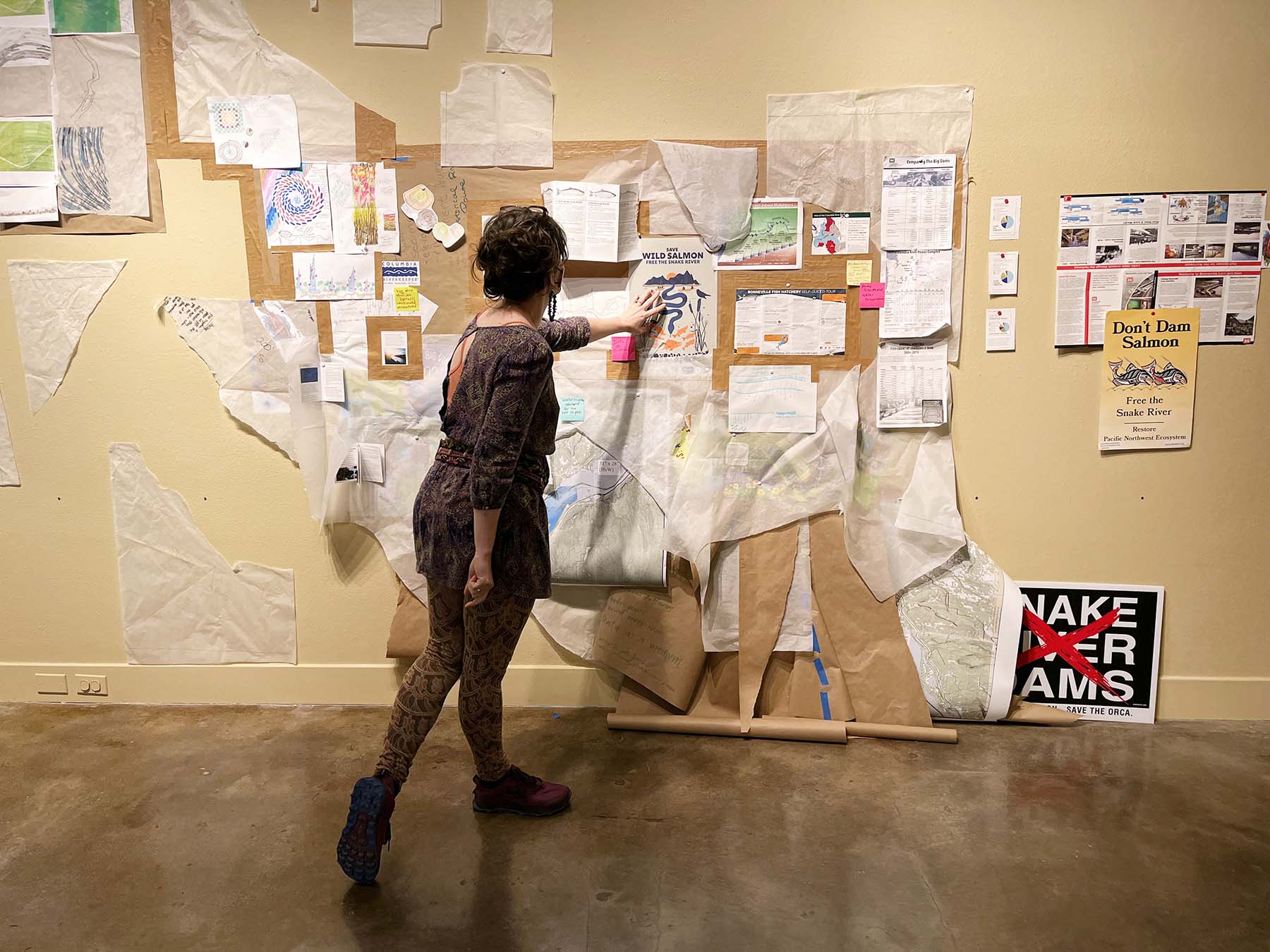
The artist in front of a gallery wall depicting the accumulated data and cut patterns

The process as it unfolded can be currently seen documented on the walls and displays of Lewis & Clark’s Ronna and Eric Hoffman Gallery. (It’s up until July 28th. Open Monday-Thursday 10:00am-2:00pm except July 4th.) It is still an active workshop, with fiber details being created, and the final sculpture put together. Really worth a visit, parking on the empty campus is easy and free, and public transport available.


“All translation is a compromise – the effort to be literal and the effort to be idiomatic.” — Benjamin Jowett

The first steps included which data to look for and to grasp what data visualization implies. It is basically the practice of translating numbers into a visual context, so they are more easily understood and allow us to find patterns or trends or outliers, things that do not conform with what we understand to be the norm.

Here is a simple example: if you look for advice on when there are the fewest number of visitors at Portland Art Museum so you can safely visit, or be least disturbed, all you have to do is go to Google Maps. They offer a picture, a bar graph that shows you in simple form what otherwise would involve reading through hundreds of statistic on daily visitor rates and density. And that still would not allow you to decide in the moment, which is the advantage of these interactive live maps provided by the institutions, coded in red bars. Voila, this Friday at 11 a.m. was the best time to visit.

Google Jam Board from Brainstorming Session

There are tons of ways in which data can be presented visually. Bar graphs, scatterplots, heat maps, box plots, line graphs, pie charts, area charts, choropleth maps and histograms all serve particular purposes. The participating students in this project all learned about these tools with the very concrete goal in mind how to represent the information about the Columbia river region in yet a different modus: using fiber to create art. Due to the pandemic, the initial months of the project took place on zoom, with Google jam boards collecting and displaying information that might be relevant. The digital brainstorming centered on representing data, but also concerned ways of understanding how traditional use, or mis-use, and abuse of data can influence how we see the world.

Once back in person, the group listened to experts, had discussion sections, took a field trip to the river and Bonneville Dam for data collection, and learned from presentations by the Columbia River Keepers about the current state of affairs of environmental facts, woes included. It became clear that all things are interconnected and cannot be judged in isolation. Dams, as just one example, provide hydro-power and regulate shipping. A good thing from a consumer perspective, but they also destroy fish habitats and spawning abilities, affecting not just salmon populations but also the cultures of Native Americans on whose land dams were built and who depend on salmon for existential and ceremonial reasons. Water use, as another example, benefits agricultural businesses, but stands in competition with river health and fishing rights in times of increasing droughts.

But how to translate this into fiber art?

Here are three examples that were generated by the project participants:

1. Energy across Oregon and Washington is drawn from multiple sources in varying amounts. Hydropower, harnessed by the dams, generates about 48%, natural gas base load is next (18%) and in descending order coal, wind, natural gas peak load, nuclear, biomass and solar are filling our needs. Each energy source is color coded.

A distribution of these resources, as seen in the pie-chart data visualization was knitted or crocheted with the exact amount of stitches and colors representing each percentage, surrounding a lightbulb representing electricity use.

***

2. Solid pollutants like fishing lines, mesh bags and other odds and ends were collected from the river and fabricated into a sculptural configuration (photograph below)to visualize what sickens the water and fish. The pebbles beneath represent parts of the carbon cycle. Carbon sinks, like forests and oceans of a certain temperature, absorb emitted carbon dioxide from the atmosphere, yet are increasingly depleted. Carbon sources, on the other hand, like the burning of fuel stored in fossils, and maintaining large livestock operations, are continually in use or even increasing, despite the havoc they wreak on our climate.

***

***

3. Other participants looked at the composition of the river, including the geological history of the Columbia River Basalt Group which consists of seven formations: The Steens Basalt, Imnaha Basalt, Grande Ronde Basalt, Picture Gorge Basalt, Prineville Basalt, Wanapum Basalt, and Saddle Mountains Basalt. Many of these formations are subdivided into formal and informal members and flows. One proposal, in the process of being beautifully executed right now, was to make a topographic map.

And then, of course, there is the river itself with its eddies and currents, its waves and flow, carefully constructed with recycled fabrics, salvaged upholstery, some wool, the center piece of the display.

***

“Translation is not a matter of words only: it is a matter of making intelligible a whole culture.” — Anthony Burgess

I met Amanda Triplett 2 years ago when I first wrote about her work for Oregon Arts Watch.

“TRIPLETT HOLDS A B.A. in Art and Art History from Sarah Lawrence College in New York. Starting out as a performance major, she soon switched to visual art, mostly focused on drawing and other works on paper. She credits the fact that she was raised in fabric-rich societies like Egypt and Taiwan, with parents later living in India, with her eventual settling on fiber sculptures. Her intention to work with discarded materials found the perfect source: Shortly after she moved to Portland from California in 2016 she was awarded one of the artist-in-residence spots at Glean, “a juried art program that taps into the creativity of artists to inspire people to think about their consumption habits, the waste they generate and the resources they throw away.” They work in partnership with Recology Portland; Metro, the regional government that manages the Portland area’s garbage and recycling system; and crackedpots, a nonprofit environmental arts organization.”

She most recently exhibited at Shift Gallery in Seattle and is currently working on a project, Morphogenesis, on weekends as an artist in residence at Mary Olson Farm and White River Valley Museum in Auburn, WA.

I was not surprised to see her work now includes an important educational aspect: marrying together aspects of art and science, putting the A into the STEM fields, echoing what is going on in the larger world with the arrival of STEAM. STEAM is an educational approach to learning that uses Science, Technology, Engineering, the Arts and Mathematics as access points for guiding student inquiry, dialogue, and critical thinking. The hoped-for end results are students who feel at home in scientific fields as well as the arts and use both approaches to enhance their problem solving and functioning in an increasingly data-oriented world. (Ref.)

Reports on the fruitfulness of collaboration between scientists and artists are more and more coming into view, and much is written about how creativity is a common denominator in the thinking of both professions.

In fact, two years ago, The Smithsonian turned to art to get out a message that scientists had been clamoring about loudly – and in vain – for decades with their tools of data-driven messaging. The exhibition, Unsettled Nature – Artists reflect on the Age of Humans, delivered information with an emotional punch, much of it sensitive photography of man-made ecological disasters, but also Bethany Taylor’s woven tapestries of varied ecosystems. Art was used to communicate the gravity of our planet’s situation established by scientific inquiry.

Bethany Taylor

Science organizations have started to acknowledge the important role that art can play, with some even holding juried art contests like, for example, the Materials Research Society, (MRS) with they annual Science as Art competition. Pictures are in the link – some pretty incredible!)

What I admire about Triplett’s approach is her ability to keep the interconnectedness of the two domains, art and science, in focus, but also remain dedicated to the language of her own field. Even with translation from the science end into the visual arts realm, there is a focus on playfulness that is a hallmark of her artistic practice. One that she shares with her students, encouraging them to experiment with tactile materials of all sorts and, importantly, try out how it feels to break the rules. There is a non-quantifiable, and in some ways non-translatable aspect to making art, one that centers on pleasure.

Not the pleasure of a satisfactory scientific result, or the pleasure of having had the right ideas now confirmed by the data, not the pleasure at one’s cleverness of designing a brilliant experimental design.

Instead it is the pleasure of the tactile exploration of fiber, seeing a fantasy or an imaginary construct come into existence, the freedom to bend the rules, to bring your very own creative impulses into the open. It is pleasure in the process, not linked to outcome. To this purpose, all participants are encouraged to create something with fiber, bits and pieces that can be selected from a basket. The growing display on the walls of the Hoffman Gallery are proof positive how playfulness translates into beauty.

***

“The best thing on translation was said by Cervantes: translation is the other side of a tapestry.” — Leonardo Sciascia

We’ll see the final sculpture, the translation tapestry, in August at Maryhill Museum. Or the other side of it, as the case may be. In the meantime, here is my own data collection during the interview, trying to weave stories out of snippets. Then there’s my data visualization with fiber remnants, translating interconnectedness, flow and play. In the spirit of Lewis Caroll’s remarks:

“When I use a word,’ Humpty Dumpty said, in rather a scornful tone, `it means just what I choose it to mean — neither more nor less.”

— Lewis Carroll

THE EXQUISITE GORGE PROJECT II

“…a collaborative fiber arts project featuring 13 artists working with communities along a 220-mile stretch of the Columbia River from the Willamette River confluence to the Snake River confluence. The project, again initiated by Maryhill Museum of Art and following the original one by printmakers in 2019, takes inspiration from the Surrealist art practice known as exquisite corpse. In the most well-known exquisite corpse drawing game, participants took turns creating sections of a body on a piece of paper folded to hide each successive contribution. When unfolded, the whole body is revealed. In the case of The Exquisite Gorge Project II, the Columbia River will become the ‘body’ that unifies the collaboration between artists and communities, revealing a flowing 66-foot work that tells 10 conceptual stories of the Columbia River and its people.”

Artists and Community Partners:

Section One: Oregon Society of Artists–Artist: Lynn Deal
Section Two: Lewis and Clark University–Artist: Amanda Triplett
Section Three: Columbia Center for the Arts, The History Museum of Hood River County and Arts in Education of the Gorge–Artist: Chloë Hight
Section Four: White Salmon Arts Council and Fort Vancouver Regional Library–Artist: Xavier Griffith
Section Five: The Dalles Arts Center and The Dalles-Wasco County Library–Artists: Francisco and Laura Bautista
Section Six: The Fort Vancouver Regional Library at Goldendale Community Library–Artist: Carolyn Hazel Drake
Section Seven: The American-Romanian Cultural Society and Maryhill Museum of Art–Artist: Magda Nica
Section Eight: Desert Fiber Arts & REACH Museum–Artist: Ophir El-Boher
Section Nine: The Confederated Tribes of the Umatilla Indian Reservation–Artist: Bonnie Meltzer
Section Ten: ArtWalla–Artist: Kristy Kún
Frontispiece: Tammy Jo Wilson and Owen Premore

Section 2 Group featured today:

The Exquisite Gorge Project II: Fiber Arts: Section 2 features the work of the following Lewis & Clark student artists:  

Brynne Anderson, Melissa Even, Margo Gaillard, Jones Kelly, Haley Ledford, Ella Martin.

More folks who have been apart of the process and supported the project:

Tammy Jo Wilson, Visual Arts & Technology Program Manager, Professor Matt Johnston, Art History, Professor Jessica Kleiss, Environmental Studies, Professor Lizzy Clyne, Environmental Studies, Justin Counts, Educational Technology Specialist, Mark Dahl, Director of Watzek Library, Ethan Davis, Digital and Data Science Specialist, Parvaneh Abbaspour, Science and Data Services Librarian, Rachel McKenna, Art Department 3D Technical Support, Kate Murphy, Community Organizer, Columbia Riverkeeper, The Columbia Fiber Arts Guild, Lewis & Clark Students: Katie Alker, Francisco Perozo, Gwenneth Jergens, Ava Westlin, Sarah Bourne.

Of optimistic and offensive pigs

I think we missed it twice in 40 years, our annual pilgrimage to a zoo on “ZooDay.” It is a commemoration of our first date ever at the Bronx zoo in NYC, all those centuries ago. Since we misremembered the original date by about 2 weeks when we first went back, we decided to add two weeks to the calendar every year and so it has been rotating through all seasons. This year it was cold, like all of this interminably rainy spring.

Traditionally a pilgrimage is defined as a journey, “often into an unknown or foreign place, where a person goes in search of new or expanded meaning about their self, others, nature, or a higher good, through the experience. It can lead to a personal transformation, after which the pilgrim returns to their daily life,” tells me my trusted Wikipedia. What we are doing at the zoo is not exactly a pilgrimage, but a celebration of a journey together – plenty of unknown places encountered there as well, and, yes, personal transformation.

I sometimes wonder why we stick to it (the zoo date, not the marriage!) Zoos elicit mixed feelings – how can you not feel for living beings put into cages? Then again, some species only escape extinction because zoos these days enable them to live and, with luck, procreate. And certainly zoos have an important educational function, allowing kids cut off from nature to experience first glimpses of awe when seeing something beyond a two-dimensional screen. At least that was what I thought, before reading some more on it.

There is quite a bit of smart writing around the controversy of zoos’ legitimacy these days. Here is a list of zoo-related books that cover a wide array of topics. Many argue that zoos should be abandoned. The most fascinating, for me at least, is a recent book called Zoo Studies, an interdisciplinary collection that examines zoos from historical, philosophical, social, and cultural perspectives, edited by Tracy McDonald and  Daniel Vandersommers. And here is a fun paper, What’s new at the zoo?, that looks at the last decade of research results around zoo-related issues, including whether animals have human-like emotions and should be afforded the rights of people.

(The New York York Court of Appeals, by the way, ruled this week that animals are not persons in the legal sense, and therefor can be denied fundamental human rights, like not being illegally imprisoned in zoos. The advocacy group who sued on behalf of an elephant interestingly used the legal construct of habeas corpus, in vain. (Funny how the Supreme Court decided that corporations are persons, for even longer than Citizens United, when our closest biological relatives are not, but that is a story for another day.)

There are many articles around claiming that science has “proven” that animals have emotions (happiness, sadness, fear, etc.), even complex emotions (shame, for example), like humans. One that caught my eye was a study about pigs that were deemed optimistic. The pigs were conditioned to two different sounds that signaled either something positive (food) or something unpleasant. They quickly learned to approach the good and avoid the bad. They were then put in differing environments – the lucky pigs got room to roam, and stimulating interactive toys. The control group pigs were in small cages with one non-interactive toy. Next they were presented with a novel sound, and, surprise, the stimulated pigs approached it, the other ones avoided it. Conclusion by the research team: good “mood” or stimulation fosters “optimism” in their research participants. They’ll approach in hopes the goodies will come.

I have a beef with that pork interpretation: Let’s start with Occam’s razor which is basically a scientific principle that says you should always prefer simpler explanations over complicated ones (parsimony). Why is this? The answer has several parts, but at the least, you should put into your theory only things that are truly demanded by the evidence, and no more.

The notion of pig optimism tramples that principle. First, let’s be clear that the evidence that’s at issue is nothing more than a behavior of approach or avoidance. That’s all. Where is the evidence here that in any way speaks to the pigs’ mood or emotions much less complex emotions?

How should we think about these pigs? One of the classic principles of behavior is Thorndike’s Law of Effect which basically means if you do something and it has a good result, you keep at it. If you do something and it turns out badly, you’ll stop. This principle explains many bits of human behavior but it also explains the behavior of a range of other animals, including organisms as simple as sea slugs. And that is all the theory you need for the pigs.

In the enriched environment the pigs saw novel objects, approached them, found them to be not harmful and in some way useful. That encouraged a habit of approaching novel objects. They learned to generalize broadly, in contrast to the control group who was provided only with a narrow gradient of experience. The pig did not have to develop a world view of the sort we might call optimism, the pig did not have to develop any feelings about this, and the pig didn’t need any brain sophistication to follow the Law of Effect. I say again: extraordinarily simple organism follow that law, with no implications for what they feel or believe.

Is it possible that pigs have feelings? Yes, I suppose. But if this behavior counts as evidence, then we lose any hope of figuring out which animals are complex enough to feel emotions and which are not. Here is a really interesting overview of the issues, anthropomorphism included, by Philipp Ball, a science writer.

And on a completely unrelated topic, involving a pig that elicits complex emotions rather than having them: the highest German Court just decided this week that a 13th century stone relief of a huge sow suckling identifiably Jewish people, with a Rabbi lifting the pig’s tail and staring into her anus, can remain in place above a famous church door. Jewish plaintiffs had gone to court to have the anti-Semitic sculpture removed, unsuccessfully. The BGH ruled that the church in Wittenberg (where Martin Luther – a rabid anti-Semite himself – once preached) had done enough to transform the sculpture into a “memorial,” by adding a bronze baseplate and a nearby display with an explanatory text. The sculpture is known as Juden Sau, Jewish Sow, a derogatory term for Jewish people used then and now by anti-Semitic Germans. For much longer than since the first ever zoo was ever established in 1793 in France….

Of course, not a single photograph of a pig. At least it’s the title of today’s music – the beautiful sound track for a movie I still have not seen but am told I have to…Pig.

Agnotology

Guns symbolize the power of a minority over the majority, and they’ve become the icons of a party that has become a cult seeking minority power through the stripping away of voting rights and persecution of women, immigrants, black people, queer people, trans people – all of whom have been targeted by mass shootings in recent years.” –Rebecca Solnit

Agnotology is another word I had to look up in the dictionary. It refers to the study of ignorance, and the ways in which ignorance can be the outcome of acts of interference with your learning. Ignorance, then, not just as the absence of knowledge, but the product of cultural or political processes designed to prevent you from knowing.

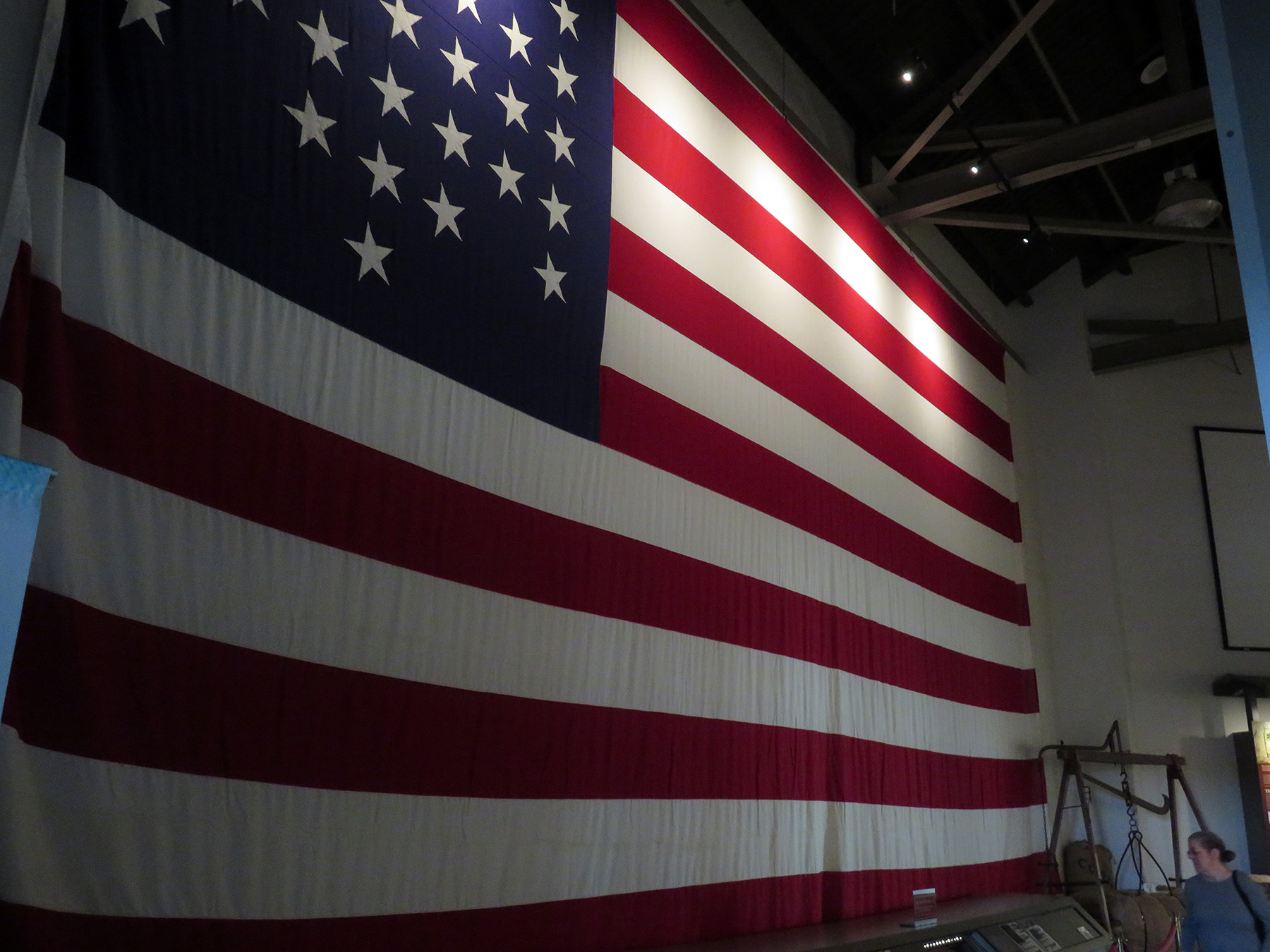
(Photographs today are from the museum at Fort Sumter, the site of the start of the American Civil War, and graves of the fallen in Charleston, South Carolina, mostly decked with confederate flags and visited by birds.) I approached the monument by boat a few years back.

AGNOTOLOGY, The Making and Unmaking of Ignorance, a 2008 classic text edited by Stanford profs Robert Proctor and Londa Schiebinger, both historians of science, is worth revisiting in the context of the 2nd Amendment debate.

According to Proctor the “cultural production of ignorance” has been instrumental for the tobacco and fossil fuel industries. It is now embraced by the gun lobby as well. (I am summarizing what I learned here.)

Think of things that can make you sick: tobacco, sugary foods, chemicals applied for agricultural use, poisoning ground water, to name just a few. The industries peddling these commodities are focused on certain propaganda. You can cast doubt on the scientific linkage between cigarettes and cancer, for example. You can shield producers and sellers from scrutiny. And you can shift the debate to issues of “personal responsibility.” Same for things that sicken the planet: you can cast doubt on the relationship between fossil fuel use and climate change, protect the oil industry from scrutiny, and shift responsibility to the consumer, rather than reveal structural policies that harm.

With regard to guns that kill: you can prevent research from being done (or revealed) that shows the true causes for gun violence, including objective measures of what freely available gun access implies. You can spare the industry any liability, and you can blame individual factors, like mental health, or loosening family structures, or grooming teachers, or sexual mores or video games – you name it, all with the goal to prevent policies that curb the unconstrained purchase of arms.

And last but not least, you can sell alternative “legal scholarship,” which eventually makes it upstream to the courts when interpreting 2nd Amendment origins and meanings.

Given the amount of misinformation, what DO we know about the history of gun laws? The first law prohibiting guns for certain people was enforced in Virginia in 1633. No guns for Native Americans. Other colonies followed suit. Enslavers, too, wasted no time (Source here):

As early as 1639, on the other hand, laws were requiring White men to be armed to be able to act as militias controlling the enslaved population.

Eventually the 2nd Amendment to the Constitution was written not to favor individual gun use but for the protection of these slave-controlling militias, so that no-one could disarm them and disadvantage the Southern, slave-holding states who needed their might.

Note the phrasing in the museum annotation (below images of slaves) above. “only a small percentage…” as if that makes it less egregious. The rest was sold into slavery in the Caribbean and Brazil, with North American interests in plantations fed there as well. And they brought sickness to the continent! How dare they?

Below the focus on the variability of slavery experiences almost suggest there were some conditions that weren’t as bad as others, and prosperity demanded it!

Fast forward to the 20th century. The NRA early on approved of legislation limiting access to certain weapons, like the National Firearm Act of 1934 and the Gun Control Act of 1968. Things changed, though, with the achievements of the Civil Rights Movement and the New Deal, expanding the powers of government and altering structural hierarchies of US society. Fierce backlash happened among those seeing their status threatened, and a push towards unfettered arming of men. In the 1990s we saw a growing militia (Christian white power) movement in response to Clinton’s gun laws. (Think Ruby Ridge, Idaho and Waco, Texas.) These extreme right wing forces subscribe to the “insurrection theory” of the 2nd Amendment, which says that the 2nd Amendment protects the unconditional right to bear arms for self-defense and to rebel against a tyrannical government. If and when a government turns oppressive, private citizens have a duty to take up arms against the government. The Proud Boys were just one division that put this into action, among other things, during the January 6th storming of the Capitol.

By 2007 the majority of justices on the Supreme Court had been appointed by presidents who were members of the NRA. In D.C. vs. Heller, Scalia argued that the 2nd Amendment protects an individual’s right to own guns (unconnected to a well-regulated militia), but vaguely implied that there were limits to the right, frustrating both gun control voices and the NRA folks who had never seen a limit they liked, as far as their own desires were concerned

If you can tolerate a style of writing that does not shy away from a somewhat excessive use of expletives, I highly recommend reading Elie Mystal’s Allow Me To Retort, an analysis of the Constitution in extremely accessible form, with insights into the 2nd Amendment in particular. It is a short, brilliant primer. Here is a review that captures everything I felt after finishing this book.

A radical change to the law is expected to be handed down by the Supreme Court this month, expanding 2nd Amendment rights. Here is is the Brennan Center for Justice‘s full analysis of what we will likely face. It is worth noting that once the door has been opened to prohibit the government from sensible regulations, as is expected here with regard to carrying guns, other regulative power might soon be taken away as well: environmental protection, public health requirements, work place safety, to name just a view.

It is no surprise, then, that the teaching of history as it unfolded, and of the conditions some try to maintain (most Americans want stricter gun laws), is anathema to those who want to turn the clock back, weapons in hand to meet a government that does not please them (after they meet their neighbors, who do not please them either given the neighbors’ quest for righting the injustices of a racially segregated society.) They do everything to obscure and obfuscate the knowledge that could empower true democratic policies and decision making and impact the sales of deadly military-style weapons and the ideological purposes they serve – agnotology in action. A Supreme Court undermining majority rule acts as the hand maid.

Numbers, anyone?

Want to come for a walk? Amble through wet meadows and woods where even the air takes on a green sheen?

Hawthorne, elderberry and ash trees

Where the sun has halos in those 5 minutes it agrees to come out of the clouds, before the showers return?

I walked along the Columbia river on Sauvie Island, so high with all the precipitation that the trees on the shores were submerged.

I approached the Willamette slough, where the pelicans rested until a fledging eagle chased them, descending from the perch where s/he had hung out with the parents.

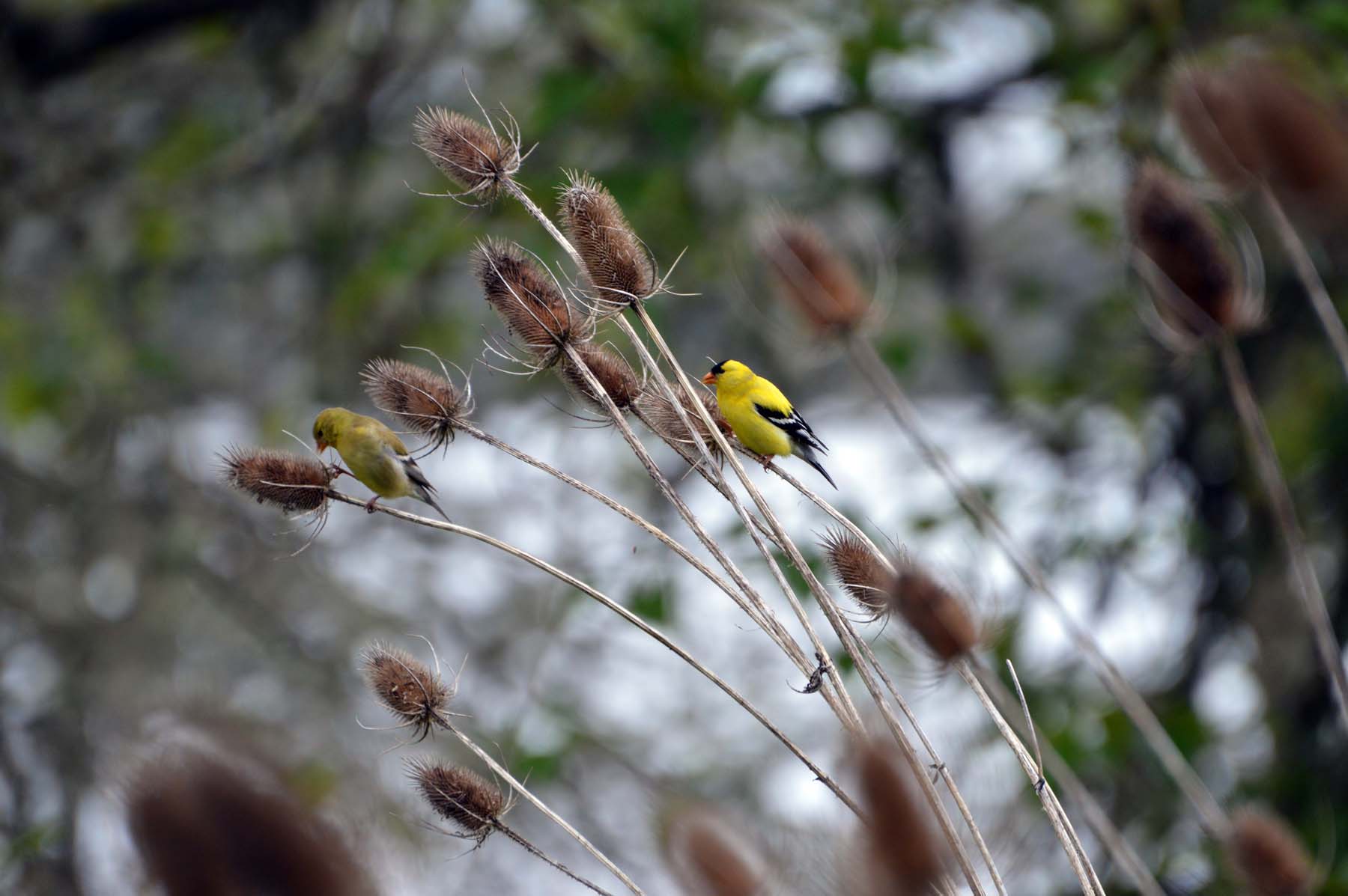
I spotted yellow – the gold finches,

the yellow warblers,

and the Western Tanagers, not shy at all and in remarkable numbers.

It made me think of numbers, and how they have to be seen in context.

In this week you likely saw the announcement of the horrific milestone that the US had now suffered, one million deaths. Perhaps you didn’t see the reports, that by some estimates 300.000 of this people would likely have survived if they had been vaccinated. The anti-vaxx movement, of course, is fueled by many influences, but one influence seems to be underemphasized.

Rufus Towhee

There is a classic statement by CP Snow, still relevant now.

“A good many times I have been present at gathering of people who, by the standards of the traditional culture, are thought highly educated and who have with considerable gusto been expressing their incredulity at the illiteracy of scientists. Once or twice I have been provoked and have asked the company how many of them could describe the Second Law of Thermodynamics. The response was cold, it was also negative. Yet I was asking something that is the scientific equivalent of: have you read a work of Shakespeare’s? I now believe that if I had asked an even simpler question – such as, what do you mean by mass, or acceleration, which is the scientific equivalent of saying, can you read? – not more than one in ten of the highly educated would have felt that I was speaking the same language.”

Snow’s concern was not specifically with scientific illiteracy. Instead, the concern was that people find it genuinely acceptable, and in some circles a point of pride, to have no understanding of science or math. Many times, I have heard people say with defiance: I don’t do math.”

The problem here is not ignorance about differential equations. The problem is revealed when we look at examples in which extraordinarily simple mathematical concepts change enormously how you think about central issues.

Pink Hawthorne

As an example, why are people not taking Covid seriously? Let us imagine, that the one million who died had a social circle of 30 people each. That means 30 million Americans have had direct contact with a Covid death. But now consider that approximately 85 million people have been infected in the US. If each of those has a circle of 30, then the vast majority of the country does know someone (or many) directly who did ok, but does not know anyone directly who died. Is it any wonder then, that vast numbers of Americans buy crazy claims like this is just a strong version of the flu — because that is the pattern of their lived experience, which outweighs dry numbers any old time.

Two Daddy Longlegs making more Daddy Longlegs

Totally different example: In the Pacific NW the Northern spotted owl may well go extinct. The most recent threat is from competition with a different species of owl, the barred owl. In a desperate response, the government has been killing barred owls in specified regions to open territory for the Northern spotted. So far, it looks like killing 2400 barred owls across ten years allowed the Northern spotted owls in those territories to survive. In places where the barred owls were left alone, the Northern spotted experienced serious decline, increasing the danger of complete extinction. You may still find this preservation strategy unacceptable, but, when you ask about costs and benefits, you might take into account that the barred owl is extremely common and thriving. The Northern spotted owl could be wiped out. So would you be willing to sacrifice, let’s say, 2% of one species in order to gain, let’s say, a 20 or 30% increase in another? These are not the real numbers, and the research is not clear yet on what the absolute numbers are. But surely the question takes on a different coloration if you look at the number of owls in the denominator.

Vultures were out en masse

One more example with a very simple character: many jurisdictions have just gone through elections, and a prominent argument from the right is that we need to do more to combat the crime wave that is ongoing in our country. The evidence for this crime wave is visible to anyone who even glances at the headlines. The problem, however, is that this is a ridiculous way to gauge crime rates. Recent data confirm that crime rates in Oregon have actually gone down (however minimally), rather than up for the last interval tested (2020.)

If we are trying to persuade people to take Covid seriously, we need to be aware of their lived experience, and that understanding has to be shaped by simple calculations I have sketched here. We may disagree about owl protection policies, but in thinking it through we have to be alert to proportions, rather than raw numbers, and in thinking about crime rates, our votes and our tax $$ should be guided by real numbers, not scare stories. Since people proudly say “I don’t care about numbers,” they rely instead on short cuts that routinely give them answers miles off of what they’d get if they spent 2 minutes thinking about the numbers. It won’t end well.

My walk ended with the resident scrub jay, who always hangs out around the parking lot. So did a ranger from the park service or whatever official administrative body. Talk about numbers in context: they had found a single gypsy moth threat in 2020 on the island, none last year. Here she was spending a full day hanging dozens of traps for these pests on the trees, and that was just the beginning. If you can’t control the moths when you still have a chance with small populations, the trees are doomed. Wish the CDC acted the same…

Expect to see small green bags dotting the island. Likely too many to count.

I am taking next week off to have some down time. See you soon after that. You can count the days!

Music is by Bartok today – he included math, in particular expressions of the Fibonacci numbers, in many of his sonatas.

Plant Blindness

Maybe it was the cold. Maybe the decline in pollinators. The number of wildflowers were sparse. It made finding every single one a particular joy, of course, hah, another iris! Maybe this 231 acres Cooper Mountain park, new to me, never had that many to begin with, or it was still too early in the season. When trails announce Larkspur Meadow, and all you find are a few puny specimens of the plant, it does make you wonder, though.

Made me think about a recent book. If you have time, read the The Arts of Living on a Damaged Planet. It is a fascinating anthology of conversations between and presentations by some twenty scientists and humanists (artists and poets included), presented during a conference at UCSC Santa Cruz a few years go. As conferences go, this was surely an imaginative one: the topics of how we can live and progress on a damaged planet were divided under two headings concerning he Anthropocene: Ghosts and Monsters.

Here is a link to Native Irises

Ghosts referred to issues around landscapes altered by the violent extraction and modification during human expansion. Monsters concerned interspecies and intraspecies social interactions. The goal for all theses scholars in anthropology, ecology, science studies, art, literature, and bioinformatics was to suggest critical and creative tools for collaborative survival in a more-than-human Anthropocene. A planet we share with other species, in other words, while making it inhabitable.

Dandelion and Wild Geranium

It is a book that has a wide range of topics, not to be read as a whole, but digested bit by bit, at least that worked for me with my aging brain. It will familiarize you with ants, lichen, rocks, electrons, flying foxes, salmon, chestnut trees, mud volcanoes, border zones, graves, radioactive waste, to name a few. We learn what has been harmed, what can be rescued, what needs adapting, and, importantly, how art can be of help in the process.

Lupine

It came to my mind on a walk on Sunday, a warm, sunny day so atypical for this dreadful April, where I found myself ambling through various biotopes: paths through old growth forests, along sunlit prairie, and in groves sheltering what remains of the oaks and freshly budding maple trees, both hung with veils of Spanish moss. Me and the rest of town – this is an easy 3.4 mile hike on Cooper Mountain near Beaverton and e v e r y o n e was out. Good for all of us – being in nature remains restorative, even when the damage is visible and seen, perhaps, by multitudes. Engaging with nature helps with (re)learning how to be in the world.

At least this was part of what Ursula Le Guin, a participant in the conference that led to the book, suggested: “To use the world well, to be able to stop wasting it and our time in it, we need to relearn our being in it.” She defined two possible approaches in ways I have cited before: “Science describes accurately from outside; poetry describes accurately from inside. Science explicates; poetry implicates. Both celebrate what they describe.” She explained: Skill in living, awareness of belonging to the world, delight in being part of the world, always tends to involve knowing our kinship as animals with animals.”

And here she put it in her inimitable poetic way:

THE STORY
It’s just part of a story, actually quite a lot of stories,
the part where the third son or the stepdaughter
sent on the impossible mission through the uncanny forest
comes across a fox with its paw caught in a trap
or little sparrows fallen from the nest
or some ants in trouble in a puddle of water.
He frees the fox, she puts the fledglings in the nest,
they get the ants safe to their ant-hill.
The little fox will come back later
and lead him to the castle where the princess is imprisoned,
the sparrow will fly before her to where the golden egg is hidden,
the ants will sort out every poppyseed for them
from the heap of sand before the fatal morning,
and I don’t think I can add much to this story.
All my life it’s been telling me
if I’ll only listen who the hero is
and how to live happily ever after.

Ursula Le Guin

I’d like to add to the focus on animals an acknowledgement of plants. People nowadays, kids in particular, know fewer plants than ever before. It is a phenomenon called Plant Blindness, the inability to notice or recognize plants in our own environment. The term was coined by two botanists, James Wandersee and Elisabeth Schussler, who originally proposed that we are blind to plants because they lack visual attention cues. They don’t have a face; they don’t move in the way that animals do; and they aren’t threatening. They look more like each other than animals do – and the human brain is geared to detect differences over similarities. We also favor things more familiar, and animal behavior is closer to humans in that regard, establishing some bio behavioral kinship. Add to that our general separation from nature, and you end up with people unable to identify more than a few plants.

Larkspur

This ignorance, echoed and anchored in the demise of academic instruction in plant biology, is all the more worrying given the role plants play in societal developments: global warming, food security and the need for new pharmaceuticals that might help in the fight against diseases. Without young people being drawn into plant sciences we might not be able to fight new plant diseases or develop plant strains adapted to changing climate conditions or discover new medications, and so on. In Great Britain you can no longer enroll for a botany degree, for example. Across the US, university Herbaria are closing. Funding is affected: 10 years ago plants made up 57% of the federal endangered species list – they received less than 4% of the endangered species funding! (Here is a good overview article on the consequences.)

Wild Strawberries

If schools fail at instruction, take the kids to the park. An emotional connection outweighs dry instruction in any case. Teach them how plants can be – are – heroes when it comes to their healing properties or their role in environmental protection – there are plenty of guides and apps for the phone available in case you’re not so sure yourself about names and species. Snap a picture and have an identification within a minute.

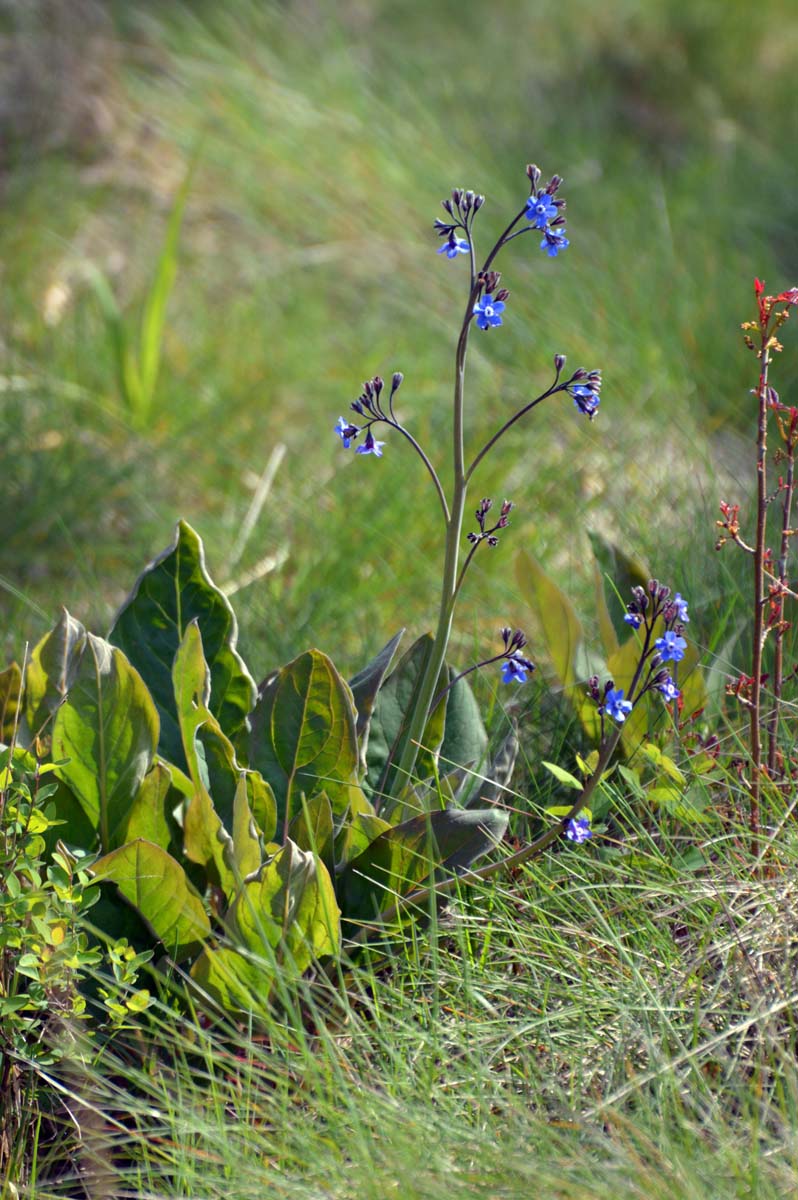
Prairie Meadow. I believe the yellow flower is Monkey flower, but am not sure.

Turn it into a treasure hunt to spur the kids’ interest. Who can find more larkspur than irises? Who spots the first saxifrage? Who can tell a strawberry by their blossom?

Saxifrage

Tell fairy tales where plants play a significant role (Hans Christian Andersen scored here, as do many Native American tales), seek out botanical gardens that help with education.

Lilies

I have my doubts about living happily ever after at which LeGuin’s poem hinted – but I believe walks are the moments when we can live happily, encountering spring’s renewal, however sparse, in all its beauty, and learn in the process.

Wood Hyazinth

Oh, and the Camassia are about to be in bloom!

Music by Aaron Copland today.

Against the Odds

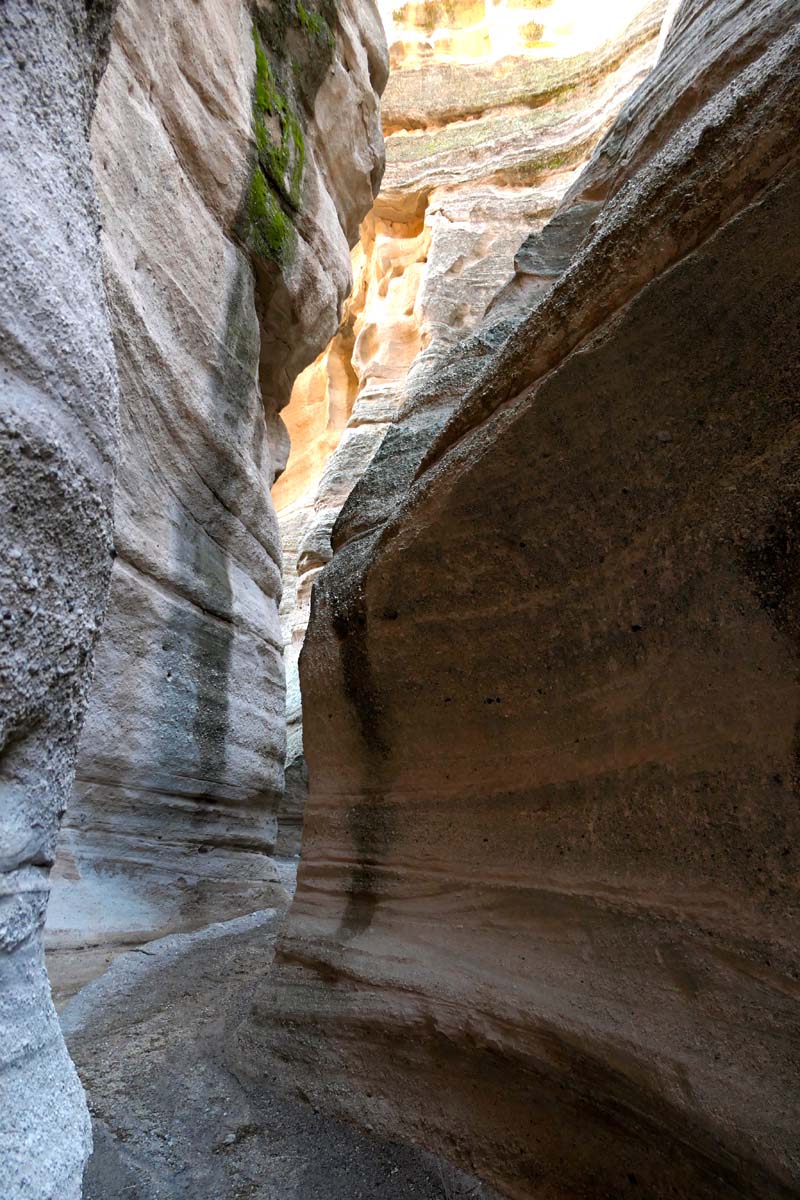
I was in a foul mood yesterday, raging against the limitations that surgeries have imposed on my life. Just three years ago this week, I had exulted in a solo hike at Kasha-Katuwe National Monuments (Tent Rock) within the lands of the Cochiti Pueblo in New Mexico. (I had described the hike here.) The canyon trail is a one-way trek into a narrow, “slot” canyon with a steep (630-ft) climb to the mesa top with excellent views of the Sangre de Cristo, Jemez, Sandia mountains and the Rio Grande Valley. Now I am exhausted after a few miles on flat territory at sea level…

OK: shift in perspective – first of all I HAD these glorious experiences, as the photos remind me and I can still hike somewhere. Secondly, I am snug in a safe place and not in a war zone. And finally, you never know what the future holds, with the right mindset.

Case in point: a blind linguistics professor named Sheri Wells-Jensen and a crew of eleven other disabled people are on a mission to prove that disabled people have what it takes to go to space. And not only that, but that they may have an edge over non-disabled people. The linguist had argued in a 2018 article in Scientific American that in emergency situations on board a space shuttle differently-abled people might be assets, since they could navigate in darkness, pay attention to signals that typical astronauts would not necessarily pick up, and communicate (if deaf, with ASL, for example) when other modes of communication failed. Astronauts in wheelchairs could save the 2.5 hours a day that the others have to use strength equipment to avoid muscle loss, to do research or repairs, etc.

The whole idea is to look at the strengths drawn from what are considered limitations and apply them. People started to explore it seriously. George T. Whitesides, the former chief of staff of NASA under Obama, and Anna Voelker, the founder of SciAccess, a non-profit organization dedicated to accessibility of the STEM fields to disabled adults and children proposed to do a test run with a diverse group of disabled people in a parabolic flight, to see what problems would arise with zero gravity and how to solve them. The flight was quite successful. (You can hear all about it here.)

It is surely no coincidence that Wells-Jensen’s research focusses on cognition across the cosmos, a form of astro-lingustics that models potential alien languages. She realized that in many of the traditional approaches had the assumption baked in that something like human visual perception was at the base of scientific development. As a blind person she was trying to model possibilities of alien technology that could make do without that mode.

I brought this up as a reminder to myself that there are always ways to stretch ourselves, to redefine what we too easily accept as limitations. I have no intention to ever visit a space station, mind you, but want to apply the principle of exploring alternatives that are open to me and might enrich my life.

And speaking of exploring alternatives in the context of extraterrestrial research, here is a fun bit on what astro-biologists are up to these days. They are looking, here in the Pacific Northwest no less, for clues about alien modes of intelligence by researching octopus minds. Yup. No kidding. On the most basic level, we humans have a centralized brain that is the control center of all that is perceived or enacted. But not so the octopus. Their “intelligence” is distributed, with most of their neurons placed in their arms and their suckers, basically each thinking for themselves. So how does octopus behavior get coordinated, with so many different control enters at work? That is what they are trying to find out, with the mindset that it’s not about how intelligent they are; it’s about how they are intelligent. Jupiter’s icy moons that are thought to have oceans underneath that ice. And if, say, they had hydrothermal vents, theoretically, they could support complex life. Octopi on Europa?

I tell you, – well, I tell myself – life doesn’t stop to be interesting, just because you can’t hike in New Mexico any longer! I will be like this: blossoming under difficult circumstances. We should all be.

Here is some appropriate space music…

.

Of Fish and Men

When humans were created, the Creator asked all the animals what they could do to help humans survive, as they didn’t know how to feed themselves. According to the legend, the salmon volunteered to help. Salmon was the first animal to stand up. It said, “I offer my body for sustenance for these new people,’ I’ll go to far-off places and I’ll bring back gifts to the people. My requests are that they allow me to return to the place that I was born, and also, as I do these things for the people, I’ll lose my voice. Their role is to speak up for me in the times that I can’t speak for myself.

– Traditional story from the treaty tribes of the Columbia, related by Zach Penney, the fishery science department manager at the Columbia Inter-Tribal Fish Commission (CRITFC.)

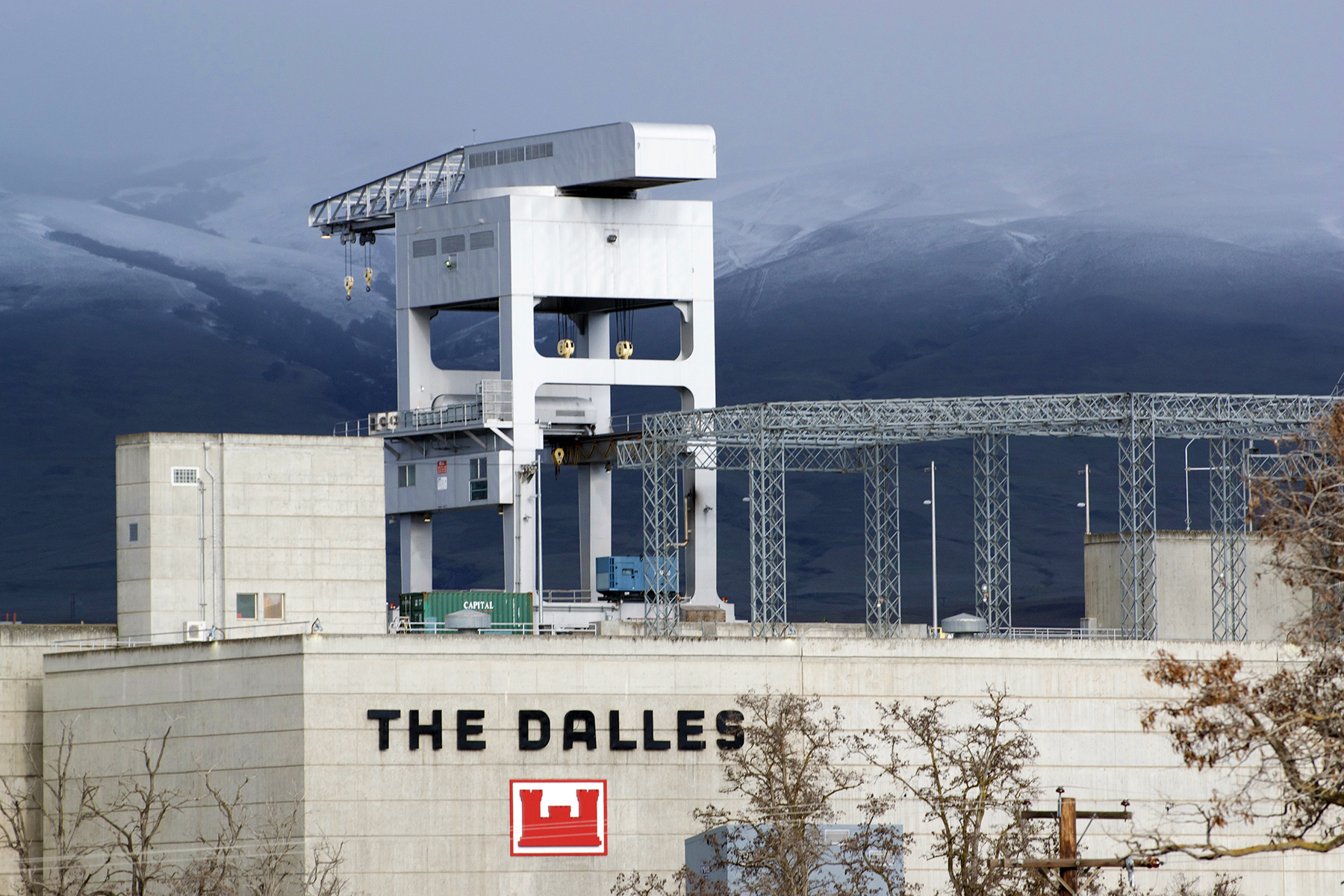
I had driven to The Dalles to get a glimpse of the bald eagles that were supposedly congregating in high numbers around the dam. No such luck, wouldn’t you know it.

One lonely bird….
A second one if you use a magnifying glass….

Instead there were plenty of other interesting sights, from the snow-capped hills that looked like they were sprinkled with powdered sugar,

to numerous traditional fishing scaffolds perched over the Columbia river.

A perfect occasion, then, for a reminder of what we know about salmon fishing given its central role in the physical and spiritual lives of indigenous people who have pursued it in this region for at least 10.000 years. Salmon are iconic to Northwest indigenous culture and identity, but also the main source of protein across these millennia. The fates of salmon and the Northwest tribes are intertwined and received an immeasurable blow when the Dalles dam was constructed in 1957. The dam inundated the upstream Celilo Falls and Celilo village, the largest trading center for salmon since times immemorial. There was scant compensation for the loss, subpar housing built only for a few permanent residents of the village who were displaced, ignoring all those tribal members who lived on reservations but regularly came to Celilo to fish and trade. It took until 2005 to start building the promised structures and no serious reparations have been paid for the immense loss of livelihoods that depend on salmon fishing. (Ref.)

The runs consist of five species of salmon, Chinook (king), sockeye (red), coho (silver), chum (dog), and pink (humpback) and steelhead, a migratory form of trout. All of them, shown below, existed in abundance, not least because native fishing practices controlled for overfishing. (I got most of my material for today here and here. The second source includes a detailed and fascinating description of the life cycle of the salmon, much more complex than they taught you in 5th grade! More on the history of the tribes that have fished here for millennia can be found at the Museum at Warm Springs – well worth a visit for their photographic collection alone. It was just featured in OR Arts Watch.)

From John N. Cobb, “Pacific Salmon Fisheries.” (Washington, DC: Government Printing Office), 1921, Courtesy of Smithsonian Institution Libraries

The bad news first: salmon runs have been in further decline, harmed by dams, overfishing, and, by environmental degradations caused by farming run offs, construction and land fragmentation, local logging and mining and now the universal water-heating effects of climate change.

The good news next: organizations like CRITFC play a central role in trying to manage, restore and improve the situation, representing the four regional tribes, Nez Perce, the Confederated Tribes of the Umatilla Indian Reservation, the Confederated Tribes of the Warm Springs Reservation of Oregon, and the Confederated Tribes and Bands of the Yakama Nation. With over 100 employees across multiple departments, they offer biological research, fisheries management, hydrology, and other science to support the protection and restoration of Columbia River Basin salmon, lamprey, and sturgeon. Equally importantly, they continue to ensure that tribal treaty rights are protected, with the help of their lawyers, policy analysts, and fisheries enforcement officers.

Fish ladders and hatcheries help support salmon, but the runs continue to struggle. Just a fraction of the fish successfully journey from ocean to spawning areas each year as revealed by tagging salmon and collecting DNA samples and other data by the fishery scientists. Hatcheries can increase the harvest, but they also have downsides. They are believed to have contributed to the more than 90% reduction in spawning densities of wild coho salmon in the lower Columbia River over the past 30 years. Why? When domesticated fish breed with wild salmon the genetic fitness of the offspring can be diminished. When hatchery fish are released, they compete for food in the wild and often eat the smaller wild fish. They bring diseases, caused by their hatchery crowding, into the wild fish populations. It is not a solution.

Historically the environmental knowledge of tribal members and their willingness to fight to protect the fish have been one of the few things to ward off complete disaster. The taboo to take spawning fish, waiting periods at the beginning of the upstream runs and limited fishing periods overall all ensured, for tens of thousands of years, that fish would return. And then the Europeans arrived.

The requirements for healthy salmon runs:

“A natural river meanders and sometimes floods, creating quiet side channels that salmon require. The fish also need their eggs, buried in gravel, not to be suffocated in dirt nor swept away. They need them to be nourished by oxygen-rich cool water flowing through the egg pockets. They need enough water in the stream — a dewatered streambed is a salmon graveyard. They need access downstream to the ocean and upstream to their spawning grounds. They need unpolluted water.”

All was affected by the newcomers. Land for farming, cleared down to the water, deprived the rivers of shade for cool water temperatures. Clear-cut riverbanks created silt that suffocated the spawning beds. Irrigating the crops emptied the streams. Dams without fish ladders, needed for flour – and woolen mills, irrigation and later electricity and even recreational purposes (lakes for powerboats…) interrupted up-stream fish travel.

As of 2020, in Washington State alone they counted 1,226 regulated dams (many do not cross streams but contain irrigation ponds, manure lagoons, and the like.)

Logging of old growth trees increased fires, destabilizing the riparian woods, again increasing silt. Loggers also built splash dams to facilitate the log floats down river – first backing up water then releasing it in a flash, disastrous for salmon fry. Mining booms created town constructions which in turn excavated river beds for gravel, sand, and limestone. Hydraulic mining required extensive ditch systems and dams. Detritus and chemicals washed into the creeks, destroying spawning beds. And all that even before extensive overfishing continued with no regard to the consequences.

In 1854 a treaty was signed at Medicine Creek which granted the tribes “The right of taking fish, at all usual and accustomed grounds and stations…” – words fully ignored. Many governmental restrictions were aimed at tribal fishermen, while licenses were granted to commercial fishermen and then sport fishermen, increasing the maximally allowed harvest even when it was already common knowledge that the runs were endangered.

“In 1935, the first year Washington kept records, the tribal catch was 2 percent of the catch whereas “the powerboat fleet hauled in 90 percent. According to state records, the entire Indian catch for Puget Sound from 1935 to 1950 accounted for less salmon than taken by the commercial fishing fleet in one typical year” (Ref.)

Eventually tribal representatives tried to fight for their rights in court, which upheld the treaties only to be ignored again by state governments. Tribal activists like Billy Frank Jr. and Bob Satiacum and their supporters staged now legendary fish-ins in the 1970s to protest limited fishing seasons, only to be arrested. This led to the United States Department of Justice filing a case against the state of Washington (US v. Washington, 384 Fed Supp). Judge George Boldt (1903-1984) issued a historic ruling (upheld in appeals) which affirmed the tribes’ original right to fish, which they had retained in the treaties, and which they had extended to settlers. It allocated 50 percent of the annual catch to treaty tribes, changing the ground game for fishing (and making a lot of non-tribal folks intensely angry.)

Restoration efforts are joined, though, by multiple constituencies.

Landowners including farmers, tribal governments, state agencies, conservation organizations, and individual volunteers from all walks of life are replanting riverine forestland, removing invasive species, placing woody debris, installing engineered snags, and reconnecting floodplains to their rivers. (Ref.)

We’ll see if the efforts can outrun the averse effect of population growth, stream bank development and loss of forest cover to fires. Removal of dams continues to be a key issue.

In the meantime here is a clip of traditional salmon fishing and the wise instruction of Brigette McConville, salmon trader and vice chair of the Warm Springs Tribal Council and a member of Warm Springs, Wasco and Northern Paiute tribes: “Whoever works with fish, it’s important to be happy. The old saying, ‘don’t cook when you’re mad,’ that’s true in every culture.”

Here is a poem by Luhui Whitebear, an enrolled member of the Coastal Band of the Chumash Nation and the Assistant Director of the Oregon State University Native American Longhouse Eena Haws.

Polar Bears on the Move.

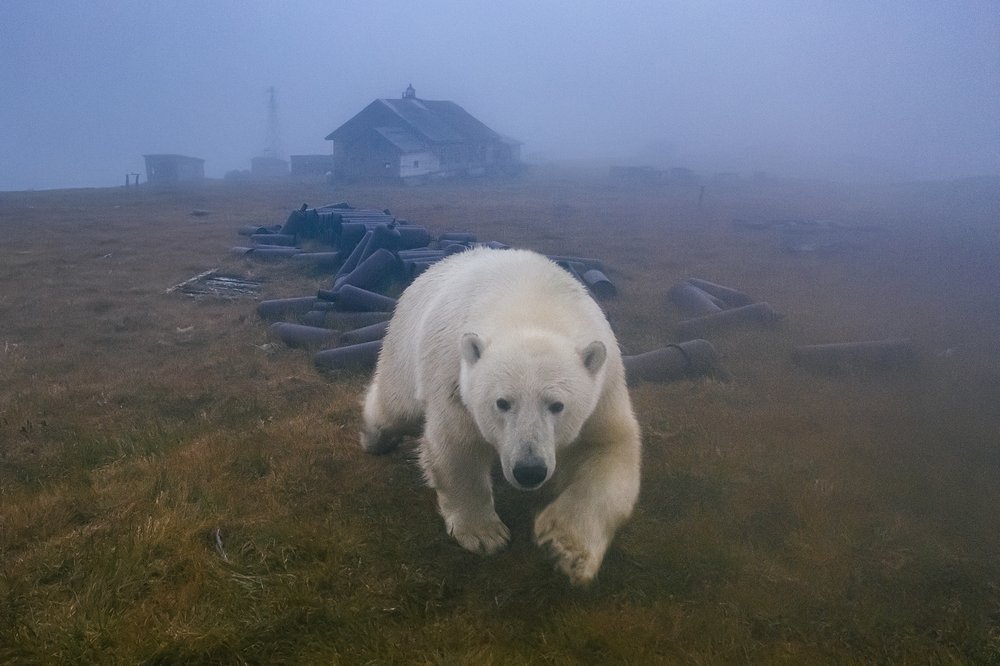
Admiration: today’s images of polar bears taking over an abandoned weather station have gone viral in the last few weeks. Wildlife photographer Dmitry Kokh traveled by boat to Kolyuchin Island, Chukotka, Russia, last year and photographed the giants (gentle they are not,) likely with drones. There was something that captured me on so many levels

– the beauty of the photographs themselves.

– the underlying disquietude that bears are driven ever further into human habitat due to melting ice from climate change.

– the spirited approach to photography that involves traveling along hazardous routes.

I went to his website and saw stern requests not to publish without permission. Sent him an email and had a positive response within 48 hours. Grateful! Спасибо!

Here is a short video of the bears moving about. I urge you to look also at Kokh’s grey heron images which he took in Russia during the 2020 pandemic lockdown. They are stunning.

Amusement: As with all things that deservedly go viral on the Internet, there is a spirited approach to creating memes that mark the occasion. In the case of the polar bear house invasion, you now find AirBnB ratings that pretend to have traveled to this remote spot in the Chukchi Sea.

Awe: and talking about spirited approaches – few are more mind-boggling than those of Joel Berger, a scientist at the Department of Fish, Wildlife, and Conservation Biology, Colorado State University. Berger’s goal is “problem solving to achieve actionable conservation.” In his own words:

Science is but one of many avenues to achieve this.  Although policy change can be a goal, so can be altering attitudes, inspiring others, or solving mysteries.  My own work tends to be with species larger than a bread box, and thematically on issues concerning population ecology, thermal ecology, effects of people on species as landscapes change, migration, and climate stressors.  Understanding how we’ve altered food webs is also important. Much of my efforts continue to be in remote ecosystems, although there are clear advantages to work on biodiversity issues in the mountains and deserts of the Intermountain West.” 

Cold-adapted species have held a special place in his research, and here the polar bear theme re-emerges. The scientist, in his quest to understand the impact of stressors like climate degradation and extreme icing events on muskoxen, the largest Arctic mammal, actually donned a polar bear costume to approach the herds in the wild. The 7-year longitudinal study with observations in both the Western and Eastern Arctic revealed, as expected, not exactly good news. Here is a video of Berger in action as a polar bear.

If I were, say, 40 years younger, I’d apply to be a research assistant. Why? Just look at the locations where he is involved: Northern Rocky Mountains and deserts to the west, the Arctic in both Asia (Wrangel Island, Chukotka, Russia) and Alaska, and some areas within central or high elevation Asia – Mongolia, China (Tibet), and Bhutan. And the questions he and his teams are asking:

In the meantime, I’ll read scientific news on polar bears….

Instead of music today here are the sounds of the arctic, and an Inuit poem contemplating the everlasting ice and scientific research affecting the region. It is a video (28 minutes) best watched when in a meditative space.

The Year of the Tiger

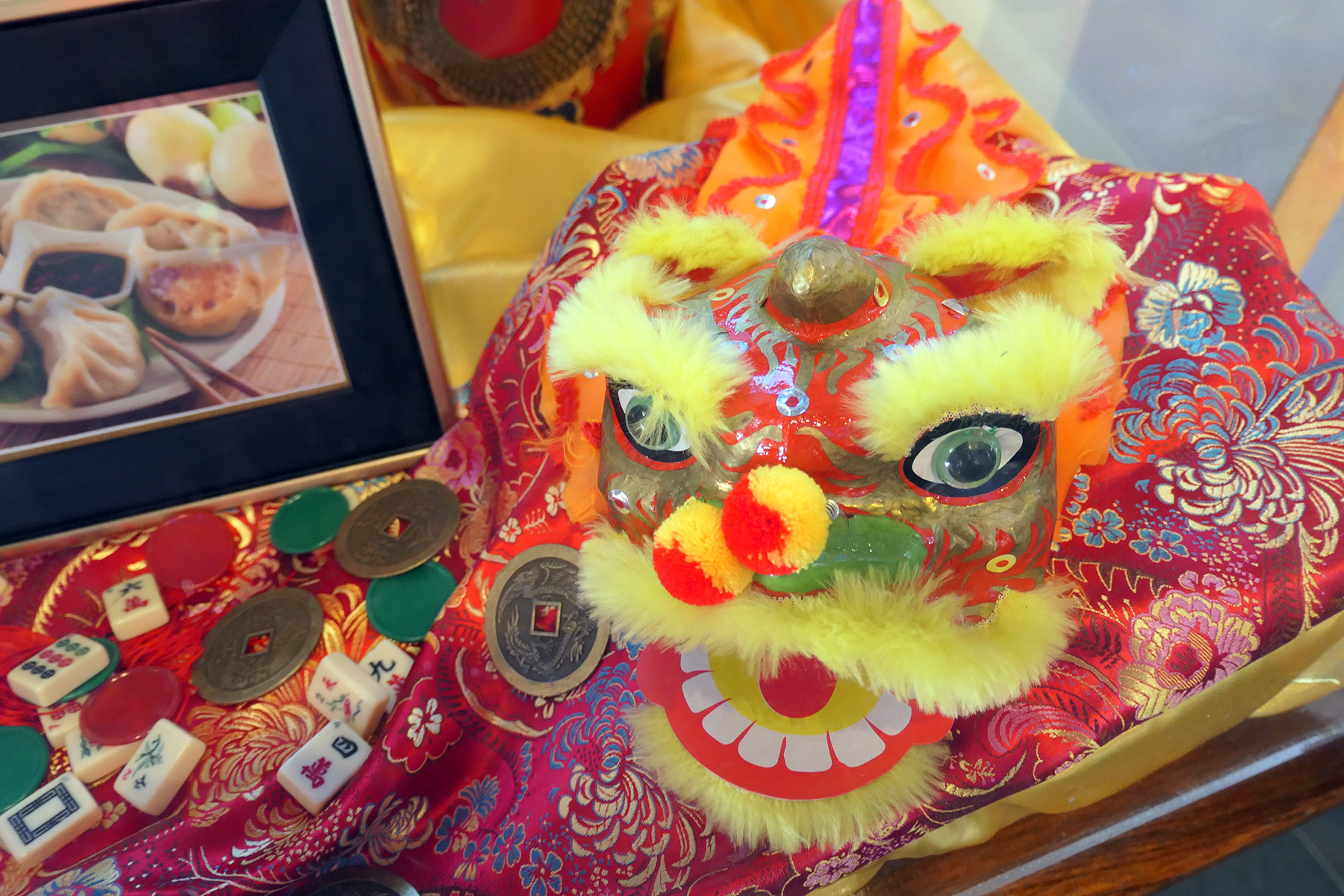
Two billion people across the world celebrate the Chinese Lunar New Year tomorrow, 2/1/2022, the Year of the Tiger. Last week I went down to Lan Su, Portland’s Chinese Garden, on a cold, sunny day to marvel at the decorations as I do every year. If you expect me to write exclusively about tigers, though, you should know better by now!

It has to be about hippopotamuses as well. I could stretch to find a connection, hippos being fierce (like the Chinese Zodiac sign of the tiger,) or semi-aquatic, linking to the fact that 2022 is a Water year for the Chinese Zodiac.

But in truth, even the hippos are just a part of today’s topic: how science approaches the (re)introduction of species to places from which they have vanished, or never lived before.

I was alerted to the issues when hearing about the hippos who were left to fend for themselves when Drug Lord and all-around-evil-guy Pablo Escobar was killed by Columbian police in 1993. He had a private zoo next to his mansion that hosted 4 hippos which escaped into the wild when the estate was left to itself. Here we are now, 30 years later, with an estimated 80-100 hippos congregating along the neighboring Magdalena River. That number might swell to another 800-5000 hippos in the next 30 years, depending on who is doing the estimating (Ref.) Hippos have no natural predators in Columbia, nor are their numbers culled by droughts as they would be in their native countries in Africa. They happily procreate.

Well, not much longer. Since it is legally forbidden to kill them, after a public outcry when the first of these escaped beasts was shot, the Regional Autonomous Corporation of the Negro and Nare River Basins (CORNARE) is now culling the herd by sterilizing the animals. They deliver doses of a contraceptive vaccine to the hippos which works on both males and females, via dart guns. The reason for a comprehensive sterilization program lies with multiple threats to the environment if the hippo numbers increase unchecked. Their grazing for food is intense and prevents other herbivores to get to the nourishment they need (a single adult hippo consumes about 88 pounds (40 kg) of grass per day.) The amount of poop deposited in the river is a threat to some aquatic plant and fish populations. And hippos can be quite aggressive if too close to human contact, with inevitable violent encounters in shared space with the fishermen.

It is easy to visualize how a foreign species hurts the balance of an ecosystem. Or what re-introduced species do to environments that have changed so much over the millennia as to not be recognizable given the landscape fragmentation. But scientists have started to look not just for the negative aspects of rewilding or new (if unintended) introductions, but to catalogue the positive trends associated with animals in new places. It looks like they just might serve some ecological functions that were earlier offered by now extinct species. New folks picking up the slack!

Here are the principles that the International Union for the Conservation of Nature (IUCN) established:

Take the hippos. Their daytime grazing habits are similar to those of now extinct giant llamas that lived in Columbia in the Pleistocene. Their defecations bring nutrients to rivers that extinct semi-aquatic creatures of yore provided. But the numbers need to be monitored and if necessary, constrained.

Northern Australia lost its giant marsupials. They are in some ways replaced by grazing water buffalos, the largest herbivores since the extinction, whose feeding habits reduce the frequency and severity of wildfires, mitigating the effects of climate change.

Feral hogs, whose rooting in soil increases tree growth and attracts bird flocks, are replacing ecological work done by extinct giant peccaries in North America. The original American horses, which died out about 12,000 years ago, are now replaced by feral mustangs and burros in the American West who engage in well-digging behavior like their forbears, protecting water resources.

These are just a few examples. More details can be found here.

And guess who is rewilded in China? Yup, South China tigers. They are taken from Chinese zoos, the only place where they exist now, and reintroduced to open terrain in wild life preserves in South Africa. Once they have learned to live outside of captivity they will be released back in China. May the Year of the Tiger see an improved coexistence of humans and nature!

Here is some traditional Chinese pipa music. Happy New Year to those who celebrate!

Seeds and Such

A young German historian, Annika Brockschmidt, recently published a book about America’s Holy Warriors (so far available in German only as Amerikas Gotteskrieger,) detailing the evolution of Trumpism, the general turn to an authoritarian, evangelical, cult-like movement within the GOP and the resulting danger to democracy. It met with acclaim, moved up the ranks in bestseller lists, until last week a sudden shitstorm unfolded, led by Politico’s chief Europe correspondent and echoed by representatives from the right-wing German press. She had not visited America! She had not interviewed Republicans in person! She was just echoing propaganda from leftwing US sources! Independent of the fact that the pandemic made travel impossible, the criticism conveniently overlooked that the contents were not claims by an investigative journalist (although she sure has an incredible breadth of source information as well as journalistic experience) but source analyses by a trained historian. The book, by the way, is smart, concise and perfectly reflective of what we here in the U.S. are experiencing.

I am bringing this up partly because I have been wrestling with the fact that my current reviews of visual artists are confined to a virtual experience of their art, or reading about their art. I am forced to look at their work on-line, if that is even possible. I can describe none of the emotional reactions that come with a real-life encounter, in situ, or thoughts that are spontaneously elicited when you meet face to face with something extraordinary. Maybe that is why universally available poetry has taken over so much of the recent musings. Does that mean I cannot, for now, review visual art? No. Just like it was for Brockschmidt, I still have access to the ideas, the concepts and insights that drive visual artists to their creations and can describe how those affect me or what they imply for the likely standing of the work.

Today, then, I want to introduce the ideas of a gifted young Palestinian artist, Jumana Manna, a film maker and sculptor, who was born in the U.S., grew up in Israel, and now spends her time between Berlin and Jerusalem. She recently received one of Germany’s more coveted awards for up and coming young artists, the bi-annual Max Pechstein Prize. It is the latest in a string of accomplishments that include stints at the 2017 Venice Biennale, and solo shows in major European and American institutions.

Let me trace the evolution of Manna’s ideas that have clearly marked her thinking for much of her career. As always, I am impressed when someone is able to have a continuous body of work that pursues different aspects of a general question.

Or questions. Who gets to decide what gets preserved when power hierarchies determine access and interpretation in situations defined by conflict? Who gets to determine how memories are shaped and transmitted? Who gets to choose what artifacts or living organisms get preserved or extinguished? Who gets to fix a value hierarchy that often serves indirectly political purposes? Manna looks at these question in the domains of botanical and agricultural preservation and opens the door to new ways of thinking about everything from the way religious botanists shaped the description and preservation of a region’s flora, to the insidious side effects of the Green Revolution in Middle Eastern countries torn by war, to Israeli laws and punishments imposed on foragers for traditional Palestinian foods.

An early body of work, Post Herbarium, looked at the American missionary, botanist and surgeon George E. Post (1838–1909) who in the late 19th century traveled to the Levant to collect botanical specimens. He believed they would be a key to understanding Christian theology. A depiction of the inherent tension between biblical beliefs and assumed scientific rationality was focal to Manna’s installations that used information gathered at the Post Herbarium at the American University of Beirut, where the specimens collected in Syria, Palestine and Sinai are archived.

Next came the film Wild Relatives (2017). (The link to Manna’s website includes a short trailer. The whole thing can be watched on True Story, but needs subscription.) The film is a marvel. It follows the journey of seeds between Syria, Lebanon and Norway, seeds collected and crossbred by scientists at local seed banks, then lost due to war, recouped from the Global Seed Deposit in Svalbarg and eventually sent back there again. (I had introduced that Seed Bank in the blog in 2017, when melting permafrost frost threatened it with flooding. Here is a more recent description of their work. )

I cannot begin to describe how the dry and often horrifying facts are told in lyrical fashion and with a sensitivity to human suffering that makes you cling to the story while absorbing scientific detail. I can, however, describe what we learn from the film. The International Center for Agricultural Research in the Dry Areas, known as ICARDA, a center that focuses on seed collection, cultivation and research, was moved from Lebanon (during that war) to Syria, back to Lebanon (during this war.) Scientists were lucky to escape Aleppo and much of their stock was lost. They requested their original seeds back from the Svalbard Seed Bank which had housed earlier deposits. Refugees from Syria are now working the fields in Lebanon to continue the local seed collection, cultivation and cross breeding with wild relatives of the species, and, once established, packages of these seeds are returned to Svalbard for further safe keeping. The film follows the journey and the humans involved in both Lebanon and Norway, their dreams and their nightmares shaped by both science and religion.

A detailed description of ICARDA’s work and struggle can be found here. What the film offers, though, is a question of the impact of Western agricultural practices and developments on the lives of small holding farmers in poor countries. What we know about the Green Revolution, the production of more food due to genetic manipulations that increased yields, is that it was a double edged sword. With increased food security (good), you also had increased use of pesticides, increased agricultural water consumption, increased areas of land needed for efficient farming, driving small holders out of the business (all bad.) Monocultures depleted the soil, and indigenous varieties of crops got extinct (really bad.)

The loss in biodiversity is real – and a problem. In the U.S. alone, 95 percent of cabbage, 91 percent of corn, 94 percent of pea, and 81 percent of tomato varieties were lost between the nineteenth and twentieth centuries. More importantly, in countries that are more exposed to current assault from climate change, like Middle Eastern countries are regarding droughts, the industry-produced seeds have not adapted to the shift and thus deplete water resources ever more. Seed preservation in vaults, theoretically a good thing, stores genetic material from times past, just like you keep animals in a zoo. The genes, however, do not adapt if they are not exposed to changing environmental conditions, yet it is exactly those adaptations that are needed to feed a world that grows drier and hotter. And hungrier.

The film makes clear that on the one hand questions of scale – who has the means, economically and scientifically, to run preservation projects for humanity’s safe keeping – favor organized institutions. But those who have the means also make the choices about genetic varieties in breeding and are able to monopolize world markets. Small breeders and preservationists who have still access to wild varieties of plant species contribute an enormously valuable part in fighting declining agrobiodiveristy, but they are an endangered species themselves. What will be preserved, what will be developed all rests on who is in power to make decisions that affect much of the world.

Here are some additional considerations how the interaction of climate crisis, monopolized agricultural decision making and urbanization contributed to the revolution turned war in Syria.

Fast forward to 2022 for Manna’s most recent video installation. Here at the West Coast we can currently see her newest work, Foragers, at the University of California, Berkeley Art Museum and Pacific Film Archive (BAMPFA.) The video installation was co-commissioned by BAMPFA, BAK Utrecht, and the Toronto Biennial of Art and filmed primarily in occupied Golan Heights, the Galilee and Jerusalem. (Full disclosure: I have not seen Foragers yet, but have been deeply moved by Manna’s essay on the issues exposed by the film – highly recommended reading, an insightful contemplation of many interrelated historical and political topics as well as an autobiographical testament: Where nature ends and settlements begin, translated into German by Fabian Wolff.) The text about the genesis of this work and her own personal experiences is a powerful reminder of what it means to live in occupied territories. Culture and tradition can be drawn into the struggle between opposing forces, and that extends even to what is allowed to be picked and eaten as per centuries-old customs.

In this specific case wild thyme and wild thistle, central to the Palestinian cuisine, known respectively as za’atar and ‘akkoub, were put on a protected species list by the Israelis, even though harvesting actually encourages the growth of these plants year after year. Individuals caught by the Nature Authority are put on trial with significant punishments, all the while many more of these plants are destroyed when the ground is prepared for the construction of new Israeli settlements. Here is a detailed description of the video installation.

If you remember, I have recently written about foraging here in the U.S. and its relationship to slavery and the impact of historical change on the African-American traditions. Traditions and knowledge were cut off with the hardships and legal (or customary) exclusion from nature following emancipation. Proprietary rights of White landowners were harshly enforced, once they had no gain from people’s survival through foraging, a survival that depended on supplementing the meager scraps of food they received on plantations. I have also discussed the effects of the Bonneville Power Act on the destruction of traditional food sources for Pacific Northwest tribes, by destroying fishing sites and generally endangering the salmon runs in order to regulate and increase water needed for aluminum production.

The interplay between nature, its products, competition for resources and power hierarchies are not an isolated phenomenon, but something found throughout history. An artist’s rendering of these complex and often rather dry topics (Seed propagation? Genetic engineering?) can open a space for us to think through the issues. Work done that reflects not just some distant past but the actual situation of growing food, lacking food, monopolizing food seems incredibly timely, given that we can expect food production to suffer in a world hit by pandemics, changing weather patterns and armed conflict. To do all this without wagging fingers, but with grace and inclusivity as Manna’s work does, is quite an achievement.

And I haven’t even talked about her work as a sculptor yet which happened in parallel to her video explorations.

Music today from a live performance in Amsterdam: Trio Joubran.