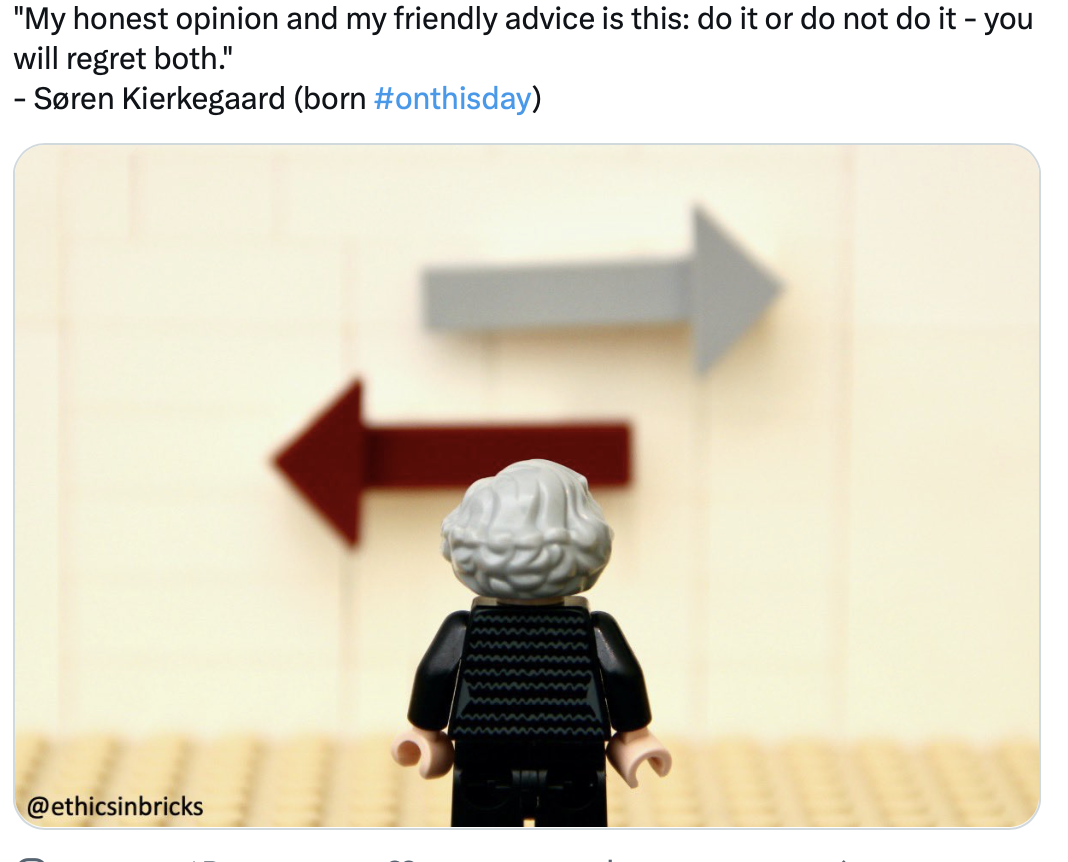
I figured I’d offer some reassurance at the beginning of 2024: YDP will be as eclectic as ever, as haphazard in what gets picked up and woven in with the rest of what fills my brain, so that you can rely on at least one thing remaining the same in your lives.
For a start it’ll be some thoughts by the Italian Marxist Antonin Gramsci, a poem by Ruth Awad, a Lebanese-American poet who is also a tattoo artist and an insurance manager who collects rescue Pomeranians, and some views of my pear tree. How is that for a mix?
House Finches
Regular readers are familiar with the pear tree, and its neighboring hawthorn tree, seen from my chair where I hang out when my body – what else is new – vetoes the plans for various hikes and outings yet again. It is where I found myself last week, amazed at the variety of birds who kept me company this late in the season, a humming bird included.
Anna’s Hummingbird
It gave me time to reread Gramsci, in particular his apropos musings on (not) celebrating the New Year. I don’t share his sentiment of hating the occasion, although I don’t love New Year’s either. At my age, frankly, one of the thoughts that is inescapable when you are feeling lousy and the numbers change from ’23 to ’24, is personal: will this be the year I die? After all we lost a lot of friends this year – here is an Oregon ArtsWatch list which included a mirror photograph I took of Henk Pander during our Mutual Portraits project, a close friend enormously missed.
But Gramsci sets me right in the rest of his one page-proclamation: you want to focus on continuity and spirit, not on breaking points and final balances, filled with resolutions that you will not keep.
“I want every morning to be a new year’s for me. Every day I want to reckon with myself, and every day I want to renew myself…..I would like every hour of my life to be new, though connected to the ones that have passed.”
Song Sparrow
In one of the stranger deliberations I’ve read in a while, he also hopes for the arrival of socialism in order to jettison the celebration dates handed down by the ancestors. I guess it would give us something to talk about, shared hopes for differing reasons….
Thrushes
Not so sure what I would talk about with today’s poet, Ruth Awad, whose work, as far as I’ve read it, lacks the balance of emotionality and intellect that I so crave. If that sounds condescending it is not meant to be – there is much to be said for the offerings of the Ruth Awads or Maggi Smiths of the world, embraced by contemporary readers for their accessibility and courage to be sentimental. If it keeps an interest in poetry alive, so be it.
I mean it.
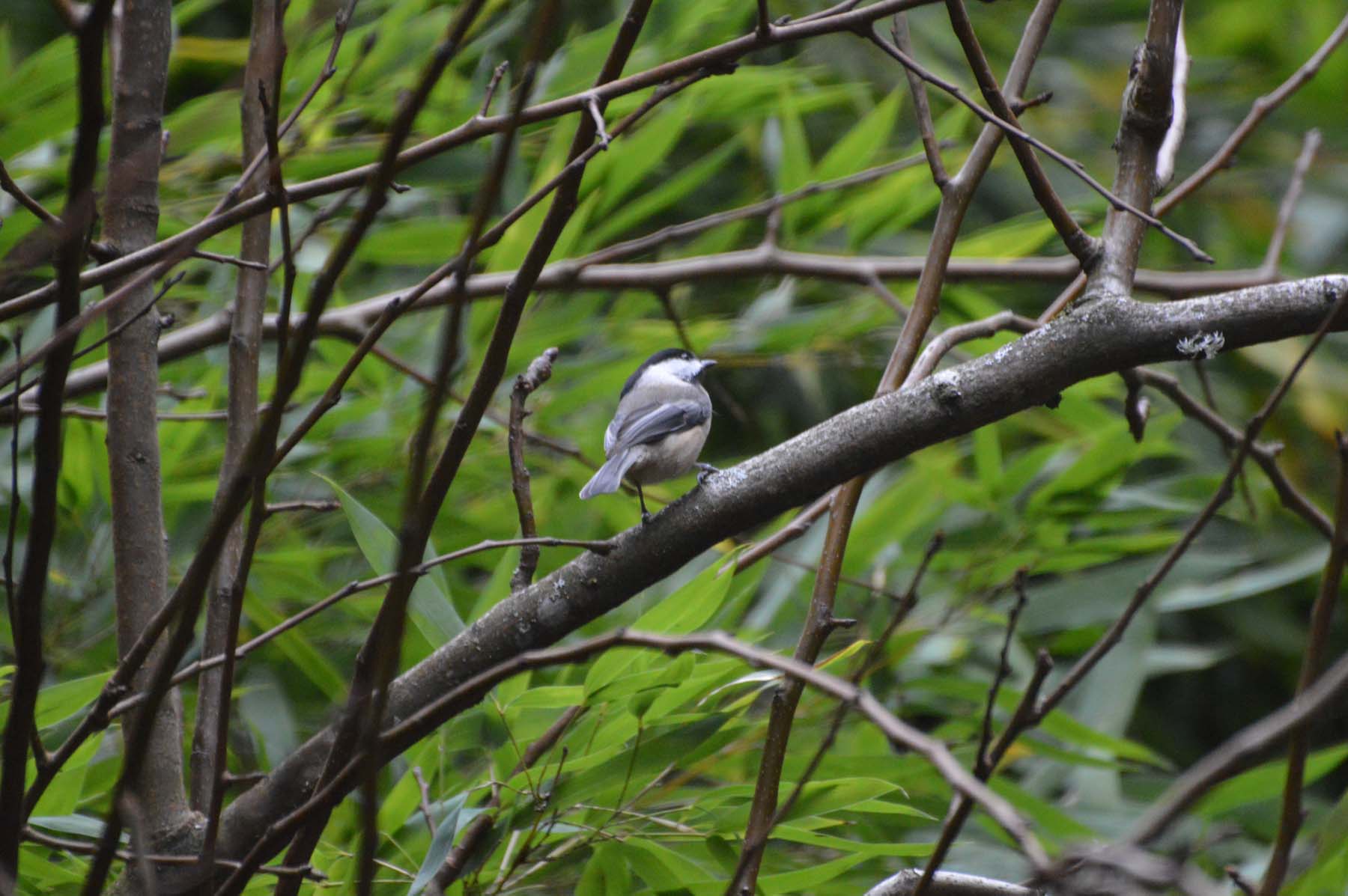
Black capped chickadees
The poem below, published in The Atlantic at the end of the year, drew me in, though, for one specific sentiment, expressed in the last words:
“…if only you’ll let he world soften you with its touching.”
To let the world soften us, or even better, to comfort and fill us with occasional awe at a time when we tend to harden from fear and/or sorrow, we have to attend to it. The “world” is all around us, easily, constantly available, no extravagant or even local excursions needed. You just have to sit and look, birds perching in the pear tree, reminding us of an existence not governed by dates, or resolutions, just renewal from hour to hour, here, now, in 2024.
Gramsci’s theory of Hegemony, a strategy of power pursued through cultural work, can wait. So can my knitting. Or folding the laundry. I just look at the birds. It is healing.
White crowned sparrow
Reasons to Live
Because if you can survive the violet night, you can survive
the next, and the fig tree will ache with sweetness for you in sunlight that arrives
first at your window, quietly pawing even when you can’t stand it,
and you’ll heavy the whining floorboards of the house you filled with animals
as hurt and lost as you, and the bearded irises will form fully in their roots, their golden manes
swaying with the want of spring— live, live, live, live!—
one day you’ll put your hands in the earth and understand an afterlife isn’t promised,
but the spray of scorpion grass keeps growing, and the dogs will sing their whole bodies
in praise of you, and the redbuds will lay down their pink crowns, and the rivers
will set their stones and ribbons at your door if only
you’ll let the world soften you with its touching.
Yes, the plan was to brighten the pre-Christmas week with something up-lifting. It has changed, wouldn’t you know it.
Yes, there were matters important enough to discard my good intentions, namely events in Germany with lessons for us here in the U.S. as well.
And yes, lots to read and digest today. I will reward the patient readers with Poulenc’s choral Christmas music in the end, however tangential it might be. It is of ethereal beauty.
Two seemingly irreconcilable events happened some days apart, both echoing a darker German past. One was the election of Germany’s first mayor as representative for a right-wing extremist party (as officially declared by the German FBI,) the Alternative für Deutschland (AfD), in Pirna, Saxony.
The other was a shitstorm descending around the recipient of this year’s Hannah Arendt Prize for political thought, Russian-American journalist and writer, Masha Gessen. After they published an essay in the New Yorker that critically examined current events in the Middle East and compared them to a fascistic historical context, all hell broke loose. Jewish organizations in Germany officially complained and the foundation that awards the prize officially distanced themselves and retracted the invitations to a planned celebratory reception, as did the host city of Bremen. The prize itself could not legally be withdrawn, and a presentation of the award happened in the end, under much reduced publicity and with the police attending to “protect attendants.”
Let me provide some background on both events.
Pirna is a city the size of Portland, OR, in Saxony, a state known for its considerable base of right-wing extremists who carry anti-immigrant and anti-Semitic sentiments on their banner. The first round of this year’s mayoral elections (a 7 year cycle) saw three candidates split the vote pretty evenly. One from the conservative party CDU, one from the center-right Freie Wähler, a party mostly operating on communal levels, and Tim Lochner, a carpenter with no political experience, representing the AfD. He won the run-off election last Sunday, since the other two parties were unwilling to compromise and withdraw one of the candidates in order to consolidate the reciprocal vote which would have spelled a certain loss for the extremist. Clinging to power against the odds (as well as very low turnout) threw the election to a neo-fascist.
This is particularly horrifying in light of the history of the city.
Pirna was one of six sites that served as the laboratory for killing human beings in gas chambers on an industrial scale, before transferring the method to concentration camps. A psychiatric facility, located in the old fort/castle Sonnenstein above the city, housed mentally ill and people with disabilities from the 1800s to 1939. It was declared an euthanasia institution in the context of the “Aktion T4” (the systematic killing of “unworthy life”) and between June 1940 and August 1941 almost 14.000 patients from all over Germany and an additional 1000 prisoner transfers from the Sachsenhausen, Buchenwald and Auschwitz concentration camps were gassed in the basement showers. It took until the year 2000 (!) to inaugurate a memorial to the victims in situ.
So here the city elects a mayor who is affiliated with a party known to carry the legacy of national-socialistic times with gusto, hoping to re-install the “values” of the Reich, normalizing racism, violence and anti-democratic leanings, among others. His first actions upon taking office? “I will meet with all individual members of city hall and check their loyalty.” Sounds familiar?
Major Jewish organizations commented on the election results, including the International Auschwitz Committee, seated in Berlin. They see the outcome of the election as a bitter signal to democratic parties that their willful competition with each other plays into the hands of extremism, enabling the steady march of the right-wing extremists into positions of power across all of Europe. (Ref.) Think of this in our own election year, with the likes of No-Labels potentially wreaking havoc, but also inner-democratic-party fighting weakening what needs to be a united force not to loose the election to Trump. It will take astonishingly few votes to shift the outcome – here is a detailed analysis.
The warning is on the wall: only mobilization to vote and consolidation of democratic forces can stop the destruction of democracy.
***
Cancelation of speech is a time-honored tool of autocratic regimes. That does not prevent officially democratic societies to go there as well, Germany among them, with explicit, much more restrictive laws governing speech that is deemed as inciting hatred or, in particular, anti-semitic. Article 5 of our Grund Gesetz (the German Constitution) defines freedom of speech. The second paragraph of Article 5 restricts freedom of expression “in the provisions of general laws, in provisions for the protection of young persons and in the right to personal honor.” Big difference to the US regulations concerning freedom of speech.
Currently, people on all sides of the political spectrum agree that there is a wave of repression of political thought occurring in Germany.
“Since Hamas’s Oct. 7 attack on Israel, virtually every major institution in Germany has been engaged in a wave of repression of ethnic minority communities — the scale and intensity of which is unprecedented in Germany’s postwar history. The targets are Palestinians, other people of color and Jewish anti-Zionists alike.”
In today’s climate, Jewish refugee Hanna Arendt herself, highly critical of the political positions of Israel and full of controversial opinions about contemporary Zionism, from 1942 until her death in 1975, would likely be silenced in Germany. Masha Gessen’s provocation, triggering the uproar around the prize they were awarded, was this paragraph of taboo comparison, from an essay in the New Yorker:
“But as in the Jewish ghettoes of Occupied Europe, there are no prison guards –Gaza is policed not by the occupiers but by a local force. Presumably, the more fitting term ‘ghetto’ would have drawn fire for comparing the predicament of besieged Gazans to that of ghettoized Jews. It also would have given us the language to describe what is happening in Gaza now. The ghetto is being liquidated.”
Some people would have predicted this to happen, scholars of history like A. Dirk Moses, the Anne und Bernard Spitzer Professor für Politikwissenschaft am City College of New York, among them. Here is a warning from 2 years ago, a critical view of Germany’s attempt to deal with the guilt of the past, a desperate grasp for redemption.
“For many, the memory of the Holocaust as a break with civilization is the moral foundation of the Federal Republic. To compare it with other genocides is therefore considered a heresy, an apostasy from the right faith. It is time to abandon this catechism.” (Ref.)
His description of the German “Catechism.”
The Holocaust is unique because it was the unlimited Vernichtung der Juden um der Vernichtung willen(exterminating the Jews for the sake of extermination itself) distinguished from the limited and pragmatic aims of other genocides. It is the first time in history that a state had set out to destroy a people solely on ideological grounds.
It was thus a Zivilisationsbruch (civilizational rupture) and the moral foundation of the nation.
Germany has a special responsibility to Jews in Germany, and a special loyalty to Israel: “Die Sicherheit Israels ist Teil der Staatsräson unseres Landes” (Israel’s security is part of Germany’s reason of state)
Antisemitism is a distinct prejudice – and was a distinctly German one. It should not be confused with racism.
Antizionism is antisemitism.
Masha Gessen, Jewish herself with a greatgrandfather murdered by the Nazis in the Bialistok ghetto, violates the rule that equates anti-zionism with antisemitism and, further more, proves willing to engage in comparisons, questioning aspects of the uniqueness of a singular event. I am linking to their brilliant speech, given in the context of the truncated award ceremony, that explains the legitimacy, importance and necessity of such comparisons. If you cannot open the link (in english) I can send you the full text. ) Also, here is a smart interview with them, can be switched to English.)
Gessen’s message: historical events unfold over time. At some point it might be too late to prevent unimaginable horrors when our lack of imagination is surpassed by reality. But we, now, no longer have to imagine – we know what is possible.
Consider it another, urgent warning.
“The Holocaust was singular in part because of how many people were killed over a short period of time. But even the Holocaust took years. People lived, had hopes, tried to make sense of what was happening, and resisted…. Over time, political positions changed, imagination changed, the idea dawned that a Holocaust would be possible ….
We are not any smarter, kinder, wiser, or more moral than people who lived ninety years ago. We are just as likely to needlessly give up our political power and to remain willfully ignorant of darkness as it’s dawning. But we know something they didn’t know: we know that the Holocaust is possible….
And this is why we compare. To prevent what we know can happen from happening. To make “Never Again” a political project rather than a magic spell. And if we compare compellingly and bravely, then, in the best case scenario, the comparison is proven wrong.“
This is the time of year that provides all of us, no matter the background, with some glorious and familiar music. If your first association is “Jingle Bells???” I have to disappoint you, although the song I am introducing today was sort of a jingle. Despite appearing like church music, it was a folk melody that revelers sang since the mid 1800s in Germany, going from house to house during the Advent season, begging for coins. It appeared in a collection of folk songs published by a passionate fan of that music, August von Haxthausen, helped in his endeavors by the Brothers Grimm.
The song became intensely popular around 1912 with the Wandervögel (migratory birds) movement, a movement of middle and upper class youths who despised industrialization and wanted to go back to nature, simplicity and freedom, hippies of yore, hiking in the countryside, singing around the camp fires and sleeping under the stars. The song was spread by them far and wide.
The movement succeeded enough that the establishment and the rising Hitlerites tried to emulate it in ways that would lure young members: The Catholic Youth Organization, The Boy Scouts, and later the Youth League of the National Socialist Workers’ Party (NSDAP) under the control of his storm trooper organization known as the SA (Sturmabteilung,) all sharing some of the same themes, opposing a return to the old social status quo, while working to create an idealistic new era, a better Germany. (Ref.) Hah.
Simple paper curling behind glass.
Ah, getting derailed. What else is new. Back to the song.
It uses simple language, sometimes interrupted by the Greek Kyrie Eleison – Lord, have Mercy – and has an archaic melody, with plain movements that ascend and descend and a dorian pitch (sort of like our minor key.) The narrative is set in woods entirely consisting of barren plants and thorns that have not shown life for seven years. When Mary, pregnant with G-d’s son, walks through this forest of thorns, it erupts into a blooming sea of roses. Let’s listen to two versions: a choir that might resemble the way it was sung on the street (albeit with the finesse of a world-class ensemble, the Vienna Boy Choir) and a version for wind instruments. I simply loved that song as a child, both for the pitch and the miracle, vividly imagining how roses would blossom all around you in the cold, long before animated movies would visualize these kinds of scenarios.
Little did I know – it is generally interpreted as a narrative pointing to divine intervention for those struggling with infertility, a benevolent power connecting the barren to new life, as symbolized by the pregnant virgin. The scourge of infertility is, of course, a massive sorrow for those dealing with it and a correspondingly frequent theme in the bible, of importance to early agrarian societies where the ability of having children proved existential (beyond the yearning) – large families were a guarantee for survival given the rates of child death and the need for labor.
The Hebrew Bible alone contains six stories of barren women: three of the four matriarchs, Sarah (Genesis11:30), Rebekah(25:21), and Rachel (29:31); Hannah, mother of the prophet Samuel (1 Samuel 1-2); the anonymous wife of Manoah, mother of Samson (Judges 13); and the “great woman of Shunem,” also called the Shunammite, an acolyte of the prophet Elisha (2 Kings 4:8-44). Women were the ones exclusively blamed for infertility, and to add insult to injury, they were reproached by society, their situation attributed to some hidden wrong, or sin that made G-d close their wombs (biblical language), making them ashamed and allowing their husbands to add another wife to the household.
Our annual Rosh Hashana reading, one of the holiest days of the year, is all about the promise to a woman, Sarah, to be blessed with child after years of longing, in advanced age. We understand Genesis 21 as a sign of divine benevolence – a higher power that bestows a gift, makes thorny woods bloom, relieves women of reproach, their own and that of the society around them.
No such benevolence on the part of many contemporary men in power. In addition to the Catholic church which has long prohibited attempts to assuage the pain of infertility by means of using In Vitro Fertilization (IVF) we now have a generation of Republicans and other Right Wing forces who want to prohibit the use of IVF in the wake of the Dobbs decision around abortion. The disposal of unused fertilized eggs should be criminalized in their eyes, as a felony no less. Unless you want to carry all of those embryos, wether viable or not, you better not start the procedure!
Am I catastrophizing? Just look at what the new speaker of the house, Republican Mike Johnson, has to say. According to recent news reports, Johnson supports banning in vitro fertilization. He is a co-sponsorof the Life at Conception Act, a nationwide abortion ban that also would affect embryos created for IVF. Here is a detailed news report that spells out the names and the arguments used in the battle to prevent women and men from alleviating their suffering, deal with the effects of chemotherapy, or simply choose their own timing for starting a family, perhaps later in life after college loans have been paid off, or career demands settled down.
Worried yet? Some members of congress were enough so that they introduced a bill a year ago The Right to Build Families Act, which lingers in Committee, but has drawn the explicit ire of the Heritage Foundation. Contraception, mind you, is on the list of desired prohibitions as well. So riddle me that. In the current discourse around the “Great Replacement” fears, with far right voices calling for enlarging the size of – certain – families, it makes sense for the radical Right to prevent people from choosing not to have children. But for those who want to build a family, why foreclose one such avenue that makes it possible?
In any case: even the old fashioned methods of procreation, with divine intervention “opening women’s wombs” as the bible has it, did not necessarily lead to happily-ever- afters, lest we forget that the power to bestow is matched by the power to take away.
The lives of the conceived sons – and sons they were, exclusively, wouldn’t you know it – was often threatened, sometimes taken. Isaac is supposed to be sacrificed, Jacob runs from murderous brothers, Joseph is nearly killed by them and then sold as a slave, Samson dies a martyr’s death and Samuel is stashed away for life at a sanctuary at Shilo.
Not a stroll among the blooming roses…..
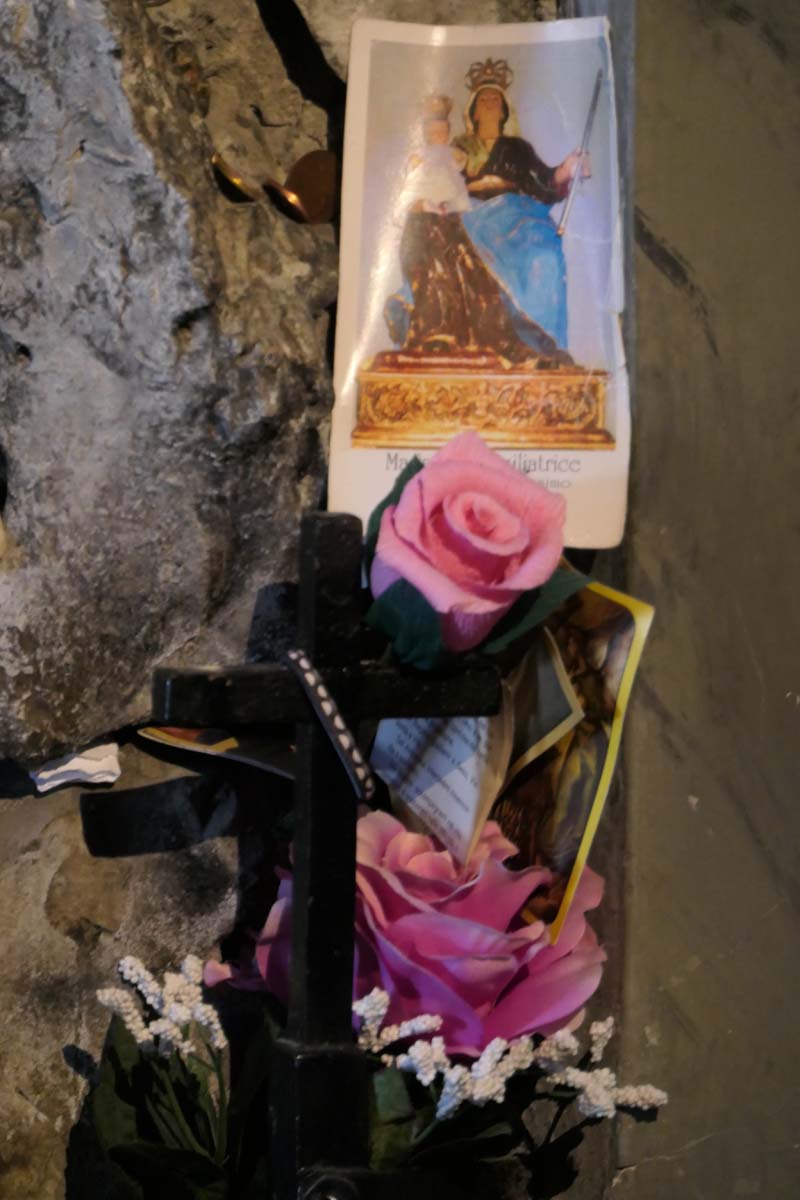
Photographs of the Virgin Mary today from my travels.
“The time is out of joint; O cursed spite!/That ever I was born to set it right!” [I.V.211-2])” Shakespeare’s Hamlet after being visited by a ghost.
In the small rural village where I grew up, Martinmas was a big occasion. Celebrating the altruism of a religious figure, a knight who shared his bread and cut his velvet cape in half to help a freezing beggar, the catholic regions across Europe put up a big parade every mid-November. Dressed in our warmest clothes, we were allowed to line the streets to cheer on a fake St. Martin riding on a horse in the evening, a subsequent bonfire at the village’s edge with dramatic reenactment and dispersement of yeast dough baked into little bread men with dried currants for eyes and a clay pipe in their mouths. Have no idea why, but it is a detail stuck in memory.
It was exciting as well as eerie. Quite a few small kids were scared to death, between darkness and fire reflected in his silver helmet and a huge horse getting restless, neighing and bucking. It was also a time when the geese were butchered and prepared for a feast.
I was reminded of those occasions when listening to a song Geträumt hab ich vom Martinszug (I dreamt of the St. Martin’s Parade,) music by Katie Rich and Christian Schoppik, a pair of contemporary surrealist folklore musicians in Germany. Lately they have teamed up with another artist, Johannes Scholar, who is more known for his electroacoustic, ambient music, that combines electronic aesthetic and nostalgia for a lost future.
The trio performs as Freundliche Kreisel (Affable Spinning Tops, album in the link), mixing experimental and acoustic sounds with lyrics that could come from German Romanticism, fairy tales, mythology and plain folk song. Lots of ghosts, sinister scenarios and temporal disjunctions, on another compilation album, Specter Land, as well.
Obviously more accessible to German language speakers, but the feeling of the disquieting undertones, directly and indirectly hinted at in the words, are certainly conveyed when you listen to the music only. The female vocalist (intentionally?) sings like a child, projecting a halting naiveté and vulnerability, before she switches to urgent warnings. Wouldn’t exactly call it riveting music, but with repeat listening its unease gets under your skin, settling like an ear worm – the German word for a melody colonizing your brain – or like the talking ferret alluded to in the lyrics, that lives in the walls and becomes a haunting menace, perhaps a specter. Of interest.
In his 1993 book Specters of Marx, Jaques Derrida coined the term Hauntology in reference to Marx’ and Engels’ claim that “a specter is haunting Europe – the specter of communism.” Derrida’s concept embraced the idea of a return or persistence of elements from the social or cultural past, like a ghost, suggesting that Marxism haunted the Western world from beyond the grave. Hauntology has been applied to music as well, our culture’s affinity for a retro aesthetic and an emphasis on cultural memory found particularly in folk music.
For the musicians of Freundliche Kreisel it manifests, among others, in reverence to Friedrich Hölderlin (1770 – 1843) and Friedrich Alfred Schmid Noerr (1877 – 1969). Hölderlin was one of our finest lyrical poets who subsumed the form of classical Greek verse into the German language and tried to embrace a “spiritual renewal,” integrating Christian faith with the pantheon of Greek gods and all that implied. (He lived and died stricken with mental illness, no causality suggested, just a tragic figure.) Schmid Noerr also elevated the cultural contents of different systems, in particular Christianity’s effects on the Teutonic world. A philosopher and writer, he wove tales that bound historical figures to legend, the past forcibly infusing the present.
Despite his fervor for all things occult, mythical and Germanic, something he shared with the Nazi leadership of his time, he was active in the resistance and published, as late as 1939 and 1940 some radically anti-Nazi pamphlets and a draft of a new German constitution.
Which finally brings me to the specter I meant to write about from the get-go today, with your eyes presumably already glazing over: the return of social and cultural elements of the fascist past, a set of philosophical beliefs and linguistic usage that is reemerging into contemporary American and European discourse. A haunting presence.
Consider the historical situation in early 20th century Germany (I am summarizing a more detailed description from here, Eric Kurlander’s excellent book Hitler’s Monsters): modernity challenged traditional religious practices, with science and secularism progressing at a steady pace. The discarded spiritual worldview created a vacuum that was filled by new esoteric (and often science-hating) belief systems. Nazi leadership grafted onto these ideas of the supernatural, the occult, esoteric sciences and pagan religions. It allowed them to attract followers whose disenchantment in the wake of the industrialization of their world gave powerful incentive to cling to irrational ideas.
The content of these supernatural allusions were often racially tinged. Slavs were vampires, Jews were vermin, both trying to undermine the purity of German blood.
“The supernatural imaginary, which mixed science and occultism, history and mythology, also allowed Nazis to pick and choose the characteristics they would like to ascribe them to their enemy, comparing them to vampires, zombies, devils, and demons.”
Green light for dehumanization of those conveniently selected as out-groups that helped foster in-group cohesion among the electorate.
The rise of non-White races impelled people to adhere to a system of racial hierarchies, that assigned supremacy to White men and the history of Aryan or Nordic nations. Conspiracy theories to make sense of an increasingly complex world sprouted everywhere and were used by Nazi rhetoric for their emotional appeal.
“Firstly, the supernatural imaginary influenced Nazi geopolitical views, which manipulated archeology, folklore, and mythology for foreign policy purposes. Himmler and Rosenberg developed these arguments, based largely on folklore, mythology, and border science that for thousand of years the Nordic people were the dominant civilization in Europe and they had a right to reclaim that. Bad archeology, selective use of biology and anthropology, and mythology fueled a lot of ideas about the Eastern Europe and why Germans had a right, like the medieval Teutonic knights, to (re)conquer the East.” (Bolded by me.)
The steadfastly held belief that one group of people was elected to rule over others, biologically, historically and racially superior, helped set the ultimate catastrophe of fascism in motion. And that was before the advent of social media…here is a piece that lays out the implications of algorithms in shaping our understanding of realty.
I am including trees here because German oaks, birches, beeches and willows, as well as forests in general play such a major role in our mythology and fairy tales.
I don’t have to spell out, I presume, how this applies to our current situation. Am I seeing ghosts, drawing the devil on the wall? (The German idiom expresses that someone is being overly pessimistic or only focused on a worst-case scenario.)
You tell me. I certainly don’t seem to be the only one.
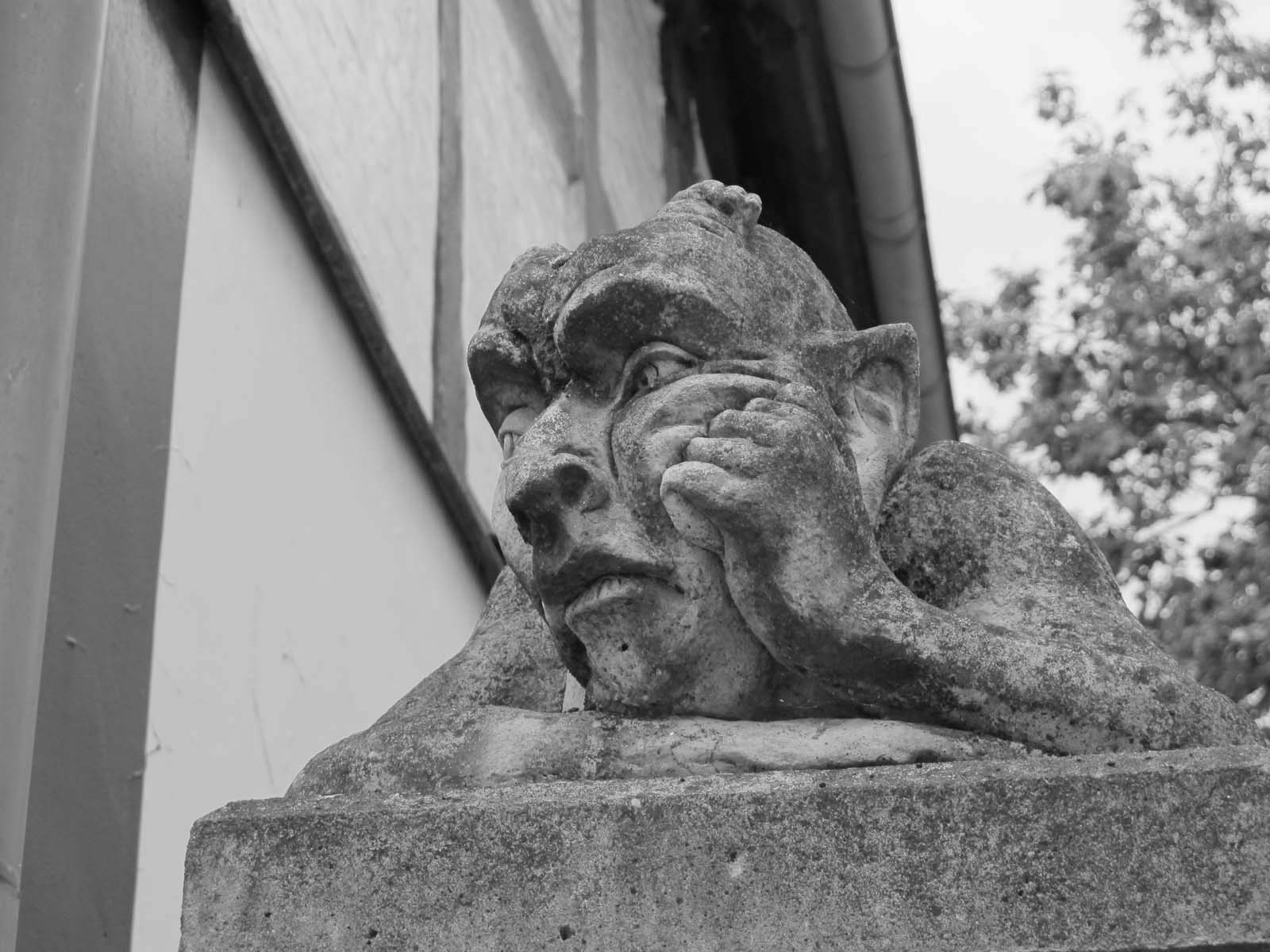
Photographs today of typical rural sights in Germany, from Lower Saxony, Saxony Anhalt, Schleswig Holstein and Hesse, with crumbling half-timbered houses offering refuge to all kinds of specters, ghosts and Poltergeists.
October 21st was Ursula Le Guin’s birthday. I was reminded of that by, of all people, my beloved, who is not exactly into literature and/or poetry, but knows how much it – and her authorship – matters to me. Oblivious to that date, I had actually been thinking about her a few days earlier, while hiking Altadena’s Eaton Canyon, completely transformed from how I had experienced it the first time last April.
Verdant then, with roaring water, now dry, with but a trickle. Full of bloom then, color and the songs of birds, now reduced to pattern, lounging frogs and lizards. Still heartrending beautiful.
I was thinking of the many poems I had read where Le Guin describes the very essence of landscapes, desert as well as coast or woods, and how I could not remember a single one in its accurate wording.
That stood in contrast to one about war, that for obvious reasons now rose to the fore:
The Next War
It will take place, it will take time, it will take life, and waste them.
I don’t know about you, but even when I try, when I immerse myself in beauty combined with physical exertion – something even a few miles will do these days – I cannot distract myself away from the sorrow of the extant and future loss of life in the Middle East. When I read about proposed solutions to the conflict, it seems to me that people are just throwing out words, hopes, and closer inspection reveals that no one really has a clue as to how to bring about realistic change, on ALL sides. (Ukraine, by the way, not forgotten by me, either.) Here is an essay worthwhile contemplating that tries to make a distinction between legality and morality of retaliatory actions, and here is one that talks about the difficulty of speaking to the issues without being labeled anti-semitic or islamo-phobic, rendered to silence when we need to speak up.
When I came home from the hike I tried to find a desert poem to post, but chanced on the one below, from her ultimate collection of poems, So Far So Good, finished 2 weeks before her death in 2018.
The volume offers meditations on nature, the recurring topic of so much of her work, but also on aging and the relationship between body and soul. Meditations that are moving, wise, courageous – and also seem an incredible luxury provided by peace time, not available to those tortured, killed and abducted, starved or rained on by bombs. As a committed pacifist, she would have likely agreed.
History connects the dots of our identity, and our identity was all but obliterated. Our land was taken, our language was forbidden. Our stories, our history, were almost forgotten. What land, language, and identity remains is derived from our cultural and historic sites . . . . Sites of cultural and historic significance are important to us because they are a spiritual connection to our ancestors. Even if we do not have access to all such sites, their existence perpetuates the connection. When such a site is destroyed, the connection is lost.
-Chairman Dave Archambault, II, Standing Rock Sioux Tribe
***
The minute when temperatures dropped last week I went for a bit of gallery hopping, early enough in the day that they were all empty. Nothing much to report until I entered Russo Lee Gallery, drawn by Ghosts in the Machine, an exhibition title that spiked my interest. I associate that phrase with British philosopher Gilbert Ryle who coined it to describe the mind/body dualism of Descartes and subsequent philosophers. Ryle picked apart the notion, held since Descartes’ time, that the mind is separable from the body (the ghost and the machine, respectively.) Why would an artist be interested in tackling a controversy that has been long since settled in psychological science? Maybe an allusion to the connection between materials used and concepts expressed?
I was way off – what else is new. The show’s title refers to a recruiting video from the U.S. military to attract attention to its psychological operations division. Watch it here, the selling of psychological warfare is perturbing, to say the least. Creepy, more likely.
According to native-American artist Ka’ila Farrell-Smith (Klamath/Modoc), the art work on view is conceptually linked to he surveillance state, one that uses all kinds of control mechanisms to pursue its goals, including squashing resistance to the extraction and transportation of fossil fuels and other minerals desired by industry. A deeper window into her reasoning can be found on her website in a letter to Sen. Jeff Merkley that outlines her stand as an activist as well as an artist.
Ka’ila Farrell-Smith Ghosts in the Machine at Russo Lee Gallery
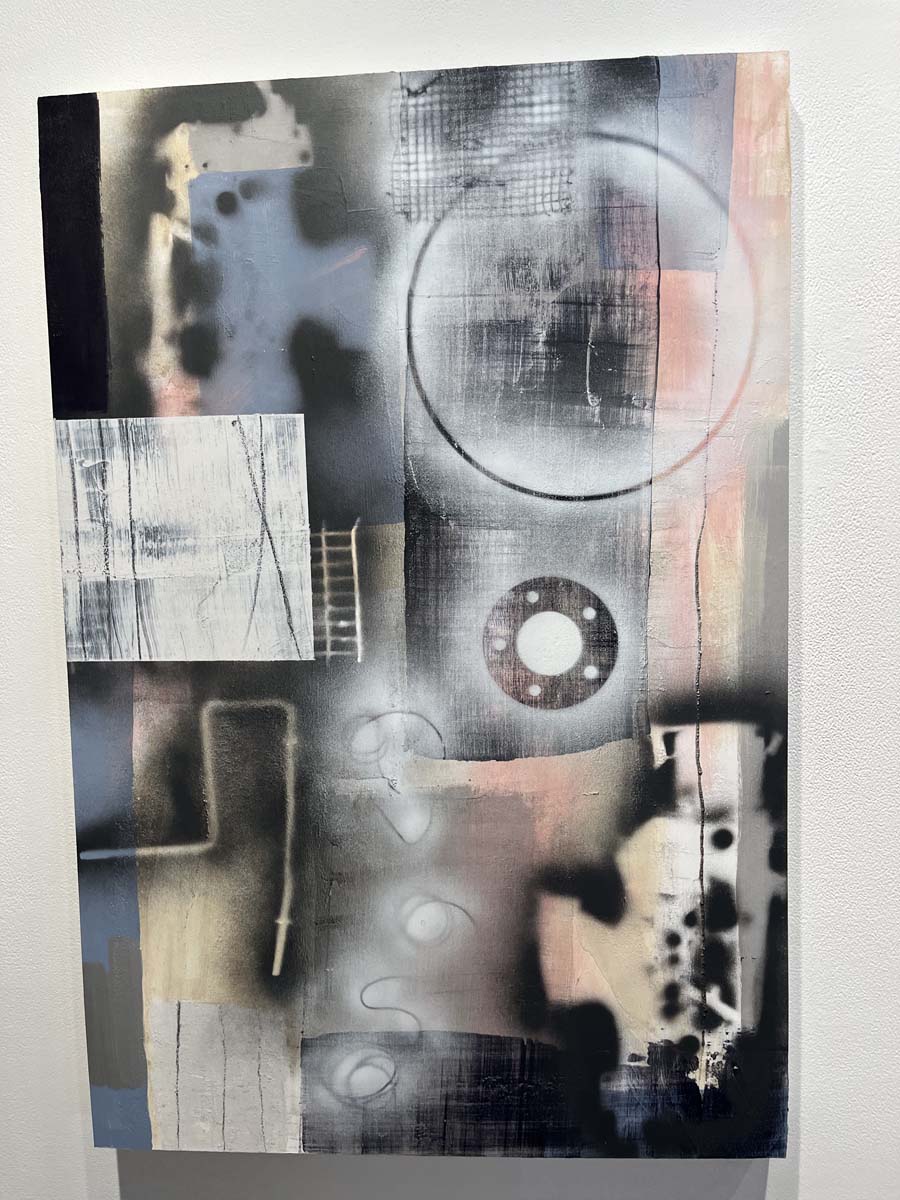
Looking at her work at Russo Lee Gallery, I was taken by multiple aspects of the gray scale paintings. Some interesting visuals, some probing conceptual issues, and some imporrtant questions raised by her exposition. Visuals first: the 21 or so paintings of this body of work use repeat patterns, created by a constrained range of colors and found objects used as stencils that anchor the gaze. They have sharply defined contours and a lot of contrast that the eye is drawn to, in juxtaposition to the hazy, floating color fields that are sprayed and enhance a sense of depth, with occasional hand-drawn patterns alleviating the impact of rigid man-made machinery. They all superficially resemble each other and it takes a while for the variability underneath to emerge – I’ll get back to why that might matter in just a bit.
They also exhibit hints of pink here and there, flags of resilience in a black and white world, beautifully arranged. One of the stencils is amorphous enough that it could be a more biological form, rather than the strict geometry of circles and grids, alluding to the ghost perhaps, and assigned a central role in the smaller paintings.
Ka’ila Farrell-Smith Ghosts in the Machine 006 (2022-2023) Northern Paiute lithium topsoil, acrylics, aerosols, and graphite on panel.
Before you learn even more, these paintings do capture a sense of unease, increased by the disorientation introduced by the many overlapping layers, creating fragmented space. This apprehension is growing when you realize that the pigments are augmented by lithium-infused earth that the artist collected in her travels along the Oregon border and Nevada, site of the struggle over one of the largest lithium mines in this country.
Under the Trump administration, the U.S. Bureau of Land Management fast-tracked and approved Lithium Nevada Corp.’s new mine at Thacker Pass (Peehee Mu’Huh) near the Oregon border, 200 miles northeast of Reno, NV, and close to the Fort McDermitt Paiute-Shoshone Indian Reservation. The Biden Administration has given its support for the extraction project, a cornerstone of its clean energy plans to combat climate change. Mining at Thacker Pass would provide lithium for more than 1.5 million electric vehicles per year for 40 years, claims the company.
Conservationists and adjacent tribal nations have gone to court against the project, on grounds of destroyed habitat for imperiled sage grouse, pronghorn antelope and other species in violation of environmental laws and fearing catastrophic groundwater pollution. In addition, the mine will destroy lands sacred to tribal members, site of a massacre in 1865 that killed many of their ancestors. A month ago, on July 17, 2023, the 9th U.S. Circuit Court of Appeals gave the final green light for Lithium Nevada Corp. to go forward with construction, ignoring the claims and concerns of the people most affected by the rupture in the land, ruling against their interests.
Ka’ila Farrell-Smith Ghosts in the Machine 004/019 (2022-2023) Northern Paiute lithium topsoil, acrylics, aerosols, and graphite on panel. Detail on Left.
Ka’ila Farrell-Smith Ghosts in the Machine 003 (2022-2023) Northern Paiute lithium topsoil, acrylics, aerosols, and graphite on panel.
Some of Farrell-Smith’s paintings allude to this concrete situation, with the chemical notation for lithium – LI – in some of them, or the native-American name for Thacker Pass found in others (Peehee Mu’Huh). But the work, for me, poses a larger question, or actually two of them. For one, why has the U.S. not adjusted its mining law from 1872, a law that precluded options for environmental protection needs or negotiating Indian interests. Secondly, and difficult to answer, what do you do if the overall imperative for societies to combat the effects of the climate crisis conflicts with the needs and demands of some of its constituent groups, continuing a historic pattern of violating their rights?
Here are some facts of the legal history (I am summarizing what I learned here.) Mineral exploration on public lands is governed by the General Mining Law of 1872, which makes “all valuable mineral deposits” in public lands “free and open to exploration.” It used to be gold and silver mining that polluted water and destroyed the land. Now companies are after the so-called “green” metals, lithium, cobalt, copper and rare earth elements used in electric vehicles and other clean energy applications. And of course the return to visions of nuclear power has uranium miners surface again.
Ka’ila Farrell-Smith Ghosts in the Machine 020 (2022-2023) Northern Paiute lithium topsoil, acrylics, aerosols, and graphite on panel.
The law still allows claimants to pay an annual maintenance fee of $165 per claim in order to keep it active. Claimants – mostly multination corporation – can pull unlimited quantities of minerals from their claims without paying a cent of royalties to the minerals’ actual owner, the American public. The law contains no environmental provisions and no reclamation requirements, so corporations can simply walk away from their mines once they’re no longer profitable, leaving the rest of us to pay for Superfund clean-ups. Here are the numbers:
11.36 million Acres of public land staked with active mining claims at the end of the 2022 fiscal year. This is a 932,000-acre increase from the previous year.
228,696 Number of active mining claims covering nearly 6 million acres of federal land in Nevada at the end of FY 2021.
267,535 Number of active mining claims on federal land in Nevada as of June 12, 2023, an increase of nearly 40,000 in just 18 months.
13 Minimum number of active mining claims staked within Bears Ears National Monument since 2016. These claims were located either in the months just before the national monument was established, or after it had been shrunk by then-President Donald Trump but before President Joe Biden restored the boundaries. National monument status bars new mining claims, but does not affect existing ones like these.
$34.4 billion Value of non-fuel mineral production in 2019 on all lands in 12 Western states.
Unknown Amount of that mineral production extracted from federal lands. The number is unknown because federal agencies do not track production. Earthworks, a mining watchdog group, has estimated that $2 billion to $3 billion worth of minerals is extracted from public lands annually.
12.5% to 18.75% Royalty rate on oil, natural gas and coal extracted from public lands.
$14.8 billion Royalties paid on oil and gas production from federal lands in 2022.
$0 Royalties paid on hardrock minerals extracted from mining claims on public land, including copper, gold, silver, lithium, uranium and various “green metals,” between 1872 and 2023.
SOURCES: Bureau of Land Management, Government Accountability Office, Congressional Research Service, Earthworks, Center for American Progress
Note that about 75% of all lithium deposits are on or near tribal land. The conundrum is, of course, that not only the financial goals of the mining operations once again subjugates native-American interests. For me the bigger question is how do you weigh a planet’s need to get away from fossil fuel consumption against the clear damages done to tribal rights? Particularly when it is not even clear how much electric cars are really a net improvement for the environment, given the issues of water consumption during battery production and the lack of safe disposal strategies. Or how much the concept of “let’s build electric cars” distracts from the needs to fundamentally curb driving and flying and transporting goods long distance or stop producing unnecessary consumer goods en masse?
Ka’ila Farrell-Smith Ghosts in the Machine Details from various exhibits (2022-2023) Northern Paiute lithium topsoil, acrylics, aerosols, and graphite on panel.
The International Institute for Sustainable Development stated last year: “Lands inhabited by Indigenous Peoples contain 80% of the world’s remaining biodiversity… Many Indigenous Peoples are at the frontlines of resisting the drivers of the global environmental crisis. Yet, international and national policies and laws do not recognize and support their collective rights.”
In our own country, those laws hark back to the Supreme Court’s adoption of the Doctrine of Discovery in 1873, in a case, Johnson v. M’Intosh, where it was decided that Tribal Nations could no longer claim legal title to their own lands as their “rights to complete sovereignty, as independent nations, [were] necessarily diminished.” Natives could not be left “in possession of their country” because they were “fierce savages whose occupation was war, and whose subsistence was drawn chiefly from the forest.” As a result, “[t]o leave them in possession of their country, was to leave the country a wilderness”—that is, land that is not commercially exploited or colonially conquered in the name of what was then viewed to be American progress.(Ref.) This is still standing law. Some environmental laws started to emerge in the 1970s and have managed to improve the protection of endangered species, with endangerment or extinction measurable consequences of mining. These laws, however, have not managed to include into their canon the inherent sovereign right of Tribal Nations to protect the lands that contain their sacred sites and the remains of the relatives. These are intangible, cultural values that were simply not taken seriously enough to be fought for by non-tribal movements.
Ka’ila Farrell-Smith Ghosts in the Machine Left to Right 009/010/017 (2022-2023) Northern Paiute lithium topsoil, acrylics, aerosols, and graphite on panel.
How, then, is the disturbance of sacred ancestral land and defiance of cultural and religious traditions, all in the name of resource extraction to further a “green” agenda (and the profits from it,) in any way different from traditional colonial exploits? I had mentioned at the beginning that Farrell-Smiths paintings superficially resemble each other quite a bit given the constrained set of colors and stencils. I feel that that in itself is a perfect metaphor for what has been done to indigenous interests: over and over and over again we see the same pattern of usurping land and harming cultural or historic sites, with slightly shifting justifications for the destruction of tribal sovereignty. Then it was the Doctrine of Discovery aimed to ban “savages” and “heathens” from standing in the way of “progress,” now it is the dire need for combating climate catastrophe on the backs of those who were perennial stewards of the land to begin with. What gives?
The work is up until the beginning of September – check it out!
We are 5,000, here in this little corner of the city. How many are we in all the cities of the world? All of us, our eyes fixed on death. How terrifying is the face of Fascism For them, blood is a medal, carnage is a heroic gesture.
Song, I cannot sing you well When I must sing out of fear. When I am dying of fright. When I find myself in these endless moments. Where silence and cries are the echoes of my song.
Lines written by Chilean artist and political activist Victor Jara before being tortured, his hands chopped with an axe, and murdered by Pinochet’s military henchmen in September 1973 at a stadium holding thousands of people rounded up by the Junta, his body thrown out into the streets of Santiago.
***
I spent several weeks in Chile some 18 months after that fateful date, traveling from Bolivia through the breathtaking, stark beauty of the Atacama desert of the North with its abandoned nitrate – and open-pit copper mines monopolized by British and later American capital. I stayed in Santiago for a while, where bullet holes remained in plain, demonstrative view, riddling the presidential palace, La Moneda, where the democratically elected, socialist President Salvador Allende had been killed during Pinochet’s Coup d’Etat. I knew of the violence of the new regime, fully supported by American industrial giant I.T.T. and the CIA (U.S. banks also extended more than $150‐million in short‐term credits to Chile and the Pentagon sold it 52 jet fighter and combat support planes in those 18 months,) but had no clue to its extent. Today’s officially recognized number of victims of the Junta, people killed, tortured or imprisoned for political reasons, is 40,018. That might not even account for the many “disappeared,” thrown out of helicopters into the sea. Military officers responsible for Jara’s murder were finally sentenced to 15 years in prison, in 2018, almost half a century later. Slow moving wheels of justice and all that. Barely anyone talked to me in 1975, much less about politics, the country seemed frozen in shock or fear and a nightly curfew was still in place.
Jorge Tacla Injury Report/ Informe de lesions, HD film 4:25 (2016 – 2023) Courtesy of Cristin Tierney Gallery
Although the days of the Junta are over, Chile is currently under duress in other ways, equally threatening to its population, particular the working class and the indigenous folks exposed to the consequences of mining. A United Nations report from two months ago states that Chile faces a daunting series of inter-connected environmental crises that violate human rights, including the fundamental right to live in a clean, healthy and sustainable environment. The country is particularly exposed to the effects of the climate crisis, among the 20 nations with the highest level of water stress in the world. Droughts and water pollution around lithium mining are intense, the latter a major export and subject to fierce struggles over ownership, bringing an unprecedented 1.5 million people out into the streets to protest for environmental justice 4 years ago.
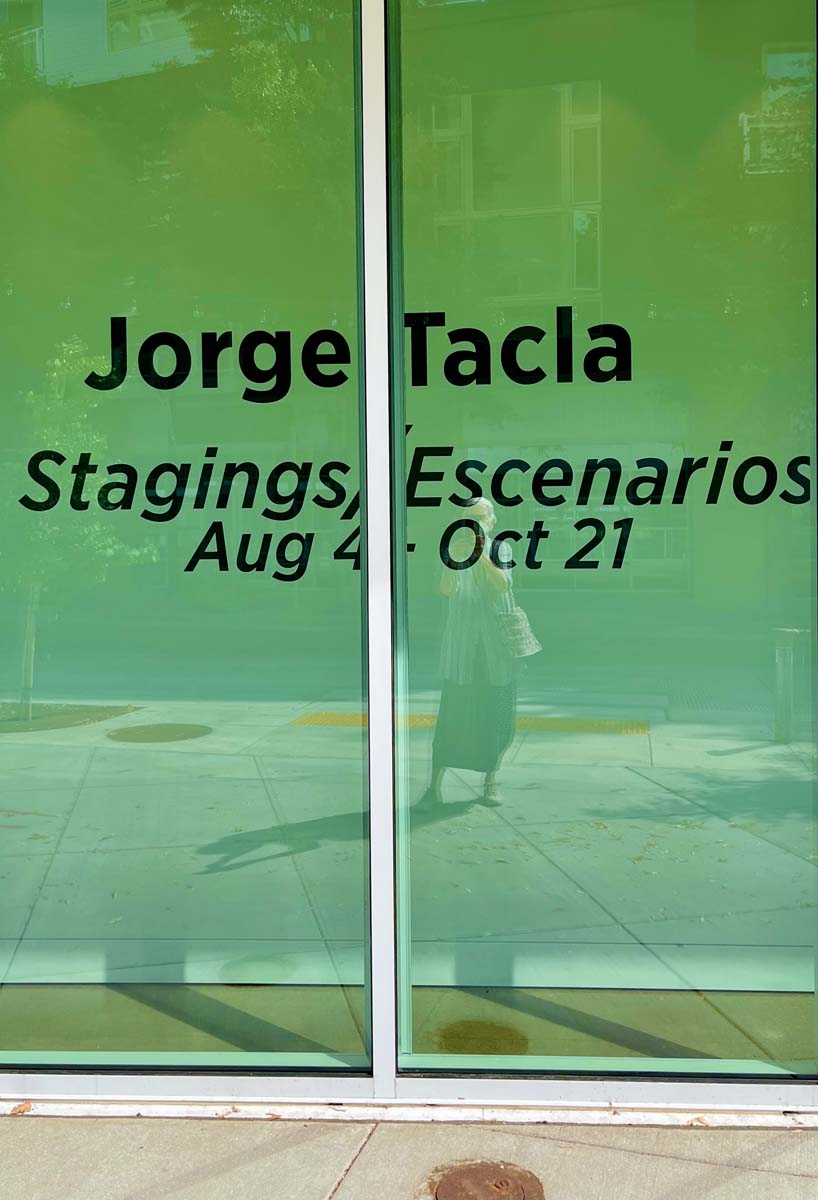
All this as an introduction to Chilean artist Jorge Tacla and his work (his list of many achievements found in the link), currently presented at the Patricia Reser Center for the Arts, in partnership with Converge 45. The local arts organization, comprised of art professionals and business leaders, starts its Biennial officially on August 24, 2023. Planned are 15 exhibitions by international and American artists across multiple venues, tackling, as the organizers put it, “how art interacts with global power shifts in contemporary society, including how art is at the vanguard of societal redefinition and shifts towards more participatory culture.” (Watch for more reviews by various writers on ArtsWatch in weeks to come, covering the full spectrum of the shows.) The list of artist names – I have obviously not yet seen much of the work itself for the upcoming Biennial – suggests a surprising and challenging curation by art critic and author Christian Viveros-Fauné.
I. Jorge Tacla: Stagings/Escenarios.
At a time when the wagons are circled, and exclusionary nationalism (and worse ideological forces) once again raise their ugly head in so many of the countries we thought were steadfast democracies, a transnational approach to art is certainly important. Knowledge of an artist’s background, temporally, geographically and culturally, might help us to gain a greater understanding if not appreciation of his work, surely affected by specific experiential pressures. Tacla came of age in Chile during the time of the military coup and left the country for the United States in 1981, these days sharing his time between New York City and Santiago, Chile. Add to that Syrian and Palestinian ancestry, peoples exposed to inordinate amounts of suffering and oppression across their histories, a heightened sensibility for abuses of power and the consequences of displacement are to be expected. That sensibility indeed influenced the contents of his work that I encountered at The Reser, an exhibition titled Stagings/Escenarios.
There are three exhibits on view, a video, Injury Report/ Informe de lesions, that relates to the book burnings by the Chilean Junta, a timely reminder for us in our own country that the step from banning to burning is but a short one, once autocratic power is fully unleashed, and two paintings. One is extraordinary large, displayed on wooden structures that makes it look like a billboard, the other is traditionally hung. Staging, rather than scenarios, feels like an aptly chosen title for the show, given the way the paintings dramatize catastrophe.
Jorge Tacla Sign of Abandonment/Señal de abandono 60, (Detail) (20121) Oil and cold wax on canvas. Courtesy of Cristin Tierney Gallery
Sign of Abandonment/Señal de abandono 60 (offered with an instruction: interpretation left to the viewer) depicts an interior view of a room that could be a tiled kitchen transformed into a provisional field hospital, or a torture chamber, constructed with hastily thrown together cinderblocks. Central is a kind of operating table, with a side shelf of medical-looking instruments and tinctures, surrounded by amorphous forms that could be shackles or handcuffs, under a hovering cloud of markings that resemble musical notes, the echoes of resounding screams, or, alternatively, buzzing insects attracted by the remnants of bodily fluids. The one unambiguous representation in this monochromatic web of hints and suggestions is the visual anchor of a patch of blood, with a few tiny splashes detectable here or there. It steers our attention to the subjective suffering of a human being, whether harmed in situ or patched back together on a make-shift bed, creating empathy, but also narrowing our focus to victimhood. It forces a gruesome vision of physical harm, drawing us into the literal as well as metaphorical darkness of that chamber. Not much room for interpretation, frankly, if a puddle of blood gets visual place of honor.
Jorge Tacla Sign of Abandonment/Señal de abandono 60, (Details) (20121) Oil and cold wax on canvas. Courtesy of Cristin Tierney Gallery
The larger painting, Sign of Abandonment/Señal de abandono 34, displays a panoramic view of collective suffering, rather than honing in on a singular imagined body under duress. A frontal view of city blocks bombed to shreds evokes the real-life catastrophe of the siege of the Syrian city of Homs, where a three-year-long battle between the military and oppositional forces a decade ago led to indescribable acts of barbarism by Assad’s henchmen, until the rebels withdrew, and the government took hold.
Jorge Tacla Sign of Abandonment/Señal de abandono 34, (2018) Oil and cold wax on canvas Courtesy of Cristin Tierney Gallery
It is a truly interesting painting, despite flirting, at times, with clichéd ambiguity: are the pinks and coral hints at the horizon a hopeful sign of dawn, or are they the glow of still smoldering fires? Are the wispy clouds testimony to an indifferent nature, or plumes of smoke?
Jorge Tacla Sign of Abandonment/Señal de abandono 34, (2018) (Detail) Oil and cold wax on canvas Courtesy of Cristin Tierney Gallery
What made it fascinating to me is the subversive use of columnar arrangements, spatial divisions by means of subtle changes in coloration, vertical lines and actual, distinct columns that overlap on some of the four panels that comprise the entirety of the painting, The columns are enclosed in an unending repetition of violently destroyed human habitat. Columns and repetition were a device of what art historian Meyer Schapiro called “despotic art,” or arts of power, starting with baroque displays of endless columns in churches and cloisters, or colonial architecture in Egypt and India, government buildings with porticos, down to the mass media presentation of his time, then the 1930s, in the new medium of photography capturing hangars filled with rows of airplanes, or military divisions marching en bloc.
Tacla is turning the table, using those elements from the perspective of the displaced, rather than that of the abusive forces, the repetition of block after block of unmitigated destruction inducing horror, rather than awe. In its cityscape expansiveness it called to mind a 19th century painting of another hell, by John Martin – note the columnar repetition of the government buildings or an imaginary reconstruction of cities of antiquity.
Jorge Tacla Sign of Abandonment/Señal de abandono 34, (2018) (Detail) Oil and cold wax on canvas Courtesy of Cristin Tierney Gallery
John Martin Pandemonium (1841), Oil on canvas, 123 x 185 cm. Louvre, Paris. Based on John Milton’s “Paradise Lost”, where Pandemonium is the capital of Hell.
The billboard-like staging reminded me of the billboards seen on many commuter roads, displaying advertisement for (sub)urban neighborhoods: You’d be home now, if you lived here! Well, you’d be dead now, if you lived here, in Homs.
The association includes something of a dialectic, of course. Being reminded of the price of violent political conflict might make you aware of the gathering darkness around us or create empathy for refugees facing a watery Mediterranean grave during their flight. But the reassurance of not living “there” after all, allows us a distancing from those far-away places where genocide happens, enacted by “foreign barbarians,” promoting a false sense of security on our own shores.
The use of cold wax mixed with the oil paints adds to the unnerving feeling caused by the staging. It allows a manipulation of transparency, and so some of what I saw resembled the haze when you look through tears, if not through the dust that gets whipped up when buildings crumble. It also adds body and allows layering; on close inspection, the painting shows scars or buckled skin, as if skin is ripped off or has burnt to the point of melting. The association to skin really was the only direct – and shattering – link to the representation of human beings, rather than architectural ruins.
Jorge Tacla Sign of Abandonment/Señal de abandono 34, (2018) (Details) Oil and cold wax on canvas Courtesy of Cristin Tierney Gallery
I cannot help but wonder how thick-skinned the artist himself must be to make it as a wanderer between worlds, like any displaced person never quite belonging to either the old or the new. Early NYT review doubted his ability to reach high ground as a painter. That didn’t age well. Psychoanalytically absorbed reviewers attest him a profound death anxiety – I guess I’m with Maslow here, “when the only tool you have is a hammer, everything looks like a nail,” including the aesthetics of destruction as a symbol for one’s psyche to acolytes of psychoanalysis. Critics attacked his monumental work at the Museum of Memory and Human Rights in Santiago, a series of plates that memorialized the place of Jara’s murder and is inscribed with his name – Al mismo tiempo, en el mismo lugar (At The Same Time, in The Same Place), 2010, – as too focused on the individual, particularly when the individual in question devoted his life to collective power.
The paintings on view at The Reser suggested to me something quite different, independent of my admiration of the technical prowess to create these monumental constructions and the artist’s resilience when reenacting suffering in the process of painting. In some ways they bear witness, questioning the relationship between the aesthetic and the social, particularly the violence so ubiquitous in our world. They want us to consider, like all good political art, how we bear or enable or resist social imperatives that are associated with power and its requisite tools.
Does art manage to shape our historical thinking, and does its form help us reconfigure our assumptions about the present? Can works of political art ultimately achieve change of a kind, beyond providing a contemporary label that soothes buyers’ conscience by making them feel “progressive”, sort of an art-washing for the soul of the (neo)liberal collector? I will turn to that question in a bit. Before we get there, let me introduce the other two artists on display at The Reser.
***
“A successful work of art is not one which resolves objective contradictions in a spurious harmony, but one which expresses the idea of harmony negatively by embodying the contradictions, pure and un-compromised, in its innermost structure.” ― Theodor W. Adorno, Essays on Music
The quote by Adorno, though focussed on modern music, could equally well be applied to curation. Curation is hard and often does not get the attention and appreciation it deserves, particularly when un-compromising. If you are a renowned curator charged with constructing large assemblies of artists, you have to balance your ideas and concepts with the interests of the organizing institutions, who have partially mercantilistic aspirations. Biennials, art fairs and the like do infuse a place with economic activity, after all. You might also face an embarrassment of riches – die Qual der Wahl is the German phrase, the torture of choice – with regard to the number of artists at your disposal, amongst whom you have to pick and choose, avoiding the dreaded commodification, pushing an important concept and protecting the state of your reputation simultaneously.
If you are a local curator, no matter how talented, your choices, on the other hand, are often somewhat restricted. If you have to combine the available work with that of heavy hitters (and I consider Tacla in that category) how do you protect the other artists from being overshadowed (no matter how good they might be, they are still less known), unless you believe in clichés like “A rising tide lifts all ships?” I don’t know the answer, but there are two comforting thoughts: for one, these lesser known artists will get exposure, that potentially opens up a larger circle of viewers eventually, if the quality of the art holds its own. More importantly, in my view, is the fact that a public confronted with art that is not yet labeled as awe-inspiring or famous, will find it much more approachable, opening interest in art in general. It might be an inspiration to listen to one’s own creative impulses, or an encouragement that early or mid-career work deserves representation. That said, the work of both artists that Karen de Benedetti picked, again showing her sensitivity for pairings as in previous shows that I reviewed, will reward viewers’ scrutiny. (Malia Jensen‘s sculpture was not yet present when I visited.)
II. Karl LeClair Perceptive Omissions // Miroslav Lovric Subconscious Conversations
What unites the work on display by two very different artist, Karl LeClair and Miroslav Lovric, is how it’s grounded in personal memory. For LeClair, intensely attuned to natural environments, drawing is a way to process the changes brought about by frequent relocations, from the East Coast to Idaho and now to the Pacific Northwest. His mixed media, printmaking techniques include intaglio, relief, and monotype (all of which were generously explained to me in my ignorance, including the preparation of the various papers, if using color, with background washes of layers of thinned acrylic, like watercolor).
Perceptive Omissions is presented almost like an installation, allowing direct, unmitigated access to the paper, reinforcing a tactile quality of the prints, the geometric rigidity softened by the occasional colorwash.
Karl LeClair Perceptive Omissions (2023) All works numbered, not labeled.
His drawings and monoprints capture the shifting characteristics of various geographical environments with a surprising tenderness. I sensed a cautious approach to new objects of his affections, trying to learn about a place, as well as a a hint of nostalgia about what had to be left behind.
The pairing of representational scenes and geometric drawings somehow reminded me of Western Esotericism, like the medieval engravings of Paul Yvan. Not sure why I picked up a hint of mysticism, but there you have it. Interpretation left to the viewer…
***
Lovric’s work, Subconscious Conversations, was the most accessible to me, growing up in post-war Europe surrounded by prints of Klee, Kandinsky, Matisse, Calder or Joan Miró. The latter’s simple shapes, strong lines and colors came to mind when I looked at the present paintings and their faint surrealist connotations. Lovric, a refugee from Bosnia, another country with a recent bloody history and unresolved political conflict, works through his displacement with remembering that seems at times indistinguishable from longing. I get it. The acknowledgement that you will never be able to recover what is gone for good, once you have made a life in a different country, does not preclude a yearning for that you left behind, even if it no longer exists.
Miroslav Lovric Soul Catcher #2 (Woman) (2011) Mixed Media on Paper
He stated somewhere that his work is about hope and resilience, and I can certainly pick up a desire for optimism in the saturated, bright colors on display. It will speak to viewers, since we can all use a dose of positivity, even if woes are not grounded in political strife or experiences similar to those of the artists.
From left to right: Miroslav Lovric Autumn Tree (2020) Oil on Canvas; Red Nest (2020) Mixed Media on Paper; Questioning Bird (2015) Mixed Media on Paper.
Miroslav Lovric Garden (2021) Mixed Media on Paper
Yet I thought the strongest of the images on display was one that captured the immediacy of contemporary (pandemic) isolation, not related to the past at all. The monochromatic construction attends to traditional elements of windows and chairs, and adds a body, albeit to my eyes one that’s missing head and heart. There is corporality to the legs, but in the absence of social embrace, of human interaction, the core of a person vanishes. Or is not clearly delineated enough to be easily detected. Tell me about it.
What does it mean to consider “art as global citizenship,” part of the Biennial’s title? Certainly not to have rights, or the corresponding obligations, as expressed in Arendt’s view of what it meant to be a citizen, during an era with many people deprived of any rights as refugees from fascistic regimes. I come back to her, for one, because I’m fussy about terms: citizenship is connected to people, not “art,” with a defined set of political criteria, and secondly, because Arendt’s philosophy is increasingly relevant today in the face of immigration politics, soon to be intensified by climate refugees. Well worth re-reading.
More likely, the intended meaning of “art as global citizenship” runs along the lines of what Hans-Ulrich Obrist, the renowned Swiss curator, uttered here (or everywhere, he utters a lot):
“Art can widen horizons, dissolve borders, is obliged to bring people, ideas, concepts together. A successful piece of art has the power to change expectations and perspectives….(art) is asked to facilitate supranational dialogue.” (My translation.)
Siegfried Kracauer’s phrase from his Weimar Essays, “They were everywhere, and belonged nowhere,” a referral to the masses as a cultural phenomenon during the1920s, could, in my opinion, also be applied to these ubiquitous tropes we hear today when discussing art. One of them, “Entgrenzung,” the act of removing borders and promoting class permeability and global interconnectedness, is among the most frequently used. Can art transcend borders and change perspectives? How would we empirically assess the actual impact of political art, and has anyone done so, beyond simply qualitative reporting that people are moved, or claim to have gained new insights, or flocked to see a particular work of art?
Art as Social Practice: Tania Bruguera and her art movement ‘Arte Útil’ engages in long-term, participatory projects that include a community center, political party for immigrants, and an institution working towards civic literacy and policy change in Cuba.
We have long held that political art, through forms of social commentary, can raise awareness and inspire dialogue. Art, we believe, can provide representation for those who otherwise remain invisible or marginalized, helping to de-stigmatize on occasion. Art can be a form of memorialization of significant events, either transmitting knowledge about them to present generations who are exposed to selective versions of history guarded by those in power, or future generations who can stitch together a picture of past times and events. (I have written about the politics of memory recently here and here.)
Art as instigator: William Blake was one of the first political artists trying to dissolve borders – in this case the church- imposed rigid division between good and evil.
Certainly an early socialist perspective on art suggested artists should serve society by assuming an ethical stance to reveal the workings of ideology by describing the truth. Do we have evidence that it works? Do people still think about new perspectives an hour after they left the museum? How do we find out if people who report being moved or challenged by a piece of art translate that into behavioral changes, voting patterns, a measurable decrease in racist, xenophobic or misogynistic attitudes or some such? If there are data, enlighten me! Me, the social scientist wants to know. Me, the art lover couldn’t care less. (I am excluding visual propaganda here, which has been empirically shown to manipulate people’s values successfully. It differs from single pieces of art by the frequency with which it showers the viewer, being mass produced and co-temporally broadcast across media.)
Art as memorialization: depicting historic events as they unfolded..
Micha Ulman Empty Library (1995) (My photographs)
This is another piece of art to commemorate book burnings, in this case in Germany during the prelude to the Holocaust. The monument at Berlin’s Bebelplatz is an underground library with enough room to fit 20 000 books, totally empty. Unobtrusive, easily missed, it consists of a 5 by 5 by 5 underground space that can be viewed through a glass cover – theoretically. The weather and temperature differential often fogs the glass over, so you only get a glimpse, a vanishing view, just like memory of the era that is slowly disappeared or disappearing.
Maybe the question for evidence of effectiveness is the wrong question. Maybe we should forget about the claimed or actual function of political art, when it is so obvious that artists across history could not help but serve as mirrors for the political and/or philosophical environments and conflicts of their day. Maybe artists are driven to description in face of the uncertainty of their existence within a political system, and really good art goes beyond that by pinpointing what the political functions are of the structures and events their describe: the function of violence, for example, during an authoritarian period, or the function of propaganda to prepare for catastrophe, or the function of assigning value to keep traditional hierarchies intact. It is about expression of the artist’s views on the injustices of the world, or their delineation of possible utopias, not their intended impact on public opinion or belief systems. They have a particular talent or even genius for describing the world as they see it, contemplating possibilities as they weigh them. Whether we, the viewers, actually pick up on that or transform it into action would not affect their production, even if it is desirable that we would.
Max Ernst Europa nach dem Regen (1933) (Europe after the Rain)
Art as premonition: depicted is a post-apocalyptic, new world order with Europe and Asia melting together.
Then again, maybe we can use the fact that art has threatened existing power structures to the point where it was forbidden, persecuted, criminalized or otherwise impeded, as indirect evidence of its effectiveness. The Kampfbund für deutsche Kultur (KfDK, or Fighting League for German Culture), for example, was founded in 1929 by Alfred Rosenberg, with the aim of promoting “German culture” while fighting the cultural threat of liberalism, leading to prohibition of “non-Aryan,” degenerate or progressive political art and the persecution of many artists. Similarly draconian measures can be seen in contemporary Russia or Iran.
Art as warning: Bauhaus artist Mariann Brandt weary of renewed militarization. “They are marching again.”
Art as activism: Photomontage by Hannah Höch Mutter, (1930) shown in the 1931 Berlin exhibition, Women in Distress, which she organized to fight for decriminalization of abortion; the show opened by Käthe Kollwitz.
One thing is empirically established: in times of social rupture, structural change of political systems and power struggles, societies become quite flooded with the depiction of catastrophes. If you look at the Weimar Republic, for example, there was a preoccupation with the visualization and dissection of catastrophes that seemingly emerged from the atrocities experienced during World War I, but seamlessly prepared, in insidious ways, the public for the horrors of its immediate future. The visual politics of people enamored with war and violence as an engine for society, like philosopher Ernst Jünger, filled the zone with imagery that celebrated the moment of danger, the unfolding of catastrophe. The new medium of photography lent itself to such manipulation – its mass distribution was in many cases intended to “produce docile subjects for the dawning spectacle of oppression and war.” (Isabel Gil, The Visuality of Catastrophe in Ernst Jünger’s Der gefährliche Augenblick, KulturPoetik, 2010, Bd. 10,p.87)
The Moment of Danger (Frontal Cover)
Preparing the masses: collective mourning after Lenin’s death, in New York
If we look at the ubiquity of depictions of catastrophes in all their gory details in our own time, with many other parallels to the 1930s looming, one wonders if we are in the process of being desensitized as well. Paintings of destructive consequences of war or torture like Tacla’s might rightfully warn us or make us think about the historical conflicts in parts of the world not our own (though surely underwritten by U.S. hegemonial interests,) or even be premonitions of things to come to our own backyard – I believe his art applies to anyone of those categories. But if they are integrated into a deluge of visual imagery of horror, from art, media and propaganda outlets alike, there might be unintended consequences, including the normalization of catastrophe.
Art as (scientific) witness: Forensic Architecture uses architectural evidence in cases of war crimes or other human rights abuses, often focused on how the narrative justification differs between state and victims. Nominated for the Turner Prize in 2018.
Georg Simmel, another German sociologist and Neo-Kantian philosopher who died in 1918, anticipated something he called the the Tragedy of Culture. He believed that there was a dialectical relationship between “objective culture” – the art out there, or religion, rituals, etc. – and “subjective culture,” our own development as individuals with creative or intellectual abilities. He was convinced that the onslaught of objective cultural products, massive saturation with cultural information, would stunt our psychological growth, with us shutting down in the face of overwhelming stimulation. The idea reverberates with me, and I often find myself in a balancing act when deciding what should be processed and what should be ignored. In the case of the current exhibition at The Reser, I come fully down on the “Give it a shot” side. The work deserves our contemplation.
And here is another Latin American political artist, Facundo Cabral, assassinated some years back, with a song that describes some of the ways of being an artist in the world. “I did not come to explain to the world, I just came to play.”
This appeared in my inbox yesterday, after Netanyahu and his brethren had pushed through legislation that a majority of Israeli citizens opposes. Unless you live under a rock, you will have heard in the news or read in our own major newspapers about the changes that drive Israel in the direction of other small, autocratic countries like Hungary and, increasingly, Poland, and the huge opposition they ignited. I thought I’ll summarize the major points best I can, but with a focus on what it implies for women, Jewish, Arab and Palestinian women alike. (Correspondingly, photographs today are street shots of women across the years.)
I used to be on the Board of the local Chapter of NCJW, the National Council of Jewish Women, before it closed its doors here in Portland, and am still receiving important information from the national group. Much of today’s information was gleaned from there.
The basics: The State of Israel has no formal constitution that anchors a separation of powers, preventing the executive or legislative bodies from accumulating too much say through a structural system of checks and balances. The judicial system, in particular the Supreme Court, served as a check on governmental excesses or violations of human rights instead, particularly those affecting minorities and women. It functioned around a “reasonableness doctrine,” which permitted the court to overturn government decisions that they felt lacked standards of basic fairness and justness, and the rulings did not require unanimity from the full bench.
The reasonableness doctrine, that very tool to curb power grabs by the legislative, has now been scrapped by the coalition of Netanyahu, far-right factions in his government and the ultra-Orthodox. More is in the wings, including the proposal that the court needs full bench agreements, and a new bill that will allow to override court decisions with a simple majority vote of the Knesset (Israel’s legislature). There is also a proposed bill that stipulates pure government control over the appointment of judges, and a proposal that would turn legal advisers who serve government ministries from professional appointees accountable to the attorney general into political appointments controlled by Cabinet ministers. Add to all that the hope of the extremist religious factions to move closer towards a theocracy, where many legal decisions will be in the hands of religious courts.
The specifics:
Last week there was an emergency meeting convened by the Labor Party and others at the Knesset under the title: “Emergency conference on the elimination of the status of women.” Points of discussion were far right proposals to advance the “right” to gender segregation, as well as their bill towards expanding the rabbinic courts’ powers in matters of divorce to include alimony and custody elements, with dire ramifications for the rights of women in divorce proceedings. And, importantly, the extremists’ move to disband the National Authority for the Advancement of the Status of Women, an independent watchdog that preserves and protects women’s rights.
The current situation in Israel is that women’s rights are not adequately protected. Women are not appropriately represented in the senior ranks of government ministries and local authorities (only 14 of the 257 local authorities are headed by women); many women are the victims of various forms of violence (the estimate is that approximately a million women and children in Israel are exposed to domestic violence); women suffer significant wage differentials in the job market; and a large percentage of working women hold low-paying jobs, especially women from groups that are the victim of discrimination, such as the ultra-Orthodox and Arabs.
If the legislative proposals became law, the situation would be far worse.
For one, the composition of any future court would shift even more heavily male and conservative, if the appointing committees would be under the control of the radicalized government. If the courts can no longer effectively provide constitutional reviews of proposed laws, the protection of women and minorities would suffer. The proposed amendment of the anti-discrimination law will harm women. Right now the law says that gender segregation is unlawful discrimination. The ultra-Orthodox would like to reinstate gender segregation in all forms, thus excluding women from public office, the courts, and the like (women are already minimally represented as is.)
Even if the courts could still fulfill their role in protecting against discrimination, the proposed bill that a simple majority of the legislative body could overrule the court, would leave women without ANY recourse.
And women’s rights in rabbinical courts are considered by many to be a travesty. Included in the proposed legislation to expand the power of rabbinical courts in civil matters is the adjudication of child support even without the consent of both parties, contrary to the current situation where if one of the spouses requests transferring the child support case to the family court, they can do so. Women who want a divorce are often forced by these courts to sign all of their rights away to be granted the legal separation. (Ref.)
Women’s advocacy groups like Bonot Alternativa called for a strike last week.
“One in three women experiences ‘get’ (divorce) extortion and are forced to give up their rights to free themselves from marriage. One in every 10 court procedures in the rabbinical court lasts over two years and causes a case in which the woman and hundreds of other women are refused a get each year and join the ranks of the agunot (chained women).”
Here is a link of an interview by Daliah Litwick of three Israeli women involved in the opposition to an expansion towards theocratic rule. It provides a lot of details of what the stakes are.
The options:
Hundred of thousands have marched in Israel in protest across the last months. Many professionals, military personnel included, have threatened strikes or absence from work duties. Eminent politicians across the spectrum, including former and current presidents, have warned against pushing the new legislation through, seeing it as a dangerous undermining of democracy.
There are also people who study resistance, in particular non-violent resistance from a general and a Jewish perspective. Just last week, a conference took place in Israel, organized by Bar Ilan University and the German University of Leipzig. Titled Non-Violent Resistance: Multi-disciplinary perspectives from the past, present and future for today’s democracies, the conference showcased lecturers from diverse fields and backgrounds. They tackled a lot, from the Hebrew Bible as Resistance Literature, to the Strategy and Principles of Non Violent Civil Resistance on a pragmatic level. It was surely no coincidence that the key note, presented by Menachem Mautner, the Danielle Rubinstein Professor of Comparative Civil Law and Jurisprudence at the Tel Aviv University, Faculty of Law, was titled – Jurisprudence for the “Bad Times.” Maybe their insight and knowledge can be applied to a contemporary crisis as Israel experiences it right now.
We will see how much and how long an active opposition to those undermining democracy can endure. Seeing the commitment by such large numbers of Israelis so far is providing some hope.
Here is NCJW’s solidarity statement from yesterday.
Here is a wild collection of variations on a theme – The People United Will Never Be Defeated.
Walk with me. Walk, I said, not run, I can’t keep up.
Running would make me tired, though, helping with sleep. Too many thoughts intruding, among them repeat disbelief when thinking about the filmed German interview of average people in an average small town wishing for the return of the NSDAP (National Sozialistische Deutsche Arbeiter Partei – Hitler’s Party) while planning to vote this weekend for the right wing extremist AfD candidate in local elections. Apparently they are not extreme enough. When confronted with the question” What about the 6 million Jews murdered during the NSDAP’s rule, they shrugged. Literally shrugged. The AfD now shows 20 % in national polls.
Then again, this week saw the extremist group ˆMoms for Liberty” posting a Hitler quote in one of their newsletters. This is the group trying to get their members on every school board in the country, known for harassment campaigns against teachers, educators and parents. The group has backed bills banning transgender women and girls from playing women’s sports, and encouraged book bans. Their annual summit this year will feature multiple 2024 presidential candidates, including Donald Trump, Nikki Haley, Ron DeSantis, Vivek Ramaswamy, and Robert F. Kennedy, Jr.
Also this week we have yesterday’s Supreme Court 6 : 3 decision Jones v. Hendrix, written by Clarence Thomas, that has been called a tragedy, and I cannot detect a smidgen of exaggeration. Basically you no longer have recourse in this country when you were sentenced to prison for a crime that turned out to be no crime, or for a time period that exceeds a legal limit. Habeas Corpus proceedings to correct the errors made by federal courts have been effectively denied by the right wing of the court. Justice Jackson wrote a powerful dissent, worth a read.
Meanwhile in Texas, Governor Abbot made sure that my insomnia continues: signing a new law that deprives outdoor workers of water breaks, undermining any safe guarding of the health of manual laborers. With temperatures up to 122 degrees ( 50 Grad Celsius!) this week, it is no surprise that the first workers are dying from heatstroke.
Death by maritime creatures was also on the table this week: BBC reports that the Russians have doubled their population of dolphins, trained to attack divers and/or spy, at their naval base on the Crimea naval base, that part of Ukraine they annexed illegally in 2014.
A video from 2020 is going viral again: California Kayakers getting swallowed by a humpback whale and then spit out again…. they survived. How is that going to help getting to sleep, when your kids kayak in CA???
In D.C., in the meantime, Indian Prime Minister Narendra Modi is received with all the bells and whistles of a government courting the business opportunities and strategic relationships with the Indian Subcontinent, particularly in view of recent developments involving China. Never mind that Modi has abetted mass murder, is yielding an iron fist against any form of resistance, engages in religious persecution and has forced, bribed or persuaded mass media and social media to prevent access to any information critical of him and his government. Here is a short essay by Arundhati Roy in The Guardian that fills in the facts. I am also re-upping a link to a lecture she gave this March in Sweden on the issue of Freedom of Speech and failing democracy – a masterpiece of political thought.
And talking about democracy, before we all despair, here is some good news: last week the Michigan House and Senate both passed a package of eight election bills implementing large parts of Proposition 2, a constitutional amendment that called for numerous pro-voting changes within the Michigan Constitution. Elections matter!
In times of irritation there is always the cop out of Positive.News, a British news website that tries to make you less upset, I guess. This week I learned that a zero emissions shuttle service debuted at Glastonbury, UK, an AI pollution-preventing ‘crystal ball’ was launched to help alert swimmers in Devon when the water is too dirty, Sea Watch celebrated the return of minke whales and 60 percent of Brits now carry a reusable bottle, compared to just 20 per cent eight years ago, giving plastic bottles a shove. And no, dear British Readers, I am not making fun of this effort. Just documenting how desperately one has to look for something, anything good to counterbalance the upsetting in the world….
I also learned here that “Sleep matters for the grey matter,” with researchers from the UK and Uruguay asserting that daytime napping may help to preserve brain health by slowing the rate at which our brains shrink as we age.
That’s what I’ll do: nap. Thinking of June meadows, counting lazuli buntings and swallows instead of sheep, dolphins, humpback or minke whales.
Sleep WILL arrive. Or a shriveled brain. One or the other.
Having written almost enough to fill a weekly quota on Monday, I figured today I’ll share someone else’s observations – conveniently offered with Legos, so you don’t have to read much more either….
Ethics in Bricks continues to amuse me, or remind me of what is important to pursue or reassures me that there are people out there sharing many of my values. You find it on various social media.
Enjoy!
—
—
—
—
—
And of course here is the one that refers to the most recent tragedy which reveals our values:
Here is the American Wild Ensemble with Shy Bricks by Christopher Stark, a composer new to me. Wort keeping an eye on.