Browsing Category

Psychology

Versions of Ecocide – second try.

Somehow there has been a problem with downloading the content. Hope this one works.

The sociopathic hierarchies our culture has inherited were invented by a people taught that they were separate from, and likely condemned by, the very thing which had created them—and in response to their disenfranchisement they built a ladder, and dominated every rung they perceived as beneath them; because the sense of superiority masked the pain of disconnection. But, like any masked thing, the fact of its existence remains and, whether engaged with or not, pain always finds a way to be expressed. Ecocide, then, is the logical conclusion to this severance—if that which created us will not love us, better to kill it, than feel the pain of its refusal. Ecocide is deicide is suicide. It is our collective response to feeling orphaned, and not knowing how to be with the grief of it. The tragedy, of course—beside the mountains of dead and dying, and the silence where once there was birdsong—is that it was never even true. That we have always belonged, more completely than we could bear, but that we were handed a set of goggles many generations ago, and we’re still wondering around thinking they’re our eyes.”Chloe Hope

***

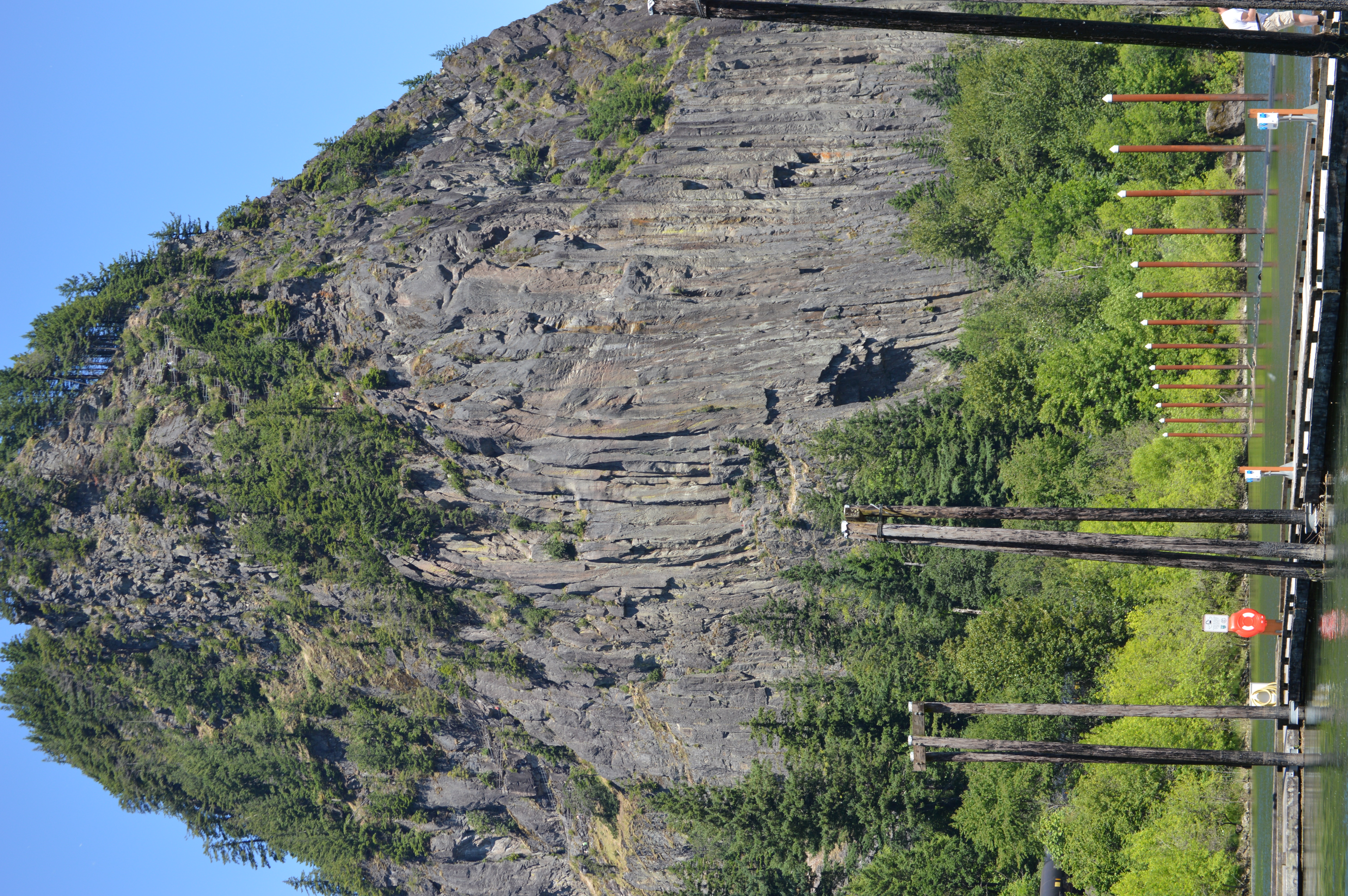
Before it got too hot last week, I hiked along the Columbia river at Beacon Rock State Park, named after a large rock already mentioned in Lewis&Clark’s diaries in 1805 during their westward expedition. A short drive away from Portland into Skamania County, WA, you can dwell on both nature and history.

The nature is gorgeous, the history rotten, what else is new.

The Yakima Treaty of Camp Stevens in 1855 forced the tribal owners of the land – the Sahaptian and Coast Salish Indigenous people – to cede their land. In 1865 the land passed into private ownership, with frontage on the Columbia River, including the Indigenous village below Beacon Rock, claimed under the terms of the Donation Land Claim Act, which codified land claims for the earliest American migrants into the area.

Various private investors across the decades bought and and often defaulted on land and timber parcels or tax loads. In 1929, Spencer Biddle and Rebecca Biddle Wood, then private owners of Beacon Rock, offered it as a land donation to the State of Washington for a State Park. Governor Roland H. Hartle refused the donation. Only when the Superintendent of Oregon State Parks tried to acquire the land, did public opinion force a shift of the Washington State administration which finally agreed to a state park in 1935. (Ref.)

The meadows were filled with daisies, the air full of birdsong, small tributaries gurgling into the larger river. The breeze had the aspen and alder leaves turn, shimmering silvery in the early afternoon light. It was quiet, few hikers out and the rock climbing side of the rock closed to protect nesting falcons.

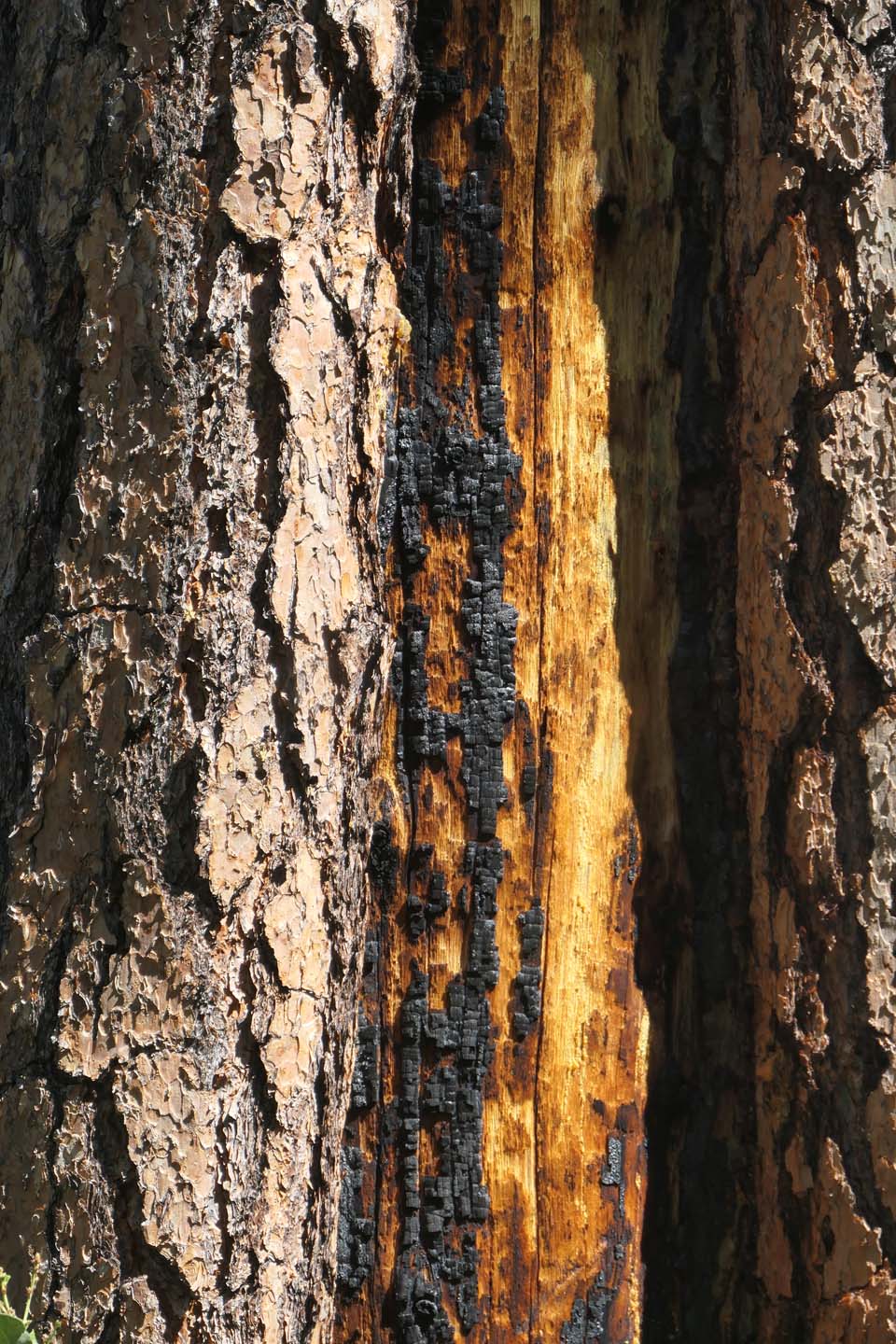
Across the river you could see the burnt forests of the Gorge, making me think about current administration attempts to dismantle the US Forest Service—shuttering 57 research labs, relocating HQ, and forcing out thousands of federal workers, including woodland firefighters. (Congress could, of course, stop this sabotage.)

How can one possibly explain the rationale for curtailing protection for our lands (and the workers and citizens tied to it? Is it as simple as for-profit motives, or anti-science bent? Refusing to acknowledge the reality of climate change which will increase the need for fire fighting, among others, and more rather than less forest management geared towards meeting the changing needs, to extract the very last penny from the land, acquiescing to certain eventual collapse?

What happened, considering that previous Republican administrations were instrumental in helping science along, now actively in the process of being dismantled not just for forests and agriculture, but weather research, ocean monitoring, food safety, and of course issues related to disease, from prevention to treatment, vaccination to the availability of new drugs. After all, the National Academy of Sciences was founded in the Lincoln administration; NASA in the Eisenhower administration, and PEPFAR (U.S. President’s Emergency Plan for AIDS Relief), PMI (President’s Malaria Initiative) and the NTDs (neglected tropical diseases) program were launched in the George W. Bush Administration.

Some trace the adoption of anti-science stance as a major platform of the GOP to the year 2015 when the antivaccine movement pivoted to political extremism on the right. It continued massively during the Covid pandemic and the perceived curtailing of “freedom” with mask mandates, public closures, social distancing and vaccination requirements. These days the anti-science sentiment has reached a fever pitch, not just nationally. It’s going global risking hundreds of thousands of lives.

A lot of it, alas, has to do with religion. The evangelical hard right claims that science is not only anathema to faith, but actively trying to undermine it. It can’t be trusted (Science is a hoax! Just look at how it changes its finding all the time!). Worse, it is a secular tool to lure people away from the “right” Christian path.

There are additional factors at work, though. One, if you are a member of a group (or a child raised there) that has certain attitudes, you will adopt them for group cohesion and a sense of belonging. And secondly, it is always hard to engage with some new facts or insights that very much contradict your current thinking. (True for all of us.) That is particularly true for people who were raised with or have personalities favoring rigid belief systems rather than flexible openness to the new and different. In other words, it’s hard to get scientific information to stick when it raises the possibility of conflict within a person’s assumptions about the world as it is and SHOULD be.

All the more so, when you think of your world as a hierarchical system where you perceive “elites” associated with science/scientists as looking down on you or pulling the wool over your eyes. If the world is perceived to be a ladder, not only does it help your sense of worth mistreating those on rungs beneath you. Just think how great it’ll make you feel if you can punish those who you assume are above, ready to stomp.

“Let’s burn it all down. That’ll show them who has the power…”

Well, burn it will, and everyone, no exemption, will be harmed by level 3 evacuations or the loss of public lands that have sustained Americans for centuries, and the Native tribes for millennia before that. All in the wake of climate change denial and anti-science rage. Never mind greed.


Music today by a Portland treasure.


Nothing but Roses. Except…

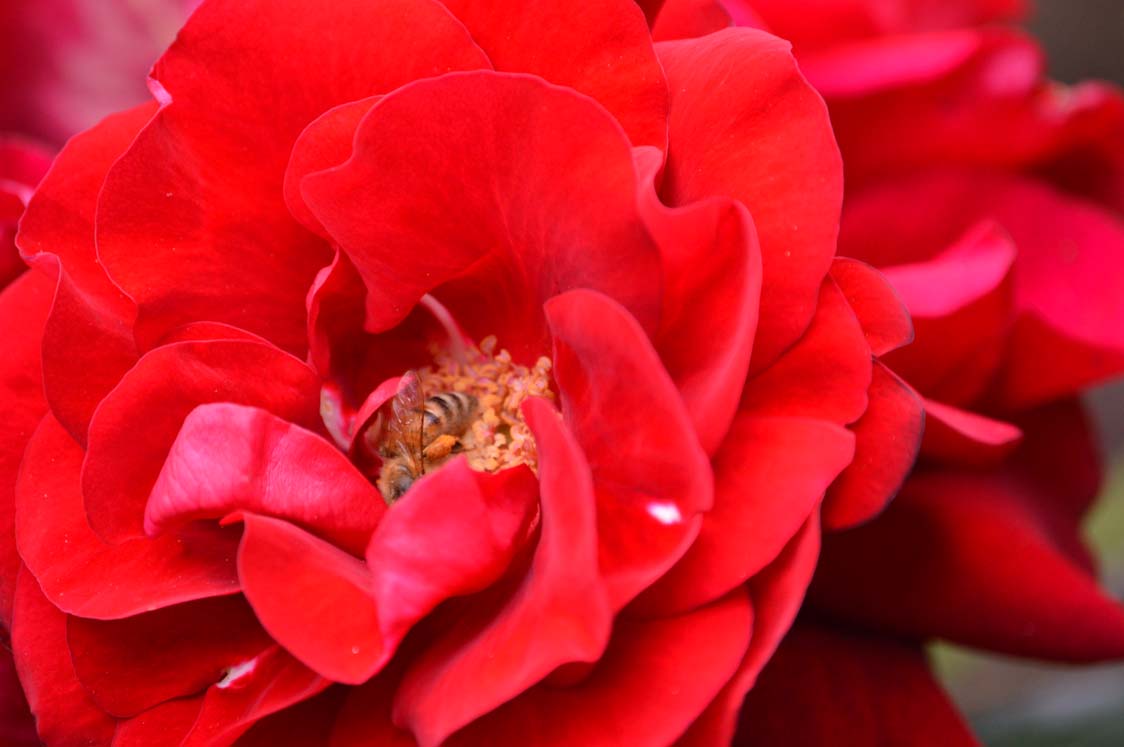
Last week I was invited to photograph my favorite garden, once again. So much in bloom, but for today I want to give the roses place of honor. Just wish I could send the scent(s) as well – they were as enticing as the visuals.

Roses need a lot of care and attention, being susceptible to soil and light conditions, in need to be fed, appropriately watered ( which can differ from species to species) and protected from pests. That about sums up my reading recommendations for today: a lot about attention, the existence of pests, and food for our brains….

I’ll start with a link to a wonderfully introspective piece (easy to read, too) that alerts us to how our attention is manipulated these days and the cost attached to this inflicted dispersion. Chloe Hope once again moved me to tears, when she describes the mining of attention:

“Poets, mystics, children and sages have, for centuries, pointed towards our attention as being inseparable from our love. They noticed how, in the presence of what we cherish, we gather ourselves in—how the fractured, weather-like self draws together and briefly becomes whole, before it’s offered out, towards our devotion. I doubt that any of them thought that, one day, it would require defending. That our species would come to tolerate a culture in which attention is mined for profit….Predatory capitalism mines our attention so it can sell us things we don’t need, so it can tell us that nothing is precious but that everything is urgent, and that the ache we collectively feel can be soothed by some new, shiny thing. It needs us looking towards its wares and away from the global damage it inflicts…”

Let’s gather our attention and look towards the things that matter, the protection of who and what we love.

Hard to do, of course, when my attention is drawn to the pests of the world, be they screwworm making a reappearance after the Trump administration canceled the relevant protection programs, or Ebola rushing forwards, with this nation unprepared for a major catastrophic outbreak, again due to cancelation of the relevant security measures. Never mind the less obvious (presidential) kinds, that make major policy decisions by consulting their dead dog (by now cloned into at least 4, maybe 5 other copies.) He welcomed a prominent American oligarch into his Argentinian realm this month, sharing the passion for discussing the Antichrist and humanity’s future (bleak, if these kinds of people’s vision blooms, mind you.)

However, if you read one piece today and are not afraid of length and careful attention requirements, I recommend this one: Nancy Fraser discusses Gaza as world event. The focus is on our moral treatment of this ever complex situation, with special attention to Germany, America and Japan. I was, of course, interested in the German part in particular, but the entire essay was more enriching than much of what I read all month long.

For those of you who are interested in psychology, trauma research and politics (bundled, no less) I would also urge to read Jon Danforth-Appell’s article in the Jewish Currents: Does the Jewish Body keep the Score? He dissects the myth of body memories (in those not directly born to survivors who might transmit a heightened sensitivity or reactivity to their offspring). He also tackles the fact that biological explanatory models are used to exculpate violent and aggressive behavior when applied to the survivor narrative. A must read for all those involved in or concerned by the antiZionism = antiSemitism debate.

Last but not least, the visit to the garden produced a special find: a crow nest from last year came down from a tree, showing a lot of duct tape woven into the twigs, clever recycling. It reminded me of the new kinds of birds’ nests found these day in Ukraine: they are constructed of discarded drone fiber-optic cables. Our’s to frame: Apocalyptic vision or wildlife, ever adapting.

Birds in Ukraine are building nests from discarded drone fiber-optic cables

Music by Schubert today – Das Rosenband.

Borrowing today.

Here you see me, with my morning coffee cup, thinking what I should do for the next blog. I was working on a longer piece, but would not finish in time. My focus was drawn to the cup because I had recently encountered a series of paintings containing cups, presented by the inimitable French gallerist Yoyo Maeght.

So I thought, let’s offer some of those and some additional ones, celebrating the joys of hot coffee during cold days. Or any day, come to think of it. After all, new Harvard research shows that 2 to 3 cups a day are tied to significantly lower dementia risk, and slower cognitive decline. (Not the decaffeinated kind, though – the more caffeinated, the better, it looks like.)

Paul Cézanne, Woman with a Coffeepot (1890–1895)

Just then, a friend sent me the essay below, which I decided to post in full. It is something I rarely do, but the writing resonated on so many levels and the shared love for birds is obvious. The observations and emotions expressed feel familiar in almost uncanny ways. At the same time I decidedly disagree with some of the sentiments. A piece to make me think, then, so very welcome. The author is Chloe Hope who has been writing about death and birds with sensitivity and wit for quite some time now. Here is her substack link, so you can see for yourself.

You get the somewhat haphazard combination, in other words, of a borrowed text and a borrowed visual idea, the former defiant, the latter comforting. I guess as good a combination as any to start our week with.

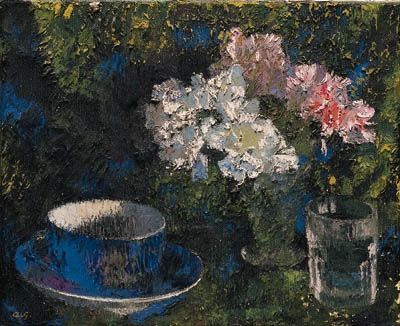
Félix Vallotton Nature morte avec des fleurs (1925).

in accordance

one eye on the sky…

By Chloe Hope

Someone in the village has been feeding the Kites. There’s an unusual number, wheeling above the valley—David counted forty, the other day, spinning a languid gyre. I’ve a cricked neck from holding my face parallel to the sky, and at times they hover so low I can see the whites of their glassy eyes. Their constant spectre is as intimidating as it is hypnotic, and they drift overhead like a half-remembered dream, while we press on below. One eye on the sky. I find myself envious of their honeyed glide. The grace with which they seem to meet the day. I have, of late, become increasingly irritated by my seeming inability to feel a sense of ease. The news cycle exhausts and demoralises. What was a creeping sense of disquiet has become a steady march of dread, and the crumbling of systems which long presented themselves as trustworthy continues unabated—each passing week seeing the circle of complicity widen, and the nature of what was being protected grow ever darker. The news is magnetic interference and my mind a compass needle that cannot find true north. I am exquisitely disoriented by this moment in time. My defensive go-to, since childhood, in the face of confusion and unrest, is to sense-make. The tumult that infused my youngest years saw understanding become sword and shield—and confusion my mortal enemy. Those grasping arms served me well; until, of course, they didn’t. Until wielding tools of rationale became as insane as the thing I was fighting. Some things will not yield to understanding. Certain darknesses have no angle from which they begin to resolve, and to keep searching for one eventually becomes its own kind of madness.

Henri Matisse Laurette with Coffee Cup (1917)

Over the years, I have had the extraordinary good fortune of being involved in the early weeks of many a young Bird’s life. As with any newborn being, there are exciting points of progression which way-mark their developing birdness: eyes opening, pin feathers forming, perching. A particular favourite of mine to witness, however, is the first wing stretch. Any wing stretch is a joy to see, but there’s something about the first one that feels seismic—as though the wings themselves are making a declaration of intent to the sky—“Soon, vaulted blue. Soon.” Each time the sight lands sharp in my chest, the strange sting of something so perfect it makes me nervous. Each time I am made to question what I will declare to the sky. A wing is a refusal of gravity; a rebuttal, made of bone. The architecture so ancient it renders us a footnote. Feathers extend in graduated tiers, the whole apparatus light but not frail—hollow bones latticed within, muscles knitted along the keel. When a Bird lifts its wings, it is shaping pressure. Curving and carving air. Whether Robin or Raptor, they sense the invisible and answer in accordance.

Francisco de Zurbaran Still Life with Chocolate Breakfast Undated

Flight is a holy intimacy with the world, one clearly reserved for those who know how to belong to it. And few belong to it more completely than the Andean Condor. These spectacular Birds have a wingspan of over 10 feet, stand more than a meter tall and, weighing 15kg, are among the largest flying Birds in the world. At the turn of the decade, a study of these Condors revealed that, while airborne, they flap their wings less than 1% of the time. One of the Birds monitored flew for over five hours, travelling more than 100 miles, without beating their wings once. These magnificent beings take to the skies, and surrender to the currents they find there. They do not fight the air they’re met by, nor wish for better winds. They sense what is, and answer in accordance—and the world, thus met, holds them aloft. Their surrender is not capitulation, but an active and intelligent response to the world exactly as it is. And their radical trust ignites my own.

Henri Fontain LaTour Vase de fleurs avec une tasse de cafe (1865)

Surrender is exquisitely difficult—for me, at least—and it seems that no matter how many times I manage it, it never becomes something that I know how to do. I’ll mither and loop, all while knowing there is an alternative, but it somehow feels out of reach. I wonder whether the act of letting go, of yielding to the very is-ness of things, tends toward rocky terrain because some part of us knows that a day exists, suspended in the geography of the future, where the final task to be asked of us will be that very thing. Each time I open my arms and tilt my head to the sky, and meet the world on its own terms in a posture of vulnerability, I am preparing for—and speaking to—my ultimate surrender.

It’s windy here, today. There’s a horizontal line of chimney smoke scoring across the garden. The Kites are undeterred—in fact I think they’re playing in it. May we each meet the day with the grace of these Red Kites, and may we each meet Death with the grace of a soaring Condor.

Jean Etienne Liotard Lavergne Family Breakfast (1754)

“Suspended in the geography of the future” – I just love that phrase; it applies not just to eventualities we meet in our own lives, but also in the unfolding of art history. Just look at the Liotard version of breakfast and then take in Juan Gris – a mere 160 years apart.

Juan Gris Breakfast (1914). 

What sticks with me, though, from the essay, is the distinction between capitulation and surrender, and the sense that an unwillingness or inability to surrender might be problematic. That we have to practice surrender for the day when it is inevitable. I disagree. I think we have to practice NOT to surrender, particularly as women in this world, or as people dealing with illness. Why worry about attitude, when death might sneak up on us unexpectedly, or soothe us into a non-conscious state before departure, or simply declare the time is now. You don’t expect an emotional stance from a baby being birthed, it simply has no choice in the matter. Why then from the person who is equally forcefully dragged into the reverse process?

The implication is somehow that an approach of a certain kind can and will ease things at the end. Yet I have seen during hospice work that all 4×4 combinations – letting go, fighting against, good death, bad death – regularly occur. Why use energy now to shape yourself into something you hope matters, when that energy could be used to pursue what you love now, what feels comfortable now, what strengthens you in daily struggle now? There are dangers to surrendering in advance – in politics as much as on the sick bed.

I’ll place myself happily among the group of defiant young women and their cups below, by one of Sweden’s foremost contemporary painters. Just dare me to let go!

Karin Mamma Andersson About a Girl (2005.)

It is claimed that Johann Sebastian Bach insisted on his morning cuppa.  “Without my morning coffee, I’m just like a dried up piece of roast goat.” Here is his Coffee Cantata.

Édouard Vuillard Tasse et Mandarine (1887)

Brain Balls

(556)

The Brain, within its Groove


The Brain, within its Groove
Runs evenly—and true—
But let a Splinter swerve—
'Twere easier for You—

To put a Current back—
When Floods have slit the Hills—
And scooped a Turnpike for Themselves—
And trodden out the Mills—

by Emily Dickinson

- from The Complete Poems of Emily Dickinson (1955)


As with all Dickinson poems, interpretations range widely. Is she talking about a mechanistic model of a brain here, which catastrophically stops functioning if parts of it are ruptured, never to be whole again? Is she musing metaphorically about a descent into mental illness, describing the fragility of our cognitive apparatus and our ability to maintain mental stability? Or is she referring to a sudden rush of ideas and speculations, when we are distracted from our train of thought, wildly drawn in different directions, unable to close the floodgates? You tell me.

I’ve been thinking about brains this weekend. About those that seemingly stopped running “evenly – and true – and delivered some huge cognitive dissonance instead. And about those that are not really fully formed brains, yet display a surprising amount of human brain function, set in recognizable grooves and growing towards a more and more familiar shape.

The first category arose from the 76th Berlin Film Festival, with someone who stunned with statements during the opening press conference that directly contradicted what they had said previously. Jury president Wim Enders (yes, that Wim Wenders) was asked about the “selective” solidarity shown to Gaza, Iran, Ukraine, and other war torn regions around the world, with Gaza willfully ignored. His answer?

We have to stay out of politics because if we make movies that are dedicatedly political, we enter the field of politics,” he said. “But we are the counterweight of politics, we are the opposite of politics. We have to do the work of people, not the work of politicians.”

This is the same brain that announced 2 years ago: “The Berlinale has traditionally been the most political of the major festivals, and it is not staying out of politics now, nor will it do so in the future.”

Cognitive dissonance in the service of avoiding engagement in the genocide debate, of combating the fear of being called anti-Semitic for any word uttered on behalf of Palestinians, of yielding to the pressure of having to align with Germany’s “Staatsräson.” How does an intelligent brain cope with this?

Arundathi Roy withdrew from the festival in protest. “To hear them say that art should not be political is jaw-dropping. It is a way of shutting down a conversation about a crime against humanity even as it unfolds before us in real time – when artists, writers and film-makers should be doing everything in their power to stop it.”

I could not agree more.

***

The second category of brains are really minuscule little brain balls or so called  “Human Brain Organoids (HBOs),” tiny, 3D versions of a human brain the size of a peppercorn. The unexpected discovery of these things during research with stem cells in 2011 led to a flurry of research programs, from understanding how brains develop in a fetus, to possible ways to combat cancer.

These organoids mimic the developmental trajectories, cellular composition, neural circuits, and anatomical structures of the in vivo human brain (Seto and Eiraku, 2019). Some of them develop spontaneously from cell cultures, grow on their own and have the characteristics of multiple brain regions. Others are manipulated by scientists gearing them towards specific brain functions, and still others are “assembloids, fusing various specific brain regions, or organdies from non-brain regions, like muscles or retinas.

No longer science fiction: you can take material from donors with certain neurological diseases, including microcephaly, Alzheimer’s disease, or Timothy syndrome, grow these HBOs from their stem cells, and then subject them to any imaginable medical intervention/drug/manipulation to see if you can figure out a way to combat the disease. No worry about side effects or dangers to a living person, all trials done just on these brain balls in the lab.

Researchers have lately been able to transplant these organoids into animals, mice, rats and monkeys among them, and have shown that they can restore malfunctions in those host animals – helping them to reestablish motor functions that were damaged, improve memory in those that had memory and learning difficulties, and helped with healing of the visual cortex in rats that were blind.

Scientists have even, believe it or not, been able to produce interphases with these HBOs and computer systems, allowing them to play a simplified version of computer games. Theoretically, you could build systems where these neuronal structures power computers on a large scale, making the significant energy demands from current AI systems obsolete.

A groove made from a combination of biological substance and silicone…. what could go wrong? What swerving splinters will create havoc?

One big unknown, hotly debated, is the question of HBOs developing consciousness, and the associated ethical issues.

I am not going into the whole consciousness debate today. Let me just sketch the basic definitions psychologists use to distinguish types of consciousness. One is phenomenal consciousness – having the raw experiences that go with sensations and emotions.

The other is access consciousness. An entity has access consciousness when it has access to information and in most cases can use that information in some fashion. Access is obviously a matter of degree. A thermostat has limited access – it registers the temperature and reacts accordingly, by clicking on or off. We would obviously not call that consciousness. We use the general term access consciousness only if there is a fairly broad range of access and also a broad range of ways in which that information gets used.

Consider Tina who is now aware that Thai food is extremely spicy. Her knowledge comes from just having read about the way Thai food is prepared. Or her knowledge is derived from the pain in her mouth after her first bite, reaching for a glass of milk to handle it. The former is access, the latter phenomenal consciousness.

Given those different kinds, scientists do wonder where the line is for non-human entities to display access consciousness, or for animals, who we often grant even phenomenal consciousness. The organoids have access to information and act on it in predictable fashion, in complex ways.

Once you acknowledge a form of consciousness, all kinds of ethical principles kick in. Here is the long version of the arguments applied to human brain organoids for those who are interested.

Pandora’s box comes to mind, if you ask me. But then again, my brain is perhaps too small to calibrate the relative merits and flaws of creating brains in a dish.

Music today tells part of the story.

Photographs from the Hunting Gardens in Pasadena, CA, all about grooves.

Leave mothers alone!

Here is the good news: you can keep the popcorn in the cupboards and avoid empty calories if you don’t watch the Korean and Dutch movies I’ll introduce today. However, both cinematic explorations under review have brain power and pretty amazing visuals. If you are a fan of disaster movies, science fiction films or mysteries, as I am, you’ll be riveted.

Here is the bad news: you will need a lot of buttered popcorn to erase a bad aftertaste left by watching the movies under discussion. Both delve deeply into psychological issues using women as projection screens of stereotypical, often misogynistic concepts, centered on versions of manipulative women and bad mothers. Sufficiently warned?

Alice Neel Mother and Child (1982)

SPOILER ALERT! I will reveal plots.

I turned to The Great Flood on Netflix without any prior knowledge, simply because I saw it was a Korean film; they are known for excellent apocalyptic movies. I find disaster porn to be the perfect distraction from real life affairs since they remind me that things could be worse, and usually have a happy ending for a select few. We can dream of being the lucky ones!

The story unfolds in the predictable manner; some catastrophic weather event (asteroid melts arctic – buy that!), sets all of Seoul under water; heroine plus child live in a 30 stories apartment building, stratified along class lines, inhabitants now jamming the stairways to get to safety. A male figure appears, half threat, half protector, to guide her and child to a helicopter waiting for them on the roof. It turns out she is the remaining lead researcher in a secret UN project. They are trying to develop AI programs intent on preserving humanity’s emotional tool bag for whatever comes after humanity gets wiped out. Without her being rescued the program is doomed. Along the way she encounters massive challenges, physically and morally, revealing herself to be a tough cookie and originally not particularly attached mother.

Suddenly the film switches gears, and it turns out (for all I could decipher, since there are enough plot holes to drive a truck through,) that she volunteered to be a subject in the data extraction of human emotions for her research project. Looks like it to me, though, that the extracting powers are not interested in human emotions per se, but the shaping of emotions deemed appropriate for a good mother. She finds herself in a time loop, going through thousands of simulations of the same disaster scenario, (conveniently indicated by the changing numbers on her t-shirt for the dull viewer), finding “better” ways to handle ethical dilemmas in order to reach the goal state: a reunion with and rescue of her child lost along the way. Who turns out not to be a child at all, but a preprogrammed AI creature. With some sort of diabetes, no less, making us wonder if they had bad programmers or this was another ruse to instill extra “nursing” tendencies in a woman who had not given birth.

Kaethe Kollwitz Mütter (1911)

Across all these re-iterations of her flight we see her develop from an emotionally distant care taker to someone who is deeply attached to the child. She is ever more engaged in being there for other people in distress, even if that might harm herself or her goals. Along the way AI is shaping her, by providing adaptive memory clues and selective reinforcers, tweaking algorithms towards a preferred outcome. Just as we, the viewers, are shaped by finding our own stereotypes confirmed – isn’t it comforting to see someone evolve to be nurturing, sensitive, present, attached, servile and self-less? A “good mother”, in other words?

Helene Schjerfbek Mother and Child (1886)

As someone who currently holds two young mothers closely in my heart, mothers who could not possibly do a better job than they are doing already, I was irked that the film regurgitated every single societal demand imposed on mothers, in order to bestow the final award, success of the mission. It overshadowed the larger philosophical – and interesting – question the movie raises, how Artificial Intelligence can shape us all – and theoretically in all directions, towards becoming good, or evil, or accepting evermore incoherent entertainment….when looking at the evolution of this film. In contrast to what I watched next, though, the movie rocked!

***

The Shouwendam 12 runs on Amazon Prime. I love to watch Dutch movies for a number of reasons. They help me keep in touch with the language, provide blissfully normal looking actors (no Hollywood glam here, ever) and offer glimpses into the darker aspects of the human psyche (which I attribute to Holland’s colonial past rather than the darkness of the northern latitudes of Scandi-Noir films.)

At first glance, the series presents the familiar script of whodunits: teenagers disappear from the village 25 years ago, someone with amnesia comes back to figure out if he is one of them, a suspicion shared by some in the village, but not others. Then someone gets murdered and a hastily called detective, with the help of the young village cop, tries to find the culprit, setting her eyes on the amnesic newcomer. So far, so typical.

All of a sudden, the series picks up rocket speed with multiplying subplots involving drug dealing, gay sex, child abuse and the like. People start dropping like flies, each killed in a different fashion, with our guy having alibis for many of them, but not all. The script is clever in the sense that we really don’t learn the full extent of a very complicated narrative until the last (10th!) episode.

Paula Modersohn-Becker Stillende Mutter (1903)

Spoiler: the whole set-up revolves around women who have lost their minds, quite literally, after having or losing a child. In the mildest version, the detective is deemed incompetent because she is still shattered by losing her son to suicide. Two cases of postpartum depression then depict women with murderous impulses, trying to kill their babies or killing someone else. Finally, the main culprit is a woman completely deranged after losing her lover to suicide and their unplanned baby in a subsequent miscarriage. She goes out to revenge those losses, murdering everyone who ever harmed her lover, who was one of the missing village kids ago from all those years ago. She drags her brother – hinted to be incestuously bound to her – along in the psychotic scheme, pretending to be the “returning” amnesiac to rattle the villagers into revealing the secrets tied to the disappearances. She escapes punishment by jumping off the church tower in the end, while he shows some redeeming feature by preventing her from killing yet another innocent victim, before he is sent to prison.

It is beyond infuriating. Women are presumed to be murderous harpies under the influence of hormonal imbalance. One is shown to be suffering the hallmarks of clinical depression before she tries to drown her daughter, others are depicted just as murderously aggressive crazies. Instead of giving the viewer tools to understand postpartum depression and its harrowing burden on new mothers, it simply terrifies us with what these women are capable of with destructive intensity.

Mary Cassat Mother and Child (1880)

No mention of the gradation seen in the real world. Up to 85% of mothers experience postpartum blues, a slight impact on mood with hormonal shifts, which remits spontaneously 2 weeks or so after delivery. Then there is postpartum depression, which is clinically indistinguishable from garden-variety depression, with sadness, anxiety and hopelessness often part of the picture for a longer stretch, infinitely treatable. And then there is postpartum psychosis, appearing directly after birth for maybe 1-2 in a 1000 women (if that – the data vary widely). A rare event, and often coinciding with the emergence of dormant bipolar disease, triggered by the stress of pregnancy and birth.

If movies want to raise larger questions – is AI a dangerous tool or possibly preserving the essence of humanity; are given life events a path to madness under certain circumstance – please find something that does not involve motherhood. Mother bashing has such a long and treacherous history, we should really move beyond that. True not just for movies, but also for books – just look at all the new memoirs about and by mothers, or the endless novels about bad mothers

Max Ernst- Die Jungdrau züchtigt das Christuskind (1926)

True, too, for operas: just think Madame Butterfly willing to give up her child, or Azucena in Verdi’s Il Trovatore with her fragile mental equilibrium, not knowing which baby went into the pyre and which she kept and raised as her own. Or Bellini’s Norma, who spares her child, but that was that for sane actions. The Queen of the Night is an ambivalent mother in Mozart’s Magic Flute, and Cherubini’s Medea is the worst of them all, killing both of her children in an act of revenge.

Enough mother bashing! Could you please leave them alone?

Here is a naughty child instead, for today’s music, in the end (at ca. 39 minutes into the video) crying for Maman, no less. L’enfant et les sortilèges is a beautiful opera by Maurice Ravel.

Mother and Child, 1902 by Pablo Picasso

Pablo Picasso Mother and Child (1902)

All Kinds of Sisters.

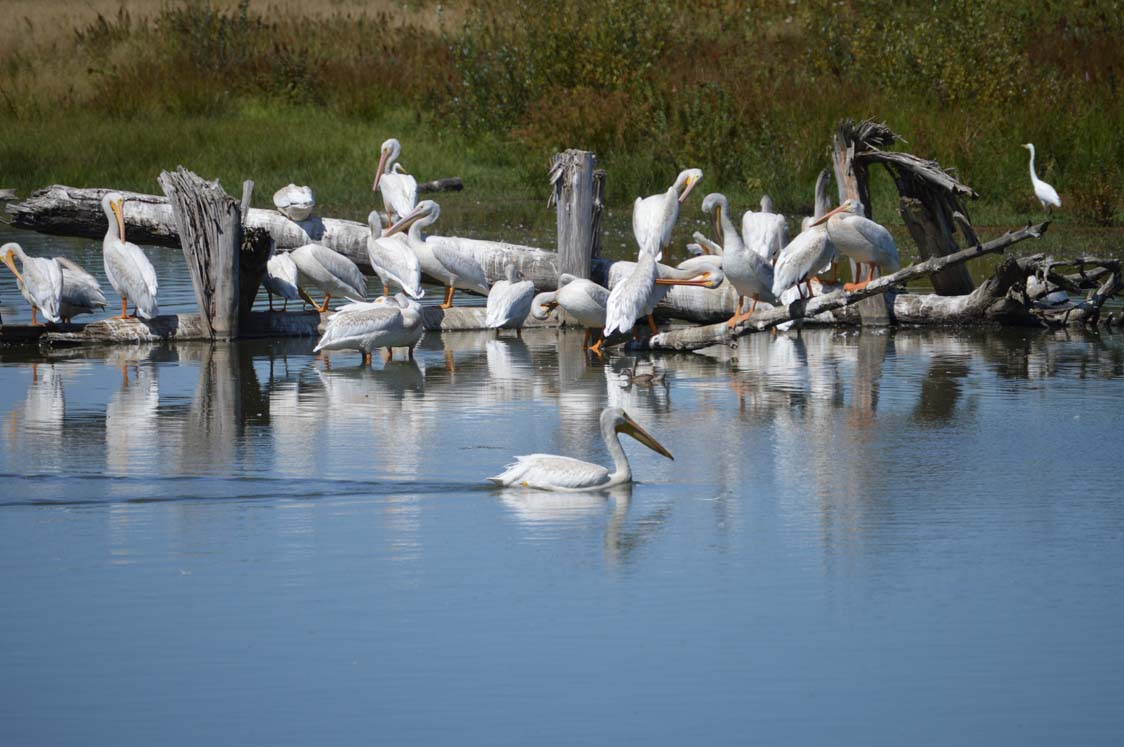
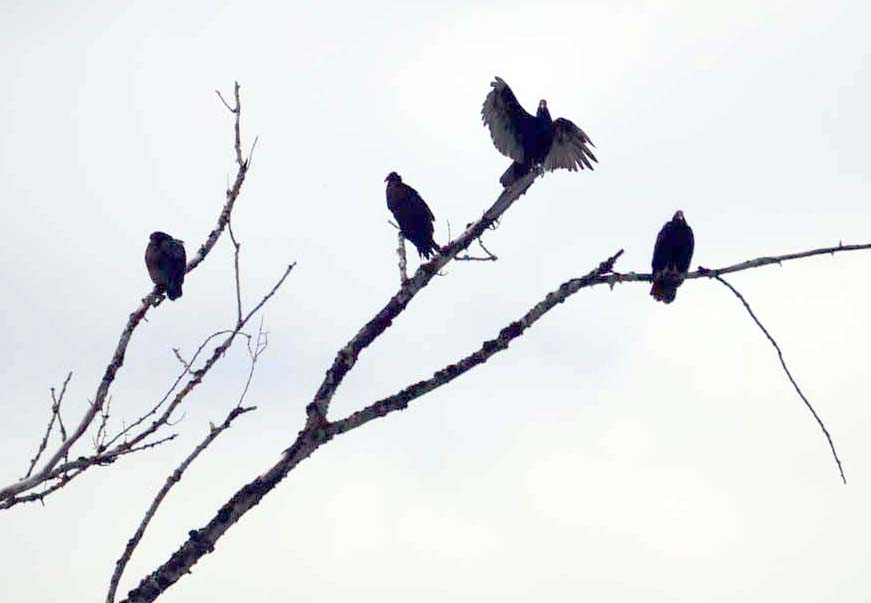
You know how it is, one thing leads to another. This time it started with the birds, so many of them, different ones. The vultures dominated, though, hanging out in the trees along the Columbia river among the bald eagles and ospreys, all ready to swoop down, all eerily quiet.

Then I saw the object of their concentration, or, more likely, their desire. A beached sturgeon, still fresh, no visible wounds other than a torn fin. A spectacular specimen. Perhaps killed by the ever surging water temperatures and dropping water levels – that warming was one of the causes for the recent die-off of sturgeons in our waters, both in 2015 and 2019. Sturgeons can get to be up to 100 years old, but they only spawn every 8-12 years, so their populations are extremely vulnerable at this point, despite many efforts by states, fisheries and environmental organizations to protect them.

In any case, I had just read a book review that started with the phrase “a beached sturgeon of ungodly proportions,” a phrase I found enticing. What followed had me rush to put my name on the library wait list (54 holds on 3 copies – what are you thinking, Multnomah County library?) for The Hounding, a debut novel by Xenobe Purvis. Set in 18th century England, it describes the fate of five sisters who are accused to be witches or worse, having caused a “season of strangeness,” claimed to transform themselves into dogs, now hunted by their neighbors. They try to save that fish, to no avail, and a man eventually kills it by violently stomping on the sturgeon’s head.

Apparently – again, I have yet to read it – many literary examples of sisters are invoked, from Pride and Prejudice, Mansfield Park to Hester Prynne. The main theme, though, seems to be the traditional one: the way society treats women, assigns them magical powers for which they are subsequently prosecuted, harms them by clinging to beliefs of malevolent witchcraft. And this brings me to a book about a different group of siblings that I just finished, The Sisters, by Jonas Hassen Khemiri.

It is a long, complicated novel, with constant shifts in time and several narrators, one of whom, the single male and potential half-brother to Ina, Evelyn and Anastasia, increasingly reveals himself to be quite the unreliable chronicler of the tale. Set in our own time, across Sweden, Tunisia and the U.S., its plot – if there is one, really – is also driven by superstitious beliefs in the supernatural. The sisters themselves believe that their family was cursed, and this guides their lives and decision making. The novel ropes us into deeply detailed worlds, both of behaviors and emotional interiors; it also makes it very clear that self-fulfilling prophecies interact with structural characteristics of misogynistic, patriarchal societies, exponentially affecting outcomes for women.

The book was not expressly plot-driven. I was more reminded of Susan Sontag’s adage that novels are education of feelings – they help us to escape the ever narrowing versions of ourselves, tied to habits in thinking and interactions. It certainly reminded me of how sibling relationships are fundamental to our existence, but their mechanisms are much more easily discerned when you observe other sibling relationships from the outside. In this case, the author managed to make each one of them increasingly more sympathetic, despite some being closer to me, the reader, in personality than the others. He also showed the futile or destructive power of competition, when they could have helped each other all along. But the novel’s real success lies in the ability to convey how potentially neutral or positive life outcomes can be thrown into disarray by the persistence of false beliefs, no matter how rational you try to be. Let that sink in.

***

I have one sister who I admire, and we love each other deeply, despite being very different from each other, but I also feel sisterly bonds to several of my friends. I thought this was described best in Adrienne Rich’s poetry. In the first poem, she alludes to a shared history (siblings are, after all the ones who know you longest and suffered the same family dynamics, even if in different roles), but does that allow you to claim true knowledge of the sibling? Is the stranger she uses as comparison really a travel acquaintance, or another version of the sister, or is it the poet herself, claiming we are unknowable even to ourselves in the end? Too complicated for my heat-addled brain.

By Adrienne Rich

Much more decipherable, then, and a hymn to sisterhood whether by biological bond or not, is this for me:

“Women”

My three sisters are sitting
on rocks of black obsidian.
For the first time, in this light, I can see who they are.

My first sister is sewing her costume for the procession.
She is going as the Transparent lady
and all her nerves will be visible.

My second sister is also sewing,
at the seam over her heart which has never healed entirely,
At last, she hopes, this tightness in her chest will ease.

My third sister is gazing
at a dark-red crust spreading westward far out on the sea.
Her stockings are torn but she is beautiful.

By Adrienne Rich

Here are three sisters sitting at the water’s edge, (no sturgeon in sight, alas,) on rocks of black obsidian. Obsidian is, of course, sharp volcanic glass formed by quickly cooling molten lava, used since the Stone age for weapons, daggers, spears and knives included, but also as ornaments. In the realm of supernatural beliefs, it is associated with healing, protecting us from negative influences. “Its reflective properties are thought to help us recognize false beliefs we may have about ourselves so they can be released.” (Ref.) Hmm.

So, here they sit, on top of those symbols of mostly violent destruction, and yet healing dominates associations. Stitching together a costume that reveals rather than masks you, vulnerabilities and all, being true to yourself, in public no less.

Stitching the scars of your broken heart, sewing as reparative action, such a familiar trope for women’s duties, but now these women mend themselves.

The third sister has gone far beyond: she can leave the torn stockings as they are, seeing the scab from her wounds drift off towards the horizon, self-generated skin a strong enough renewal. She might have fallen, but picked herself up. She might have been violated, but wounds will heal.

And given how most women I know see themselves reflected in one or the other of “our” sisters depicted here (on the mirror surface of the obsidian and in the hurt), this poem is a gift of encouragement and manifesting, with no further need for belief in talismans or other mystical powers. We might be fumbling towards repair, but we do have the power to heal ourselves.

Then again, being able to turn yourself into a dog on occasion, hunting with the pack of your sisters, might be quite the thrill, no?

I’ll report more when I’ve read The Hounding.

Music today is a phenomenal collaboration: Sisters doing it for themselves….

Shelter

You know that feeling when you think about something and all of sudden almost everything you read or see somewhat points in that direction? It’s some sort of semantic priming, and mine has been all week around the notion of shelter. How can we find shelter against the onslaught of bad news, the overabundance of worry, the intensity of stress in our personal as well as public lives?

First thing this morning, then, was a videoclip sent from Germany. Someone declared that the current mood, across the world, is like the weather: dark, stormy, and definitely cold. He then argued we all have to be like hats, or jackets, or felt-lined boots used for exactly that weather, offering shelter against what surrounds us, providing warmth for those next to us, out in the cold. I took to that mental image – you’ll be my jacket, I’ll be your hat. Protection found in mutual caring for each other, shelter in loving kindness or chesed, as it is known as a concept in Judaism.

Next thing in my inbox was this week’s Meditation in an Emergency, focused on the need for big tents, another form of shelter. Solnit argues that during emergencies like real world catastrophes people come together to support and protect each other regardless of political or religious differences that usually keep them apart, unless they reside at the absolute extreme ends of the spectrum. The same should happen during political upheavals the likes of which we are currently experiencing. There is value in alliances, then, rather than isolation, protection through coalitions, not undermined by scorn or accusations for previous mistakes. )Although some will always barred from my tent: Republican Darren Beattie, for example, appointed by Secretary of State Marco Rubio to be the acting undersecretary for public diplomacy and public affairs, a senior role that represents American foreign policy to the world. Beattie has called for the mass sterilization of “low IQ trash” and feral populations. “Could offer incentives (Air Jordans, etc.).” Nerd-Reich eugenics, anyone?)

Back to sheltering tents: Here is Solnit’s paragraph that registered most with me:

Many powerful forces–the rhetoric of mainstream politics, the framing of mainstream entertainment and news, the version of therapy that reinforces individualism as it tells us we’re here to care for ourselves, end of story–tell us we are consumers, not citizens (and here I mean citizens as members of civil society, regardless of legal citizenship status). That we are here just to meet our own needs and chase our personal desires, within the realms of private relationships and material comfort and security, and that we hardly exist beyond those small realms. It says on the one hand “go have all this stuff” while it quietly discourages us to have the other stuff that is public life, participation, and power. While pretending to point us toward abundance, it deprives us of the most expansive and idealistic versions of ourselves. And most of us really are that larger self, the version that cares about justice, human rights, democracy, equality (withering all that away is a clear part of the right’s agenda at least since Margaret Thatcher’s “There is no such thing as society”).

Chiharu Shiota The Network (2024) Musée du Pavillon de Vendôme; Musée des Tapisseries and Chapelle de la Visitation, Aix-en-Provence, France. Photocredir Philippe Biolatto, Ville d’Aix-en-Provence

And then I came across a mention on ArtNet about two current exhibitions of work by an artist who is everyone’s darling these days – not mine, admittedly. Chiharu Shiota’s work has been basically repeating itself for the last 25 years, and some of her installations borrow quite a bit from other people’s ideas. But honor where honor is due: She was one of the early sculptors who integrated fiber into her work, before we saw the explosion of fiber art across the last years. And the theme of interconnectedness has been a red thread (quite literally) throughout her career. (She reserves the black threads she uses for associations to the cosmos, fate, or other intangible things that surround us.) The idea of all of us being invisibly bound together by these webs made out of thousands of threads, and the visual experience of tent-like installations hanging above our heads certainly fit into the associations that came up around the notion of “shelter.” For an introduction to her work, here is an interview with the artist, a good starting point.

Chiharu Shiota Uncertain Journey (2024) Le Grand Palais, Paris, France

Photo credit: Didier Plowy

Here are selective exhibitions still on view:

until 19.03.2025
The Soul Trembles, solo show, Le Grand Palais, Paris, France [touring exhibition]

until 20.04.2025
Between Worlds, solo show, Istanbul Museum of Modern Art, Istanbul, Turkey

until 28.04.2025
The Unsettled Soul, solo show, Kunsthalle Praha, Prague, Czech Republic

Chiharu Shiota The Silent Concert (2024) – Kunsthalle Praha, Prague, Czech Republic

Photocredit: Vojtěch Veškrna

until 27.06.2025
The Soul’s Journey, solo show, Fundacion Calosa, Irapuato, Mexico

As I said, she is surely en vogue. Lots of soul in the titles, lots of wool in the air. Clearly resonating with a large, international public. Maybe it is people’s fascination with the nature of webs, strong and fragile at once. Or the rudimentary desire for cocooning. Or respect for the tremendous amount of coordinated work going into these creations. Or humans’ insatiable desire for spectacle, the bigger the better. All not mutually exclusive.

I encountered her work for the first time at the Hammer museum in L.A., when she was the inaugural artist featured in the Hammer’s redesigned lobby, for the Hammer Projects 2023.

Here is an installation in a gallery in Brussels from 9 years ago, that somehow reminded me of a painting by George Tooker, the way my brain works…

Chiharu Shiota Sleeping is like Death (2016) Installation View, photo credit Gallery Daniel Templon

George Tooker Sleep II (1959)

Last year Shiota was invited to show at the Chapel of the Visitation during the Aix-en-Provence Biennial; her installation included letters from people asked to write about their experience with gratitude (does that remind you of Yoko Ono’s installations of trees and letters for peace?)

Beyond Consciousness de Chiharu Shiota - Journal Ventilo

Chiharu Shiota Beyond Consciousness (2024) Photo credit: Pierre-Nicolas Bounakoff

Maybe the idea of gratitude is another way to find shelter: a focus on what we have that is positive. It might just insulate us, if only for short moments, from the fear and disquiet instilled by the news.

Gimme Shelter, indeed… the Stones knew.

A World growing Cold.

We had a dusting of snow this week, lasting not even a day. Coincidentally, I was cleaning out some closets and found a number of calendars from the 1990s, beautiful, huge art reproductions on linen paper, sent to me as gifts from Germany. Most of them were intact – I had only ripped out a few of my favorite pages to put into thrift-store frames at a time when we did not have the funds to put original art on the walls. I went to look for the winter months, and there they were – impressionistic renditions of snowy scenery.

All of the calendars featured painters from an artist colony that was established in the late 19th century in the small hamlet of Worpswede. The village in the state of Lower Saxony, close to the wealthy and bourgeois Hanseatic league city of Bremen, was a haven for young, academically trained artists trying to escape urban centers and an increasingly industrialized society, longing for a return to nature and establishing a utopia of communal living. In a way, they withdrew from reality and any attempt to use art as a means of engagement with a new technology-driven society, changing at a rapid pace. Instead they expressed longing for an ideal, intact world (heile Welt), and pursued new aesthetic criteria to express their belonging to a Germanic world, their northern roots. They hoped to mutually sustain each other pragmatically and artistically, in a region that was cheap, in fact so poor that almost every single crop sharer had multiple children emigrate to the U.S. at the time, because the land could not feed large families.

Starting in 1889, the three founders, Fritz Mackensen, Hans Am Ende and Otto Modersohn first lived with farmers, then in an inn, and eventually started to build their own houses. They were soon joined by numerous other artists, all drawn to the stark landscape of the foggy country side, dominated by peat bogs, heather and moors, a river and canals that allowed small barges to transport the peat. It was close to the sea, windswept, with annually 200 days of rain, flat as a pancake, opening endless horizons, disrupted only by the occasional birch groves and conifers thriving on the sandy loam. In 1901, Rainer Maria Rilke started to visit – you can read about his impressions of the artists and the landscape here. He developed a crush on two young women, a painter, Paula Becker (these days famous in her own right), and a sculptor, Clara Westhoff, who he eventually married since Paula had chosen Otto Modersohn, then a widower and financially secure, instead. Rilke’s essay reads like a long fare-well to a shared vision, now abandoned, since the utopia had not worked out.

It took but ten years for the idyllic artist colony to break apart. Personal rivalries played a role, jealousy about sales, exhibitions and awards. The very first group show in Bremen that exhibited some 34 work of multiple painters, had been a flop. The wealthy burgers clung to their old-fashioned tastes for genre paintings and did not like, much less purchase, the new impressionist art. A fluke visit of this show by Eugen Stieler, president of the Munich Secession, led to an enthusiastic invitation to show at the Munich Glasspalace in 1895 – and they were a sensation. From then on they met with success at all the reputable art fairs and museum shows across the county.

More importantly, the dissolution of the artist group was caused by increasing conflicts around political and ideological issues. They all had read, and were influenced to varying degrees, by a book by Julius Langbehn, Rembrandt als Erzieher, (Rembrandt as Educator) a basic, openly racist text of anti-positivist and anti-rationalist philosophy that was hugely popular at the time. It was about German art, blood and soil, rejection of science and technology (dangerously international, not “völkisch” enough!), an exhortation to any German individual to serve the German spirit and culture. (Ref.)

All should sound familiar to those who know how National Socialism coopted these positions. Several of the painters, foremost Mackensen and Am Ende, did eventually become flaming Nazis, while others withdrew, trying to stay neutral, and one courageous individual – Heinrich Vogeler – completely shifted gears, fighting the Nazi regime, changing his art from romantic Art Nouveau to political agitation prop. He paid for it with his life: he was captured and sent to a Russian penal colony when the Germans invaded Russia, to which he had fled. There he starved to death.

Heinrich Vogeler Barkenhof im Schnee (1910)

***

Heinrich Vogeler Frühling 1897

What strange paths this man trod, what encounters,
experiences, shattering upheavals it took to free him
from the rosy flower-chains of a romantic fairy-tale
world and turn him into an uncompromising fighter in
the ranks of class-conscious workers.]
— Erich Weinert, Introduction to his edition
Vogeler’s Erinnerungen (Berlin: Rütten &
Loening, 1952), p. 14.

Why am I writing about this, rather than letting us all enjoy some pretty pictures? It comes down to the psychological question of what enables people to resist propaganda, while others adopt mind sets that are flamingly immoral. The obvious parallels to our contemporary horror show make an answer to that question ever more pressing.

We are currently facing a concerted attempt to reinstall forms of segregation, assert a hierarchy of value determined by race and gender, with White males on top of the hierarchy. Forget about issues of enrichment, corruption, influence peddling, colonial longings, political persecution, science denial, or all the other things having rained down on us in the last two weeks with the advent of the new administration.There is a basic, open, systematic assault on everything the civil rights movement worked for decades, a century, to achieve. Re-segregation is the order at the federal, state, and local level, not just some purging of DEI initiatives.

Let’s call a spade a spade – you can read in detail about it in the Washington Post here and the NYT here. It is not just about “meritocracy,” the new powers are suing about the very presence of Blacks in our institutions. The US Census Bureau has taken down the statistics for age, sex and race/ethnicity, numbers needed to pursue equality. Women and POC are supposed to be driven out of the workforce – just listen to the President’s comments on the causes for aviation disaster.

Ending all Cadet Clubs and activities for POC at the United States Military Academy, while all religious ones remain, is aimed at re-segregation and elevation of Christian Nationalism.

The introduction of school vouchers that allows schools to accept/reject applicants if they are private, and hollow out the available funds for the remaining public schools, is a tool of re-segregation. Don’t forget that Trump’s judicial nominees almost always demurred when asked in their confirmation hearings whether Brown v. Board was wrongly decided. Doesn’t that make you wonder what the Supreme Court is up to next? The DOGE posse has gotten access to Department of Education data on federal student aid, including the personal information for millions who receive student loans from the government, feeding it into AI to cut funds for the majority poor and POC constituency served by that aid, eliminating thus access to education.

I could go on. We have been there before. You can learn about President Wilson’s attempts to re-segregate federal government in a fascinating book by Eric S. Yellin: https://uncpress.org/book/9781469628387/racism-in-the-nations-service/.

So how does an individual resist the flood of rising racism? For Vogeler it was, I believe, the experience of serving in WW I and realizing what the causes of war were all about, for one. He developed a strong sense of empathy with those unjustly treated in their societies. He also was extremely widely traveled, learning about the nature of hierarchies no matter what nation you looked at, in Europe or Asia, the eternal division between up and down, us vs. them, as a means to protect stratified power.

Most Americans have not served in a war, or, for that matter, left this continent. Their perception of the world is singularly driven by what they learn at home and from the selective exposure to media that knows how to manipulate mindsets. Most importantly, as I have written about in detail already five years ago, we have to look at attitudes being transmitted in a direct connection to the history of slavery. I excerpt it here. (I know, it’s getting long, but it is SO important and you have all weekend thread it….)

“Scientific studies have shown this to be true nowhere more so than in the American South. In their book Deep Roots: How Slavery Still Shapes Southern Politics Avidit Acharya, a political scientist at Stanford, Matt Blackwell, a professor of government at Harvard and Maya Sen, a professor of public policy at the John F. Kennedy School of Government at Harvard, link current conservative attitudes towards gun rights, death penalty and racial resentment in parts of the South directly to a slave holding history.

In a nutshell: Southern Cotton and tobacco industries thrived on chattel slavery, since those crops were extremely labor intense. After the Civil War, those regions’ economic survival depended on finding ways to continue to exploit Black labor. Anti-Black laws and practices, from Jim Crow to the undermining of education and participation in the political sphere, served that purpose.

But there is another important mechanism at work, called behavioral path dependence by the authorsGeneration after generation passes down and reinforces beliefs about racial inequality and the need to impede progress of those deemed inferior. Children learn from their parents and teach their own children, all the while being backed up by local institutions that echoe the value judgments and create spaces for segregation. After slavery was abolished and with it Ante Bellum Laws, the subjugation of Blacks now relies increasingly on cultural mechanisms.

“…things like racialized rhetoric from the top down can have really, really damaging and long-term impacts. So things like talking about people in dehumanizing language, extrajudicial violence, institutionalizing policies that treat people as less than human. Those things can really create attitudes that then persist for a long time.

And this culture is incredibly resistant to change, proceeding at a glacial pace. In other words, federal interventions, like the Civil Rights Act or the Voting Rights Act (or what’s left of it) can address behavioral discrimination, but they do nothing with regard to attitudes. Children who are indoctrinated from an early age will carry their parents’ attitudes to the next generation.

Education is key, and education is what they are going after.

Musik, fittingly for place and time, then, by Brahms.

Thoughts on Change.

A friend sent me an essay from the New Yorker this week – I somehow managed to avoid subscribing to the magazine for all of my decades on American shores. Lessons for the End of the World is a moving, lyrical piece by poet and MacArthur fellow Hanif Abdurraqib. It braids together strands of reactions to loss, material and immaterial. I read it as a flock of robins descended on the Hawthorne tree in front of my window, in search for the last remaining berries.

I agreed with the author’s acknowledgement that the loss of personally meaningful, irreplaceable objects requires psychological adjustment, regardless of the ways things get lost, accidentally dropped at an airport, or violently destroyed by all-consuming fires. The essay embeds his reactions within a tapestry of reminders about women’s writings on trauma and loss, Nikki Giovanni and Octavia E. Butler among them. Butler’s Parabel of the Sower is currently making a come-back in public discourse, its seemingly prescient descriptions of a society destroyed by fiery climate catastrophe and held in the thralls of authoritarian violence a detailed narrative, all too fittingly depicting this moment.

As I wrote 2 years ago (see below,) many of her novels manage to make the grief attached to loss, particularly traumatic loss, astoundingly explicit. We mourn what is taken from us, often irreplaceably so, whether destroyed heirlooms, or body parts, no longer being physically whole. Simultaneously, though, if more implicitly, she points us to the psychological opportunities attached to new beginnings. Loss raises awareness of our ability to make choices, how to deal with the loss itself, how to move forward both as individuals and with regard to the structures that surround and constrain us. Living through existentially hard times can produce new ways of thinking, acting and re-acting, a shift in values that could lead to favor mutual aid and empathy.

Abdurraqib’s essay focuses on that as well, Butler’s prescription for looking at change as the ultimate power, “the innovation and adaptation required to survive the unsurvivable.” He quotes Butler:

“There’s no single answer that will solve all of our future problems. There’s no magic bullet. Instead there are thousands of answers, at least. You can be one of them if you choose to be.”

In this regard, she is a beacon of hope, believing in our potential to grow new life out of the ashes, a radically changed life enabling us to survive the ways this planet, our nations and all of us contained within it, will continue to be harmed.

The graveyard with so much old growth burnt as well a month ago, but her grave is unharmed. The bookstore Octavia’s Bookshelf in Pasadena has become a hub for mutual aid after the Eaton fire, just as she would have envisioned.

***

I wonder. There might be one aspect of losing irreplaceable things that helps, in some paradoxical ways, to move from grief to renewal: centering, retroactively, human connectedness.

As a personal example, I lost a number of things in the Eaton fire that originated in my own history, things I had given the kids as tokens of their belonging to a loving network of generations of people they never had a chance to meet. (Let me hasten to add, they are inconsequential compared to what others have lost, more closely connected to their current lives.)

For one, there was a garment my mother had knitted, a beautiful cape for a baby in blue and purple hues. Honestly, it had been waiting in a closet for decades, out of awareness, and once delivered to the young family, I never thought of it again. Until now, when I try to remember the pattern and constantly think of my mother knitting, a craft we have in common (I might go as far as calling it a shared form of therapy). Not only was the cape something she physically touched, but its loss is now a reminder, very much at the forefront of my daily consciousness, of how she taught me, with much patience, something beneficial and creative, knitting – a lasting connection, despite her early death in 1983.

A previous version of this hat for an owl-loving toddler burnt as well – but I was able to knit it again. Somehow the ability to replace things is wonderful but also highlights the inability to retrieve others.

Secondly, I had, quite literally a week or so before the fire, sent an old photograph of my grandfather to the kids. It had languished in a box, not even an album, for decades, must have come down to me when my father died in 2002 and I took a few of the things he had saved back to the U.S. It was taken in the battlefield trenches in France during WW I, on his (and coincidentally my mother’s) birthday on February 8th, with my Opa holding a guitar, at the center of a group of painfully young, thin and empty-eyed soldier. I have so many questions. Would you bring your instrument, as a musician, to the front? Was it provided as some sort of means to distract the company? Was music what allowed him to survive two world wars unscathed, as a peaceful, curious, nature-loving, gentle human being? These questions did not preoccupy me until the burning of the photograph.

The losses force us to remember the people attached to the items, and, in turn, our attachment to them. Maybe that focus on relationships, on belonging even after death, signals the way to adapt and move on. Just as Octavia Butler spelled out, the secret to survival lies in communal embeddedness and reciprocity. The love we received and that we can now pay forwards will never be contained in objects only, it exists independently, inviolable by flood and fire. That solace might help staunch the grief.

In honor of my Opa’s real love, the double bass, here is a beautiful rendition of a Bottesino concerto.

After the Fire.

Here they were, salmons “singing in the street,” in Northern morning light that favored gold and blues. Right out of an Auden poem that stirred in the recesses of my brain, vaguely remembered. Had to dig it out, oddly relevant to our times when Southern light is dimmed by black smoke, or flickers as burning embers. Like all truly meaningful poetry, his poem captures universal truth, models defiance and stirs hope.

Malo Hasselblad Metal Fish Walkway at Washougal, WA waterfront Trail

***

As I Walked Out One Evening

As I walked out one evening,
   Walking down Bristol Street,
The crowds upon the pavement
   Were fields of harvest wheat.

And down by the brimming river
   I heard a lover sing
Under an arch of the railway:
   ‘Love has no ending.

‘I’ll love you, dear, I’ll love you
   Till China and Africa meet,
And the river jumps over the mountain
   And the salmon sing in the street,

‘I’ll love you till the ocean
   Is folded and hung up to dry
And the seven stars go squawking
   Like geese about the sky.

‘The years shall run like rabbits,
   For in my arms I hold
The Flower of the Ages,
   And the first love of the world.’

But all the clocks in the city
   Began to whirr and chime:
‘O let not Time deceive you,
   You cannot conquer Time.

‘In the burrows of the Nightmare
   Where Justice naked is,
Time watches from the shadow
   And coughs when you would kiss.

‘In headaches and in worry
   Vaguely life leaks away,
And Time will have his fancy
   To-morrow or to-day.

‘Into many a green valley
   Drifts the appalling snow;
Time breaks the threaded dances
   And the diver’s brilliant bow.

‘O plunge your hands in water,
   Plunge them in up to the wrist;
Stare, stare in the basin
   And wonder what you’ve missed.

‘The glacier knocks in the cupboard,
   The desert sighs in the bed,
And the crack in the tea-cup opens
   A lane to the land of the dead.

‘Where the beggars raffle the banknotes
   And the Giant is enchanting to Jack,
And the Lily-white Boy is a Roarer,
   And Jill goes down on her back.

‘O look, look in the mirror,
   O look in your distress:
Life remains a blessing
   Although you cannot bless.

‘O stand, stand at the window
   As the tears scald and start;
You shall love your crooked neighbour
   With your crooked heart.’

It was late, late in the evening,
   The lovers they were gone;
The clocks had ceased their chiming,
   And the deep river ran on.

by W. H. Auden (1907 – 1973)

From Another Time by W. H. Auden, published by Random House. Copyright © 1940 W. H. Auden, renewed by the Estate of W. H. Auden. Used by permission of Curtis Brown, Ltd.

The poem is disguised as a traditional ballad, filled with cliches which altogether take on different meanings when read in the context the poet builds around them. The message is as serious as it gets.

Our narrator is out on an evening stroll amongst the sea of humanity, fields of harvest “wheat,” that might soon meet their reaper. He overhears a lover singing, near a brimming river and the train tracks that could quickly carry one away, looming disaster and flight metaphors in one simple verse.

The lover borrows every available absurdity to express the strength and longevity of his sentiments, with love lasting until the impossible happens, physically, geographically, biologically, metaphorically – in other words, lasting forever. The depth of love is expressed in fertility symbols (said singing salmons and the rabbits.) The allusion to disaster and flight is repeated in the image of the seven stars, squawking like geese. It refers to the Pleiades, a star cluster that played a major role in Greek mythology. Like migrating geese, the seven daughters of Atlas fled from place to place for many years pursued by Orion, until Zeus turned them into a constellation as he did with Orion, who still hunts them across the sky.

The lover’s song expresses the belief of singularity: the first love of the world, flower of the ages. But, more importantly, an unshakable faith in continuity, or even permanence. This is of course, a core belief that keeps us all going. Not just for love, but for life plans, for the existence of what and who we know and hold dear.

An unshakable faith, until it is shaken, or burnt to ashes, as the current case may be.

Such relentless optimism awakens the malevolent clocks: Time will have none of it, our lovers soon be disabused of their notion of eternity. Physical decline, material worries and economic stress (icebergs in the cupboard,) the eventual abating of sexual desire (desert in the bed) all putting cracks in the vessel once thought to last forever. Time manages to put the very notion of fairy tales onto its head: the presumed innocents prove to be lascivious, and relationships revert in unexpected ways. Why should “happily ever after” be the one to survive?

Looks like an inevitable ride downhill towards impermanence or even death. But now Auden rescues us with some strangely placed exhortations that are subtly encouraging.

‘O plunge your hands in water,
   Plunge them in up to the wrist;
Stare, stare in the basin
   And wonder what you’ve missed.

Could be washing your hands free from guilt of having been so naive, mistaken about continuity, or unable to live up to the promise of eternal love. But could also be a suggestion that you interrupt the narcissistic admiration of your Self in the basin, by making waves that destroy the image, pushing the focus on something else. That would make sense given how much Auden had embraced Freudian theories. It would also very much explain the next command:

‘O look, look in the mirror,
   O look in your distress:
Life remains a blessing
   Although you cannot bless.

YOU might have failed in your naive or misdirected optimism, but LIFE remains a blessing. I read this as such an important reminder to be grateful. There is stuff out there, even if not what you hoped for, even if you lack agency, even if you dropped, or were dropped by a lover (a repeated theme in Auden’s personal life, made more complicated by being gay in times where it was illegal.) Even if you incurred unimaginable losses, there is a world out there. (One, I might add, shouting for us to find ways to protect it.)

And significantly:

‘O stand, stand at the window
   As the tears scald and start;
You shall love your crooked neighbour
   With your crooked heart.’

Look out towards the world, no matter how rotten you feel, and remember the commandment to love your neighbor like yourself. They might be crooked, so are you. The whole idea is about goodwill/love towards others, a form that is not necessarily the sexual rush of the lovers we encountered in the first part of the poem, but the notion of Agape, the “unselfish loyal and benevolent concern for the good of another, “as the dictionary defines it. Reaching out towards humanity as a whole, engaging in brotherly love, might protect from time’s relentless drag.

***

We are experiencing Agape at this very moment. The love and support extended towards the displaced by the Eaton Fire is beyond description. I cannot thank everyone personally, but am deeply grateful for the outpour regarding my kids. From what I hear, mutual aid is generally flourishing in Altadena, trying to soften the blows while everyone is still in a state of shock, where even finding a meal or a change of clothes can become an overwhelming task. The fire is forging an already tight community into a whole, held by concern for each other.

In our personal case, it feels like a small child is at the protected core of concentric rings, reaching ever further outward. Fiercely shielded by parents, who are supported by grandparents, aunts and uncles, then friends, then acquaintances, then friends of the older generations – a whole network of emotional sustenance, physical comfort, shared expertise and financial generosity.

The Greek word apocalypsis actually means not so much doomsday, but revelation or unveiling. The fires reveal humanity’s fragility and the consequences of ecological overshoot – using more than the planet can sustain. But they also reveal something essential: We cannot count on permanence, but we are here and now surrounded by love.

You don’t know how much of a difference that makes at this very moment.

Auden wrote this in 1937, unsettling times in Europe with rising fascism, not unlike our own – he soon after emigrated to the U.S., having had a harrowing time when traveling to Spain to report on the Civil war. I think it is a poem to be bookmarked for the year(s) to come.

Here is Auden reading his poem.

And here is a song cycle by Benjamin Britten. “Our Hunting Fathers, Op. 8, was first performed in 1936. Its text, assembled and partly written by W. H. Auden, with a pacifist slant, puzzled audiences at the premiere.”