I am off for a short road trip to visit with artists in Eastern Oregon and get my annual dose of smelling the pines of the High Desert.
In the meantime I leave you with an essay that can serve as a follow-up to my own post last week on what is happening in Europe, this week’s thoughts on what gets remembered in this country, and my posts here and here some years back specifically on memory culture. Where I confined myself last week to talk about the German election in the small state of Saxony-Anhalt, Seth Cotlar’s essay is providing wider comparisons in much more in depth. He is a historian who is a professor at Willamette University, currently teaching abroad, in Strasbourg.
Cotlar conveys historical and current political facts, but also guides us to the differences in memorial culture between European nations and our own. He addresses pivotal moments in history, the way things change, often unpredictably, and how we seem to ignore the lessons about how to forstall disruptive and destructive change. It is a learned analysis, as would be expected from a historian, but also an astute, empathetic capture of the moment, with smidgens of optimism. And very cool photographs. Much recommended read. Every time I open Rightlandia, Cotlar’s blog since 2025, I certainly learn something new.
Or should I once again (mis)quote: History is written by the ones in power?
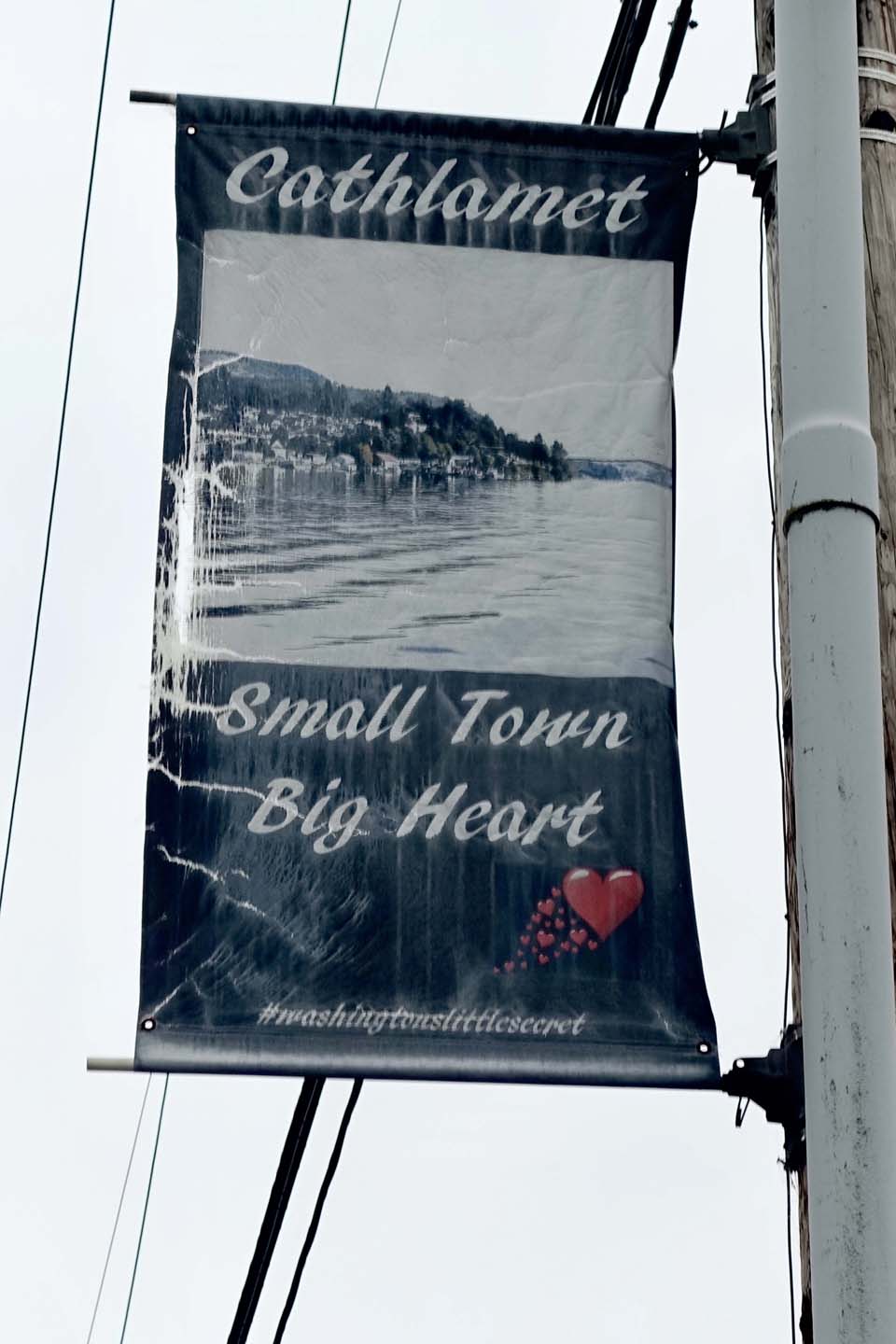
Last week I visited a small historic town,Cathlamet, WA, located on a similarly named channel of the Columbia River. About an hour-and-a-half’s drive north west of Portland, through beautiful landscape once you hit the western edge of Washington State.
Old pilings from Douglas Fir trees used in the sorting and rafting process in 19th century logging.
It has a small marina for boating and fishing, some industrial tug boats still working in the harbor, and 19th century buildings that are well preserved.
The place was settled by early pioneers in 1846 and the Washington Territorial Legislature established Wahkiakum County in 1854, naming it after the native people who had for centuries lived along the river (some 6000 still by1820, the combined population of the Wahkiakums, Cathlamets, and Clatsops and Chinooks.) They had been decimated by the arrival of earlier explorers who brought small pox, observed by the Lewis&Clark expedition, but nothing like the epidemic to follow: in 1830 some 90 percent of the tribal populations got wiped out but what historians believe to be malaria.
Settlers arrived and took over the land, and, equally important, the river. Logging and fishing industries blossomed after 1870, with the majority of homesteaders now coming from Scandinavia, where hunger and poverty drove scores of people to emigrate. These settlers, and later large companies drawn by the riches of the temperate rain forest, cut millions of trees, and drained the wetlands, ignoring their importance for a flourishing ecosystem. The Nordic immigrants were expert fishermen, but also brought a lot of knowledge about dairy farming and organizing as cooperatives to stay in business that became quite competitive. Puget Island, in the middle of the river across from Cathlamet, was even called “little Norway.”
There is a lot written about these early settlers, their hardship, their skills. These days, the major companies who absorbed their labor, logging forests to make paper, have left the region. The fish are gone as well, at least in the numbers that sustained whole communities. Overfishing, environmental degradation in general, ever further pushes of the urban boundary into spawning grounds, and, most importantly, building endless dams upriver, have had severe impacts.
The small town now relies on tourism, providing a marina for fishing boats, or just generell water sports. Many people commute to larger cities to find work, or take on jobs as fishermen on trawlers that fish in Alaska, being gone for months on end.
When I say many people, let’s face that the entire population of the town is 520 people, as of the last census I could find. About 95 percent of them are White with a median annual income of $35.000 or so, a high poverty rate, and about 60% of them are voting for the Republican party.
***
There is a lovingly preserved church, a courthouse, a few memorial markers for tribal populations, or citizens who were killed in world wars.
There is also a small museum, which has historical logging and farming equipment outside and a boat that served as a hub for decades, teaching young men to fish for salmon, sturgeon, silverbacks and all the other species running the Columbia River. (I did not venture inside, if it was open at all, since I forgot my mask in the car.)
Nowhere to be found was a trace of remembrance of the Chinese pioneers who contributed so much to the Pacific Northwest.
At least not what I saw, might have missed it?
We know that in Astoria, OR, some 45 minutes west of Cathlamet, they brought the railroad, they built the river walls and the jetties, they put in the sewer system and worked in the canneries or other fish processing jobs long before the Scandinavians arrived. Some 22% of the population was Chinese at the time. There they are remembered in The Garden of Surging Waves.
We know the cannery industry boomed in the 1870s along Wahkiakum’s Columbia River shoreline as well. We know that Chinese immigrants comprised a high percentage of the workforce. By 1880 there were 500 Chinese workers located in Wahkiakum County as well (today there are 5 (yes, five) Asians counted in the census of 520 inhabitants of Cathlamet.) They were first hired as butchering crews for the local canneries. In Cathlamet they lived in what was called The China House located next to the cannery. (Ref.)
And then? Wherever you look, you find sentences like: “few remained after that.”
Once again, you have to figure out history on your own, when it comes to dealing with violent parts of the evolution of this country. What happened is not just the racist treatment of Chinese migrants, their literal killing and maiming in so many townships on the West Coast across the centuries. There was specifically the Chinese Exclusion Act of 1882.
“U.S. federal law that was the first and only major federal legislation to explicitly suspend immigration for a specific nationality. The basic exclusion law prohibited Chinese labourers—defined as “both skilled and unskilled laborers and Chinese employed in mining”—from entering the country. Subsequent amendments to the law prevented Chinese labourers who had left the UnitedStates from returning. The passage of the act represented the outcome of years of racial hostility and anti-immigrant agitation by white Americans, set the precedent for later restrictions against immigration of other nationalities, and started a new era in which the United States changed from a country that welcomed almost all immigrants to a gatekeeping one.”
If you read the entire entry on the act (in the link above) you’ll learn that it was repealed and amended in 1943. Here is the thing, though: two months ago, the Trump administration published a 162-page report in which it defended the 1882 Chinese Exclusion Act as a necessary tool for protecting American workers and sovereignty. It did so in the context of trying to force our cultural institutions, like the Smithsonian and other museums, to revise their narratives about the supremacist bend of exclusion laws. It explicitly wants to eliminate all mention of historical oppression. I guess it has to order the Library of Congress as well… here is their entry on the plight of Chinese migrants:
“Even as they struggled to find work, Chinese immigrants were also fighting for their lives. During their first few decades in the United States, they endured an “epidemic of violent racist attacks, a campaign of persecution and murder that today seems shocking. From Seattle to Los Angeles, from Wyoming to the small towns of California, immigrants from China were forced out of business, run out of town, beaten, tortured, lynched, and massacred, usually with little hope of help from the law. Racial hatred, an uncertain economy, and weak government in the new territories all contributed to this climate of terror and bloodshed. The perpetrators of these crimes, which included Americans from many segments of society, largely went unpunished. Exact statistics for this period are difficult to come by, but a case can be made that Chinese immigrants suffered worse treatment than any other group that came voluntarily to the U.S.”
It is, of course, not just versions of history that can be shaped by those in power. It is the ongoing attempt to manipulate who gets to live and work in this country that was founded by immigrants. The Trump Administration has now floated a $100,000 fee for Optional Practical Training (OPT), aiming to deter international students from working in the U.S. post-graduation. As Forbes reported,
“This proposal faces opposition from educators, economists and businesses, who highlight students’ contributions to innovation and the economy. Critics also question its legality, especially after a federal judge recently struck down a similar $100,000 H-1B fee, deeming it an unconstitutional tax. Research shows international students on OPT do not harm American job prospects but rather boost employment and innovation. Such a fee would likely harm U.S. competitiveness and drive talent to other countries. The policy’s future remains uncertain.”
China, as of 2024, had the second highest number of International students, some 277.000, in the US, only topped by India. Think of all that talent, all that potential for scientific research lost, should the proposal gain traction and would be considered legal.
It is mind boggling.
So was the view along the river, the green once again soothing a brain boiling with irritation. The kingfisher did his tricks, the clouds slowly lifted. It was still warm, a hint of rain in the air.
We live in a spectacular place. Why on earth won’t we share it?
We live in a complicated world, and are, of course, not the only ones who have a complicated history. Music today is also complicated, but mesmerizing.
Letter to the Person Who Carved His Initials into the Oldest Living Longleaf Pine in North America —Southern Pines, NC
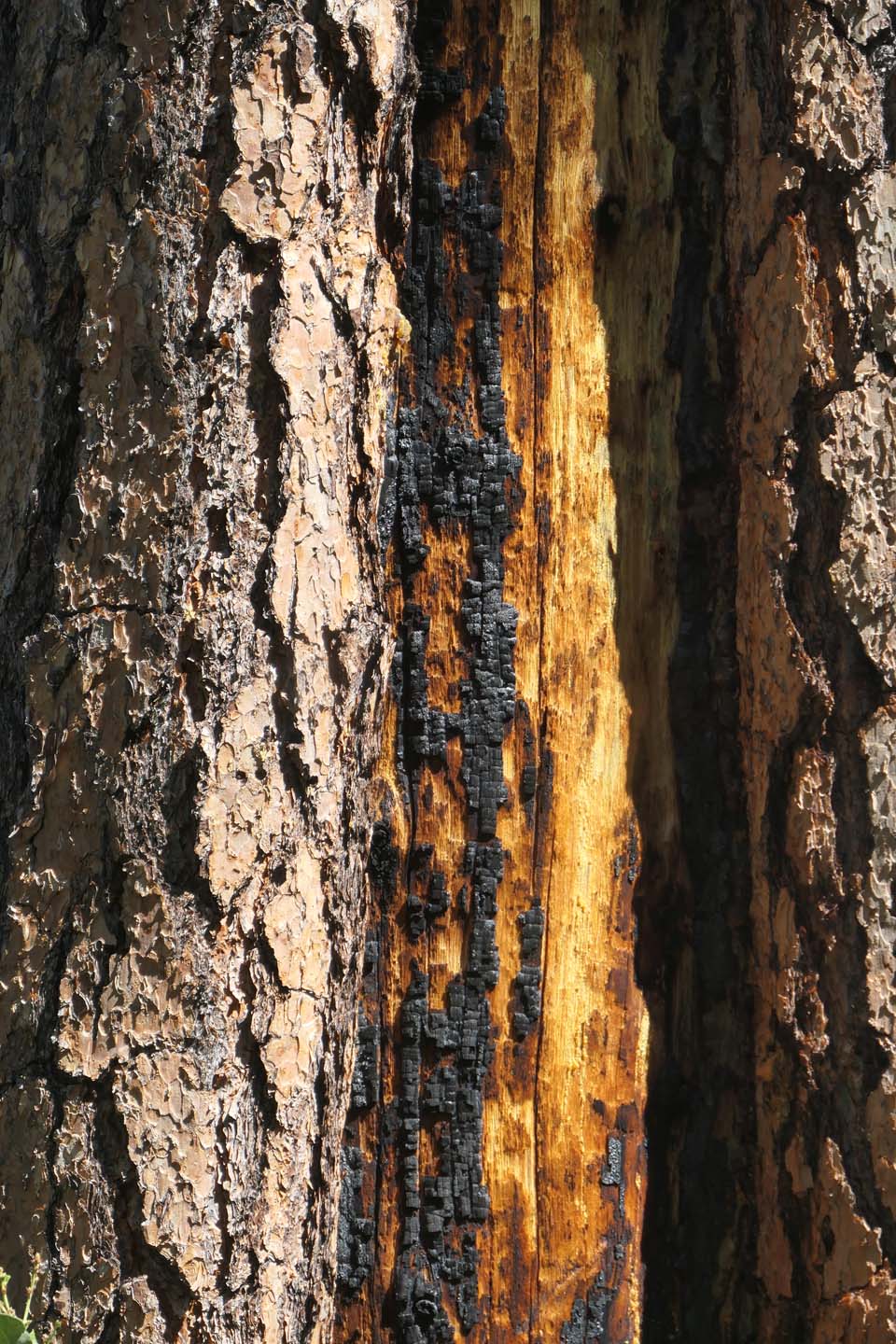
Tell me what it’s like to live without curiosity, without awe. To sail on clear water, rolling your eyes at the kelp reefs swaying beneath you, ignoring the flicker of mermaid scales in the mist, looking at the world and feeling only boredom. To stand on the precipice of some wild valley, the eagles circling, a herd of caribou booming below, and to yawn with indifference. To discover something primordial and holy. To have the smell of the earth welcome you to everywhere. To take it all in and then, to reach for your knife.
If your first reaction to this poem resembles mine, you’d be thinking about vandalism, or ignorance, or a vile belief system that sets man above nature. Enraged about the continued thoughtlessness and indifference of people uselessly harming trees, or anything else out there in nature.
Some second thoughts, though. What do we know about tree carvings? Turns out that there are reports of arborglyphs (or dendroglyphs or sylvaglyphs, however you want to call them) since ancient times. Both Callimachus and Virgil wrote about lovers commemorating the presumed longevity of their feelings by carving the bark of trees with their initials. Shakespeare followed centuries later.
People around the world, not just couples, have carved patterns for communication, expressions of cultural significance, scientific pointers (astronomy) or spiritual appeals into trees. Some were maps or way markers, some related to burial customs. Here in the US, the Chumash tribe used tree carving to relate astronomical movement of the planets. Shepherds in the Southwest, many of them of European origin, carved into aspen trees, including drawings and poems. We have more than 20,000 documented tree carvings across California, Nevada, and Oregon, dating from the early 1900s. Who knows, of course, how many are left after the fires.
Does carving hurt a tree? Potentially (and often) yes, if it is too deep.
Does it make sense to “engrave” important local, or scientific information into trees presumed to be around for a long time to help tribal movement and information sharing before technological means of communication? I’d say yes to that, too.
And was promptly reminded of another way of communication that conveyed not necessarily pragmatic instruction, but instead psychological resilience: the Kilroy Was Here meme found throughout the battlefields of WW II, left by the Allies to indicate presence, power, the might to invade deep behind enemy lines. It boosted morale during times fraught with killing and dying. Of course, it also used every available surface, from beach sands to fences, to bombs or lavatory walls that literally confounded the likes of humorless Hitler and Stalin, respectively. But I digress.
What is the psychological motivation, though, for individuals to leave their marks on trees, marks that have no informational value, e.g. plain initials?
For lovers, it might be a spell-like, wishful thinking that nothing will part them in the future. Alas, sealing your love that way might indeed seal the fate of that tree.
And maybe, for individuals like the poem’s villain, it has to do with our shared fear of mortality. Maybe we can ward off that sense of discontinuity, triggered by a landscape that signals eternal presence, historic continuity, a landscape in which we are but a temporary speck?
So we assert ourselves, leaving a legacy, however destructive, that will remind others and ourselves that we existed (well, someone with those initials, at least.) A cheaper, if equally perverse, version of gilded triumph arches in Washington, D.C. ….
I tend to believe that views of majestic, or even just beautiful natural landscapes often conjure thoughts of past and future, and thus instill a sense of temporality. How many millennia did it take to carve a gorge into mountains of basalt? How many centuries to grow trees of this size? Will these meadows survive the droughts ahead of them, with snowcaps no longer sufficient in providing runoffs? Will these streams run dry during our life time?
It is a short jump to mull our own life span, or the possibilities of being remembered, the next best thing if we can’t be around ourselves. Most people hope that they can influence that remembrance through their achievements, or their sharing of their story, their generosity, or through their children’s recollection.
Here is what I remember: my father showing me the tree he marked with his initials as a 10-year old in a forest that later lived through WW II, bombs and all. I was in awe when I saw it at approximately the same age. And so he lives in my memory. (As he would have without that tree-endangering carving….) Was it a villainous act?
And some people will live on in collective memory through their destructiveness, their cruelty, their indifference. Like it or not. Anything that makes them feel big, rather than enduring a sense of insignificance. Having a future beyond the grave. That includes, of course, arsonists. Those who commit arson by starting fires, and those who omit to engage in environmental protection, leaving us with ever increasing risks from climate change, burning the planet. Much more “efficient” than carving and destroying just a single tree.
Trees serve well as symbols of a future. They are strong, long-lasting, easily imagined to survive, and thus carry a message from (eventually) the past. That assumption is now, of course, likely to be burnt to crisp, alongside its subject. The ever growing fires are making sure of that.
General ideas about the future and our place in it are changing as well. Here is a gift article from the NYT that I strongly recommend for your perusal. Ivan Krastev is the chairman of the Center for Liberal Strategies in Sofia, Bulgaria, a permanent fellow at the Institute for Human Sciences in Vienna and a Financial Times contributing editor.
“We are living in a world very different from the world of the Cold War. Probably our very idea of governance will change. Some of the changes we witness are really radical. Imagine for a moment that some of our most fundamental assumptions have been challenged. We disagree on many things, but we have tended to believe that the future will be better than today and that individuals are mortals but nations are immortals, and we continue living through our children, our sacrifices for the nation, our books. Now some individuals — particularly in Silicon Valley, but also including people like Putin — are starting to genuinely hope that they will not die, some nations are starting to genuinely believe that they will die, and many young people for different reasons have decided not to have children. This political world cannot be understood or explained in the language of the 20th century. This is why neither awakening the utopian energies nor simply defending institutions will be enough to deal with the current crisis.
This is where this sense of vertigo comes from. In politics vertigo is when you see the abyss, but you are not sure: Is this the past or the future?”
What we see from here is, literally, smoke and ashes.
Music today is a fascinating concept album picturing Alexander von Humboldt’s trek to explore nature and cultures on a continent different from his own. Last Lost Words.
Somehow there has been a problem with downloading the content. Hope this one works.
“The sociopathic hierarchies our culture has inherited were invented by a people taught that they were separate from, and likely condemned by, the very thing which had created them—and in response to their disenfranchisement they built a ladder, and dominated every rung they perceived as beneath them; because the sense of superiority masked the pain of disconnection. But, like any masked thing, the fact of its existence remains and, whether engaged with or not, pain always finds a way to be expressed. Ecocide, then, is the logical conclusion to this severance—if that which created us will not love us, better to kill it, than feel the pain of its refusal. Ecocide is deicide is suicide. It is our collective response to feeling orphaned, and not knowing how to be with the grief of it. The tragedy, of course—beside the mountains of dead and dying, and the silence where once there was birdsong—is that it was never even true. That we have always belonged, more completely than we could bear, but that we were handed a set of goggles many generations ago, and we’re still wondering around thinking they’re our eyes.” – Chloe Hope
***
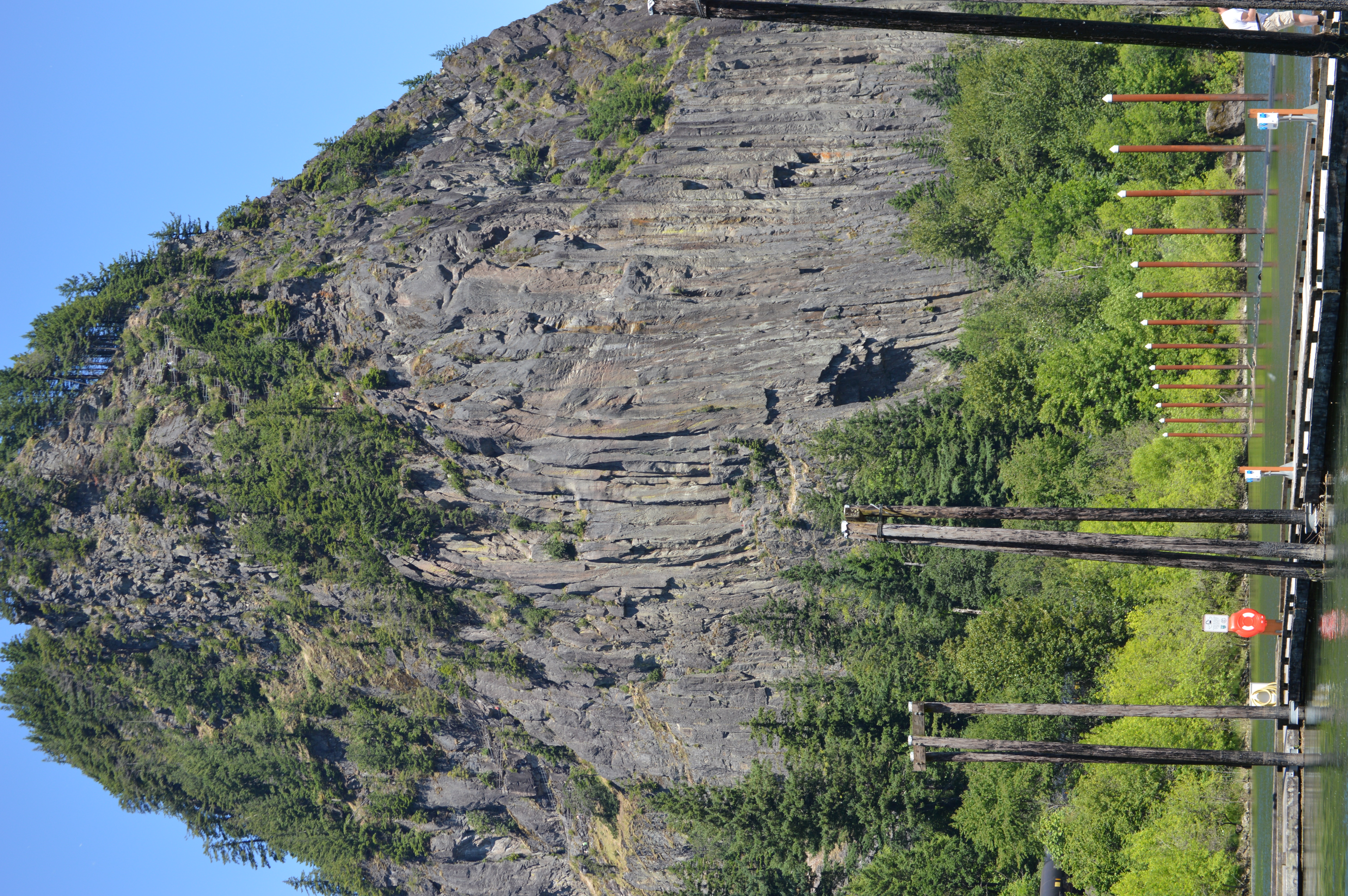
Before it got too hot last week, I hiked along the Columbia river at Beacon Rock State Park, named after a large rock already mentioned in Lewis&Clark’s diaries in 1805 during their westward expedition. A short drive away from Portland into Skamania County, WA, you can dwell on both nature and history.
The nature is gorgeous, the history rotten, what else is new.
The Yakima Treaty of Camp Stevens in 1855 forced the tribal owners of the land – the Sahaptian and Coast Salish Indigenous people – to cede their land. In 1865 the land passed into private ownership, with frontage on the Columbia River, including the Indigenous village below Beacon Rock, claimed under the terms of the Donation Land Claim Act, which codified land claims for the earliest American migrants into the area.
Various private investors across the decades bought and and often defaulted on land and timber parcels or tax loads. In 1929, Spencer Biddle and Rebecca Biddle Wood, then private owners of Beacon Rock, offered it as a land donation to the State of Washington for a State Park. Governor Roland H. Hartle refused the donation. Only when the Superintendent of Oregon State Parks tried to acquire the land, did public opinion force a shift of the Washington State administration which finally agreed to a state park in 1935. (Ref.)
The meadows were filled with daisies, the air full of birdsong, small tributaries gurgling into the larger river. The breeze had the aspen and alder leaves turn, shimmering silvery in the early afternoon light. It was quiet, few hikers out and the rock climbing side of the rock closed to protect nesting falcons.
Across the river you could see the burnt forests of the Gorge, making me think about current administration attempts to dismantle the US Forest Service—shuttering 57 research labs, relocating HQ, and forcing out thousands of federal workers, including woodland firefighters. (Congress could, of course, stop this sabotage.)
How can one possibly explain the rationale for curtailing protection for our lands (and the workers and citizens tied to it? Is it as simple as for-profit motives, or anti-science bent? Refusing to acknowledge the reality of climate change which will increase the need for fire fighting, among others, and more rather than less forest management geared towards meeting the changing needs, to extract the very last penny from the land, acquiescing to certain eventual collapse?
What happened, considering that previous Republican administrations were instrumental in helping science along, now actively in the process of being dismantled not just for forests and agriculture, but weather research, ocean monitoring, food safety, and of course issues related to disease, from prevention to treatment, vaccination to the availability of new drugs. After all, the National Academy of Sciences was founded in the Lincoln administration; NASA in the Eisenhower administration, and PEPFAR (U.S. President’s Emergency Plan for AIDS Relief), PMI (President’s Malaria Initiative) and the NTDs (neglected tropical diseases) program were launched in the George W. Bush Administration.
Some trace the adoption of anti-science stance as a major platform of the GOP to the year 2015 when the antivaccine movement pivoted to political extremism on the right. It continued massively during the Covid pandemic and the perceived curtailing of “freedom” with mask mandates, public closures, social distancing and vaccination requirements. These days the anti-science sentiment has reached a fever pitch, not just nationally. It’s going global risking hundreds of thousands of lives.
A lot of it, alas, has to do with religion. The evangelical hard right claims that science is not only anathema to faith, but actively trying to undermine it. It can’t be trusted (Science is a hoax! Just look at how it changes its finding all the time!). Worse, it is a secular tool to lure people away from the “right” Christian path.
There are additional factors at work, though. One, if you are a member of a group (or a child raised there) that has certain attitudes, you will adopt them for group cohesion and a sense of belonging. And secondly, it is always hard to engage with some new facts or insights that very much contradict your current thinking. (True for all of us.) That is particularly true for people who were raised with or have personalities favoring rigid belief systems rather than flexible openness to the new and different. In other words, it’s hard to get scientific information to stick when it raises the possibility of conflict within a person’s assumptions about the world as it is and SHOULD be.
All the more so, when you think of your world as a hierarchical system where you perceive “elites” associated with science/scientists as looking down on you or pulling the wool over your eyes. If the world is perceived to be a ladder, not only does it help your sense of worth mistreating those on rungs beneath you. Just think how great it’ll make you feel if you can punish those who you assume are above, ready to stomp.
“Let’s burn it all down. That’ll show them who has the power…”
Well, burn it will, and everyone, no exemption, will be harmed by level 3 evacuations or the loss of public lands that have sustained Americans for centuries, and the Native tribes for millennia before that. All in the wake of climate change denial and anti-science rage. Never mind greed.
“The sociopathic hierarchies our culture has inherited were invented by a people taught that they were separate from, and likely condemned by, the very thing which had created them—and in response to their disenfranchisement they built a ladder, and dominated every rung they perceived as beneath them; because the sense of superiority masked the pain of disconnection. But, like any masked thing, the fact of its existence remains and, whether engaged with or not, pain always finds a way to be expressed. Ecocide, then, is the logical conclusion to this severance—if that which created us will not love us, better to kill it, than feel the pain of its refusal. Ecocide is deicide is suicide. It is our collective response to feeling orphaned, and not knowing how to be with the grief of it. The tragedy, of course—beside the mountains of dead and dying, and the silence where once there was birdsong—is that it was never even true. That we have always belonged, more completely than we could bear, but that we were handed a set of goggles many generations ago, and we’re still wondering around thinking they’re our eyes.” – Chloe Hope
***
Before it got too hot last week, I hiked along the Columbia river at Beacon Rock State Park, named after a large rock already mentioned in Lewis&Clark’s diaries in 1805 during their westward expedition. A short drive away from Portland into Skamania County, WA, you can dwell on both nature and history.
The nature is gorgeous, the history rotten, what else is new.
The Yakima Treaty of Camp Stevens in 1855 forced the tribal owners of the land – the Sahaptian and Coast Salish Indigenous people – to cede their land. In 1865 the land passed into private ownership, with frontage on the Columbia River, including the Indigenous village below Beacon Rock, claimed under the terms of the Donation Land Claim Act, which codified land claims for the earliest American migrants into the area.
Various private investors across the decades bought and and often defaulted on land and timber parcels or tax loads. In 1929, Spencer Biddle and Rebecca Biddle Wood, then private owners of Beacon Rock, offered it as a land donation to the State of Washington for a State Park. Governor Roland H. Hartle refused the donation. Only when the Superintendent of Oregon State Parks tried to acquire the land, did public opinion force a shift of the Washington State administration which finally agreed to a state park in 1935. (Ref.)
The meadows were filled with daisies, the air full of birdsong, small tributaries gurgling into the larger river. The breeze had the aspen and alder leaves turn, shimmering silvery in the early afternoon light. It was quiet, few hikers out and the rock climbing side of the rock closed to protect nesting falcons.
Across the river you could see the burnt forests of the Gorge, making me think about current administration attempts to dismantle the US Forest Service—shuttering 57 research labs, relocating HQ, and forcing out thousands of federal workers, including woodland firefighters. (Congress could, of course, stop this sabotage.)
How can one possibly explain the rationale for curtailing protection for our lands (and the workers and citizens tied to it? Is it as simple as for-profit motives, or anti-science bent? Refusing to acknowledge the reality of climate change which will increase the need for fire fighting, among others, and more rather than less forest management geared towards meeting the changing needs, to extract the very last penny from the land, acquiescing to certain eventual collapse?
What happened, considering that previous Republican administrations were instrumental in helping science along, now actively in the process of being dismantled not just for forests and agriculture, but weather research, ocean monitoring, food safety, and of course issues related to disease, from prevention to treatment, vaccination to the availability of new drugs. After all, the National Academy of Sciences was founded in the Lincoln administration; NASA in the Eisenhower administration, and PEPFAR (U.S. President’s Emergency Plan for AIDS Relief), PMI (President’s Malaria Initiative) and the NTDs (neglected tropical diseases) program were launched in the George W. Bush Administration.
Some trace the adoption of anti-science stance as a major platform of the GOP to the year 2015 when the antivaccine movement pivoted to political extremism on the right. It continued massively during the Covid pandemic and the perceived curtailing of “freedom” with mask mandates, public closures, social distancing and vaccination requirements. These days the anti-science sentiment has reached a fever pitch, not just nationally. It’s going global risking hundreds of thousands of lives.
A lot of it, alas, has to do with religion. The evangelical hard right claims that science is not only anathema to faith, but actively trying to undermine it. It can’t be trusted (Science is a hoax! Just look at how it changes its finding all the time!). Worse, it is a secular tool to lure people away from the “right” Christian path.
There are additional factors at work, though. One, if you are a member of a group (or a child raised there) that has certain attitudes, you will adopt them for group cohesion and a sense of belonging. And secondly, it is always hard to engage with some new facts or insights that very much contradict your current thinking. (True for all of us.) That is particularly true for people who were raised with or have personalities favoring rigid belief systems rather than flexible openness to the new and different. In other words, it’s hard to get scientific information to stick when it raises the possibility of conflict within a person’s assumptions about the world as it is and SHOULD be.
All the more so, when you think of your world as a hierarchical system where you perceive “elites” associated with science/scientists as looking down on you or pulling the wool over your eyes. If the world is perceived to be a ladder, not only does it help your sense of worth mistreating those on rungs beneath you. Just think how great it’ll make you feel if you can punish those who you assume are above, ready to stomp.
“Let’s burn it all down. That’ll show them who has the power…”
Well, burn it will, and everyone, no exemption, will be harmed by level 3 evacuations or the loss of public lands that have sustained Americans for centuries, and the Native tribes for millennia before that. All in the wake of climate change denial and anti-science rage. Never mind greed.
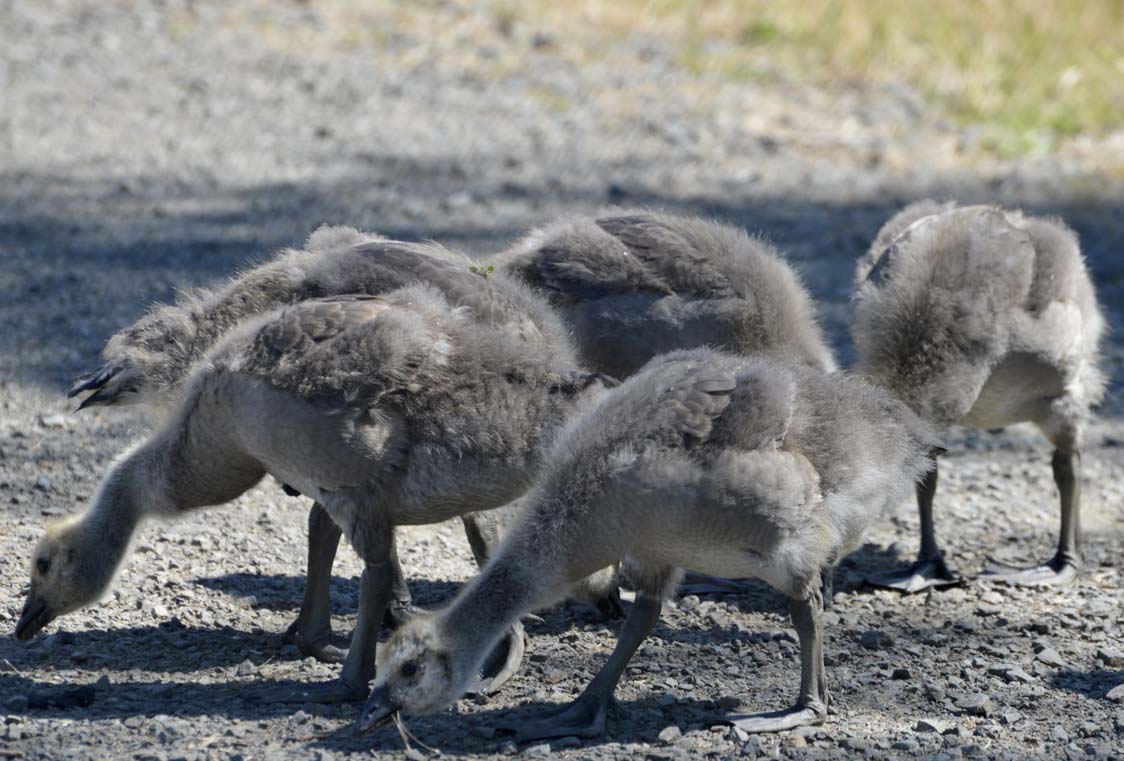
I turned around the corner, and just like that, there were two families of geese. Completely unperturbed by my presence, they walked up from the lake shore, through the grass, onto the path, not 2 meters away from me.
The German word for the way goslings follow a leader in a straight line is “Gänsemarsch”, geese march. Not to be confused with goose stepping, which in German is called Stech Schritt, literally translated as stabbing step.
Goosesteps
A collector of walks, I was practicing my llamastep when one of those white geese with the knob of cheddar on its bill honked at the goslings ignoring the art of the rank and file so adored by Mussolini and other assorted lunatics who I have trouble believing could ever raise one leg parallel to the earth they scorched without falling prey to gravity that was given a special kind of dominion over the fascist paunch, a shabby thing I have never seen hang around the waist of a goose, though who can say for sure under all that heavenly down where the hips of a goose begin and end; and even if tomorrow some budding scholar published a treatise titled The Mystery of Goose Hips to fanfare, it would be an exaggeration of the grossest kind to equate a goose’s trumpet with the barking from the balcony by the sad bullies whose love of the locked leg I will never understand since the knee was so obviously made to flex, which means locking one is most likely a kind of sin against Darwin or God, both of whom I think would disapprove of anything so unnatural as even twenty people moving in stiff unison to music unless the brass and strings were just about to sway and bend to the hot version of “When the Saints Go Marching In.”
I associate goose stepping with authoritarian leaders, although it originated in 18th century Prussia under Prince Leopold I. Locked knees, lifted to a 90 degree angle, brought crashing down with a loud slap, a totally unnatural and physically demanding, if not exhausting form of walk.
Originally performed by batallions or platoons, it was meant to impress with physical prowess, and disciplined determination. By the time Mussolini and Hitler made it one of their trademarks, something else was added to the mix. The synchronized mass movement of bodies was participatory without being democratic. People bought into the mass spectacles, but it was directed top down, all in service of a leader. I am thinking back to what Hannah Arendt wrote about Totalitarianism: an organized, privileged elite pushes masses together into a form of experienced unity that relieves the individual of a sense of isolation. Our need for belonging is sated by participation in a larger whole, the nation or paternalism of some charismatic leader.
Synchronized movement fosters a loss of self, a bonding to or being usurped by some larger unit, taking with it the worries and the loneliness generated by a society in flux. That kind of de-individuation might also, however, lead to complete abdication of responsibility, or upholding of one’s individual moral standards. A mass becomes a mob….. and at the center of it is always a component of fostered hatred.
Arendt, writing about a time when goose stepping was on the rise in Germany between the world wars, described it succinctly:
Enough. I have to stop thinking about urgent political, historical parallels, or I go nuts. Let’s just marvel at the fluffiness of the goslings, the nurturing parent geese, the poet’s ability to distance himself from the horrors with a good portion of humor.
And here the Boss version of the Saints marching…..
On Tuesday I stood in line early to watch the celebration of the Lunar New Year at Lan Su Chinese Garden. The long wait was worth it, despite cold feet and a mounting worry that my parking might expire before I got to visit the garden in full.
A kindly gentleman with a nifty beard contraption kept us in good spirits – he distributed red envelopes with lucky coins in them – Hongbao – to children and adults alike. This is a traditional custom ensuring that generosity is remembered and rewarded.
Then the lion dancers arrived at the plaza in front of the garden. Quick change in attire – it does get hot in those costumes.
Plenty of opportunity for the press to take pictures, and then the dance began.
Each lion had two hidden actors, some quite young, all very athletic as well as expressive. They happily “ate” the dollar bills offered to them by an enthusiastic crowd, kids transfixed.
The musicians were impressive as well, even though I feared I would go deaf standing right next to them, camera in hand and thus unable to plug my ears…..
Finally the gates to the garden opened. Dancers, musicians and public rushed in, making the rounds through the various pathways, performing some more on the terrace.
The garden was beautifully decorated with small, tasteful ornaments on some of the trees, horse graphics in the windows, and colorful sculptures in the ponds.
The combination of Horse (the 7th of the 12 Chinese zodiac signs) and Fire (one of the 5 rotating elements) reoccurs only every 60 years and is believed to be particularly powerful. The sign is associated with energetic, determined, resilient personalities with an entrepreneurial drive. It is also burdened with superstition: in some Asian cultures it was believed that women born under this sign were likely to overpower potential husbands and thus not a good match. Consequently, birth rates declined in those years to avoid exposing daughters to an uncertain fate.
It never ceases to amaze me how cultural mythology actually shapes our behavior.
Astrologers also claim that years of the Fire Horse are associated with important political and social events. Can we find that to be true of 1966, the last time the Fire Horse appeared?
Spoiler Alert: yes we can; and no, I did not check 1965 or 1967 just to confirm my hunch that important things happened then as well, as they do every year….
I will, however, remark on where we are 60 years later.
1966 saw the start of the Cultural Revolution in China on May 14, initiated by Mao Zedong. This socio-political movement aimed to preserve Chinese communism by purging remnants of capitalist and traditional elements from Chinese society. Bloodbath, but also initially making huge inroads to combat inequality, both in land holdings and educational access.
Where are we in 2026? China’s Xi Jing Ping is certainly not as despotic as Mao, but also not as open to relative freedoms as his own father was, choosing a middle path. One can look at repression under his leadership and the fraught issue of Taiwan, but also at long-term planning that takes into account scientific knowledge, climate change and so on, securing economic stability for billions of people.
Other major shifts in governments abroad: Indira Ghandi was elected as Prime Minister in 1966. Tough maneuvers to get into and then stay in power, with a focus on nationalism as well as leftist politics of redistribution of wealth. In 2026 we have Narendra Modi whose right-wing leadership has led to a resurgence in Hindu nationalism, taking away the autonomy of Kashmir in 2019, and relentless democratic backsliding in the following years.
Closer to home: 1966 saw an increased engagement in the Vietnam war and concomitant protests. It also saw a variety of legislative actions benefiting Americans: Lyndon B. Johnson’s presidency created significant domestic policies, including the Great Society programs aimed at eliminating poverty and racial injustice.
Dr. Martin Luther King Jr.’s ‘Letter from Birmingham Jail’ was published. It became a seminal text in the American civil rights movement.
Medicare was officially implemented. The Freedom of Information Act was signed into law, promoting transparency in government.
We joined the United Nations International Covenant on Civil and Political Rights and the International Covenant on Economic, Social and Cultural Rights. These covenants are key international treaties that outline fundamental human rights and freedoms, establishing standards for all nations.
The National Organization for Women (NOW) was founded on June 30, 1966, and aimed to advocate for women’s rights and equality, addressing issues such as workplace discrimination and reproductive rights.
The Endangered Species Act was signed into law on December 28, 1966, marking a significant step in wildlife conservation efforts in the United States. This legislation aimed to protect species at risk of extinction.
And last, but not least, the Cuban Adjustment Act was signed by President Lyndon B. Johnson. This legislation aimed to provide a pathway for Cuban refugees to adjust their status.
2026: Measures to improve or protect the rights of women and racial minorities are actively rescinded, under the guise of DEI hostility. Reproductive rights and voting rights are under particularly vicious attacks. I had written about the SAVE act earlier, but remember, if ratified it will make it harder for married women, poor people, students and native Americans to vote. Millions of them.
We have numerous instances where healthcare is endangered through the new bills that Congress and the President established, with Medicare a likely target for further restrictions.
We are blockading Cuba (while ICE is rounding up Cubans in Florida) to the point where we are accused of human rights violations by the international community.
Can some Fire Horse please gallop in to promote significant directional change for the rest of 2026????
In the meantime there is always the natural beauty of the garden, camellias, plum blossoms and paper bush in bloom. There are also many events scheduled (see the garden’s website) including light shows and miniature horses on site to be admired by the kiddos.
Music today: Dmitri Shostakovich completed his Cello Concerto No. 2 in 1966, matching the mood of our times.
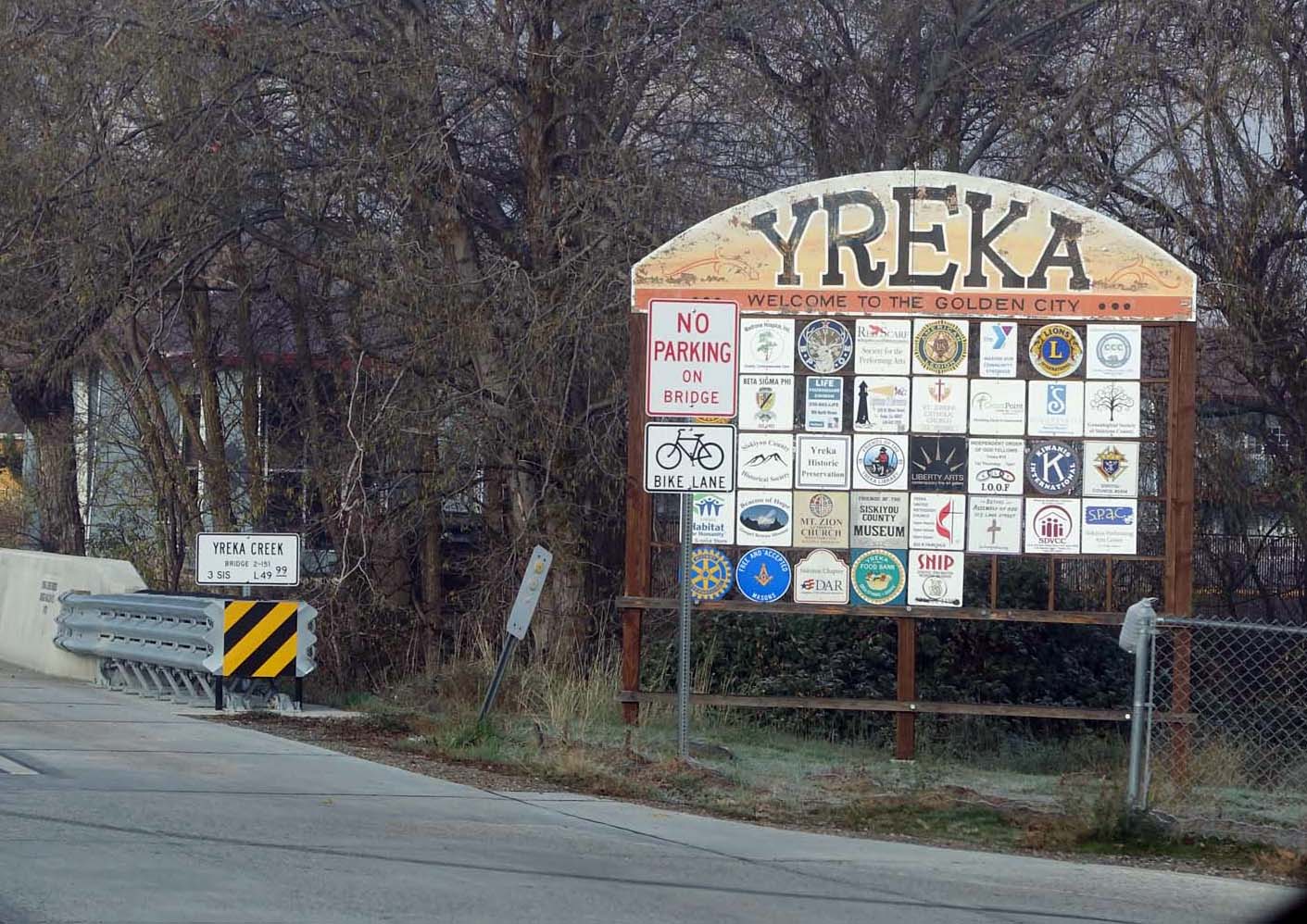
It was a cold, frosty day. As always on our drive on I 5 South to California, we looked for something new to explore.
This time we picked the small town of Yreka, known for its 19th century gold rush, preserved historic buildings and a park that promised historical mining tools and structures.
The travel brochures praise the town for its quaint main drag with many historic buildings still intact, and the beauty of the surrounding Siskiyou mountains. (They are a coastal subrange of the Klamath mountains, which get significant precipitation from the ocean and early snow. It was the land of many different tribal nations with a common language spoken, Athapaskan, also known as Dene.)
“Greenhorn” Park, criss-crossed by diverse hiking trails, offered views onto the mountains across a spacious reservoir; lots of old-growth trees and a few pieces of old mining machinery, a smithy next to a fabulous playground – clearly a good place for local and tourist families to enjoy and take a break from highway driving.
It proudly presents the history of the gold rush, starting in the 1850s, when people arrived upon the news that gold could be found here as well, not just further south.
Rush is an appropriate word – between March of 1851 when the first serious gold was discovered and May of that year, some 2000 hopeful men erected tent camps, shanties, and a few rough cabins on the flats near the Scott river. By August it was 5000, with wooden buildings starting to be constructed on what is today called Miner Street. A year later the California legislature created Siskiyou County. The town was called Yreka. Some say it was adopting the Indian name for Mt. Shasta, White Mountain. Mark Twain had a different theory: place had acquired its mysterious name ”when in its first days it much needed a name” through an accident. There was a bakeshop with a canvas sign which had not yet been put up but had been painted and stretched to dry in such a way that the word BAKERY, all but the B, showed through and was reversed. A stranger read it wrong end first, YREKA, and supposed that that was the name of the camp. The campers were satisfied with it and adopted it.
(Turns out, YrekaBakery existed at the time and advertised its palindromic name. Twain was too good a satirist, likely, to let that fact fly by unused….)
On this quiet, early Sunday morning, the town itself was deserted, but for an aimlessly wandering older woman who screamed her cold misery out into the world. Quaint bordered on somewhat run down – and that was before I read up on the history, and the current status of this hamlet of some 7000 people. The main block of businesses and shops quickly gave way to neighborhoods showing lots of signs of distress.
The statistics are one thing – crime rates are higher than in 90.6% of U.S. cities. Median household income in Yreka is 25% lower than the national average. Unemployment is 33% higher than national average. The poverty rate is 50% higher than the national average. There is no real industry, work can be found mostly in healthcare, education and retail. Poverty-adjacent drug use and houselessness are soaring. Just this year, a large encampment of over a hundred unhoused people, consolidated on a hill visible from the town center, was bulldozed, because the town- people had enough of the garbage and disorder they associated with the camp. The result? Dispersement into the adjacent forests, since no housing alternatives are offered, exponentially increasing the forest fire risks.
As a traveling visitor you can’t really know all the facts. Yet there are consistent reports of law suits, including some class action ones, directed at the Sheriff, his office and the county administration, with accusations of insidious racism and persecution of minorities in the region.
Chinese miners came to Yreka early and, across the span of a century saw multiple fires devastate their parts of town. Nowadays, Asian Americans, particularly the Hmong community in Siskiyou County (who came to the U.S. as refugees after fighting alongside the U.S. military in the Vietnam War,) had to fight against ordinances that deprived thousands of them of basic water for survival, hygiene, and wildfire defense. The Sheriff’s prohibition of water trucks carrying over 100 gallons to travel to the areas where these farmers live, was eventually repealed in Court. For now, the crisis that degraded their health, resulted in the loss of livestock and gardens, left people unable to fend off wildfires, and forced many to leave their homes, has been ameliorated.
Today, the Asian American community members’ major class action lawsuit against Siskiyou County officials and the Siskiyou Sheriff’s Department for their sweeping racial persecution campaign is still pending. “In this case, Chang v. Siskiyou County, community members and their attorneys at the ACLU Foundation of Northern California, Asian Law Caucus, and Covington & Burling LLP detailed how county officials restrict people’s right to water and execute unlawful traffic stops, search and seizure practices, and property liens in a blatant effort to isolate residents of Asian descent and drive them out of the region.”
***
This part of Northern California is known for a movement to secede from the state and create a new one, the State of Jefferson (they are joined by parts of southern Oregon.) Folks feel not represented as rural communities and want to have independence – or, as they put it, their liberty and freedom back, currently “withheld” by the folks further South. They claim their taxes are funneled into large population centers and not used for their own needs (the reality is that Sacramento spends far more money on these rural regions than they take in.)
By their own accounts – here is a short documentary that really represents the type of people fighting for a new state – they want to go back to earlier times which they felt were better, and they stress the importance of blood and soil – their words, not mine – as a source of power.
They claim it is all about liberty and representation – but there might be something more insidious underneath: “a barely concealed desire to carve an ethnostate out of the only part of California where whites still constitute a majority, and not just a conservative strain of politic. Today, almost every county north of Sacramento has passed a resolution in favor of joining the State of Jefferson. From Mendocino to Alturas, neon Xs glow in bar windows and billboards exhort passersby to join: Jefferson, the 51st state. (Ref.) (The double x on their flag refers to being double crossed by the state governments in Sacramento, CA and Salem, OR.)
The years of Covid pandemic mask protocols and an influx of non-White workers have stoked the passions – and hardened minds against being told by outsiders who supposedly don’t share their values – faith, family, patriotism – what they can and cannot do, much of it centered around gun issues as well. According to observers, violence is now publicly threatened and representatives of the movement regularly appear on the Alex Jones podcasts and the like. There is a Cottonwood militia movement that claims to have trained over 1000 people so far, and is claimed to be linked to the newly elected, far-right Shasta County Board of Supervisors as well as several of the Sheriffs.
Legally, the creation of a new state is all but impossible. The state from whom you wish to secede has to agree, and then congress has to approve the establishment of the new one. Beyond the legality issues, though, I find it scary to contemplate the motives that lie underneath, and the networking that is going on among all of these far right, white supremacist organizations to do both, get their candidates into state offices and prepare for more violent modes of action when they deem the time has come. Militias in Shasta County are open about their association with, among others, the Proud Boys, and to the Bundy family, of fame for their radical actions in Oregon a few years ago.
Walking along the deserted Miner St. in Yreka, you wouldn’t know. Shop windows and saloons offered touristy kitsch and libations, all closed, of course, on a Sunday morning. Maybe they were all preparing for a birthday party…
We drove on, as always struck by the beauty of the American West, and the incomprehensible sentiments that lie underneath so much of what we see at the surface, divisions that fester with hatred, including the fear or despising of true equality for all humans of all races and origins
To stick with the theme (while insisting on diversity): Music today is by Bob Dylan about the Union’s Sundown….and by Fela Kuti about Independence, and about nationalist leaders by Burning Spear.
When I brought my then boyfriend back to Germany for the first time, my father lovingly created a sight-seeing itinerary for a road trip, down to the minutes between named Autobahn exits, hotel information and sites worth visiting. What feels like an eternity later, my now husband has taken up the banner, luckily restricting himself to points of interest and highway exit numbers.
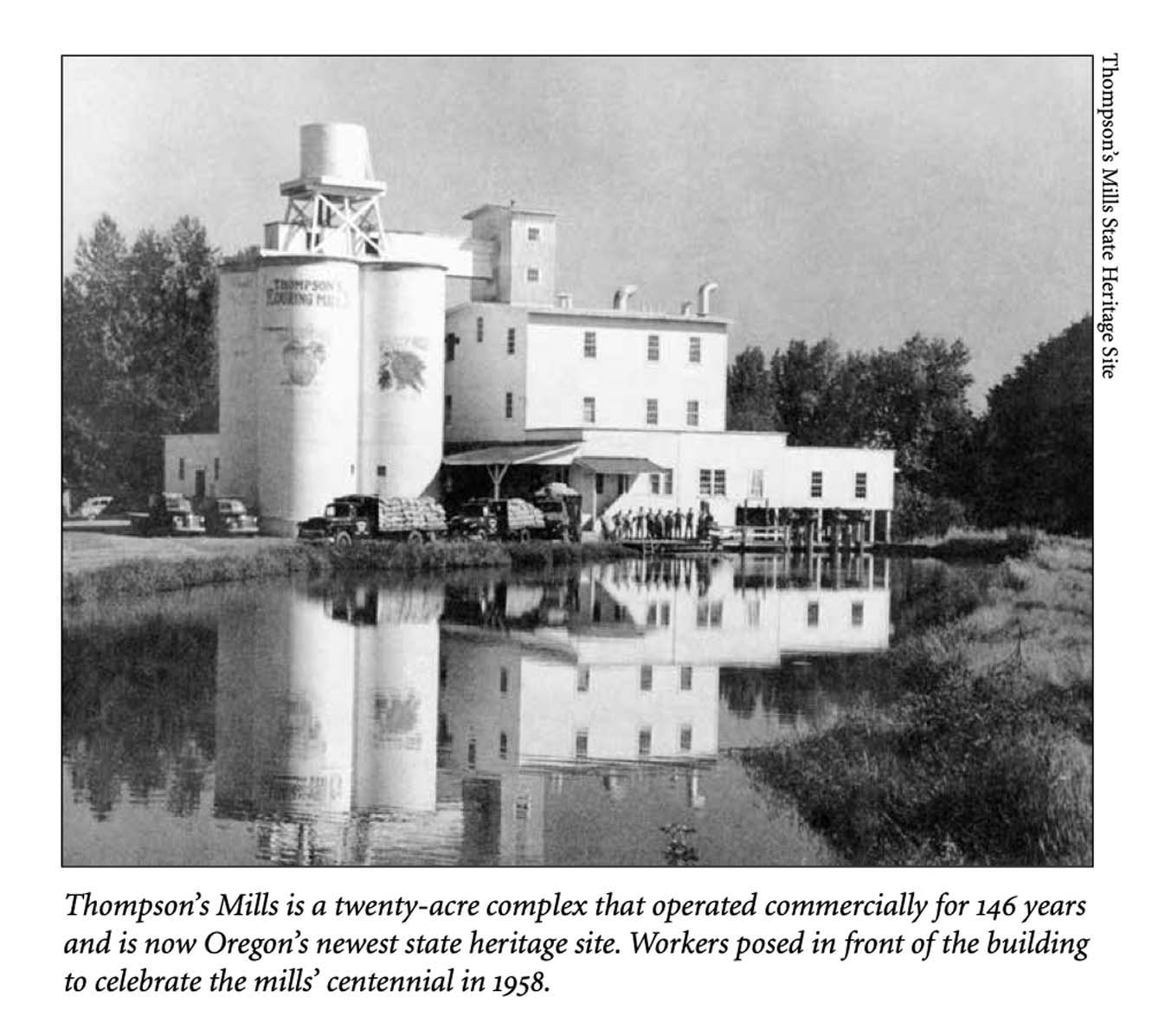
This is how we found the Thompson’s Mills State Heritage Site located a few minutes off I 5 South, in Shedds, Oregon, near Corvallis, on our drive to California last week.
Oregon’s oldest water-powered grist mill is a photographer’s candy store and a historian’s treasure trove. The entire economic, social and political history of Oregon and its relation to world economies and technological development is encapsulated in the objects and machinery contained in these Rube Goldberg-like buildings. Some of it was relayed by knowledgeable and friendly docents, much of it can be found here (I will summarize also from the same author’s in-depth publication in the Oregon Historical Quarterly. Fascinating stuff.)
The six-floor mill building, with storage silos, milling machines and hydro-power plant are located on 20 acres, with a Queen Anne’s home for the mill keepers and boarders who worked at the site, outbuildings and garages, next to the mill. The adjacent Calapooia river was dammed up by the mill owners starting in 1858 until 1986, to produce the necessary power.
In the early days, with a number of changing owners, the mill flourished due to intense demand for flour from the California Gold Rush. There were obstacles – the mill burnt down in 1860, to be rebuilt again immediately, and the small town of Boston nearby completely relocated when the rail road was built further away. But the next owners, German immigrants Martin and Sophia Thompson whose family would operate the mill for three generations, benefitting from international developments and smart investment in ever new technology, kept up with changing fortunes in the trade for a long time.
The Thompsons’ arrival coincided with Oregon’s entry into the Asian Pacific Rim market – flour exports to China were wildly profitable for Oregonians who supplanted the earlier Californian trade opportunities. National politics, however, brought this to an end: the Chinese Exclusion Act of 1882, extended by the Geary Act that same year, restricted Chinese-worker immigration to the United States for an indefinite period. China retaliated sensibly, building its own mills and by 1910, most exports to China had ended, and exports to Hong Kong dropped by 50%.
World War I changed the downturn. The Hoover administration’s food relief program required flour for starving allies. The mill produced 12 hours a day, selling directly to the U.S. Food Administration, with profit margins the highest for the entire run of the family business. I shudder to think of the working condition: the noise was infernal (a 2 minute demonstration of just one milling operation – they had many in parallel going on at the time when the mill was active – was so loud you’d want to cover your ears. Dust was pervasive at the time, despite the installation of blowers, mostly intended to prevent fires, though. Even now, I was glad to be masked, as always.)
Enter sliced bread, yes, you read that right. By 1927, the nation’s enthusiasm for store-bought sliced bread significantly dropped the demand for grocery-store flour, leaving mills to struggle economically. The Thompsons started to diversify, selling flour sacks almost at cost, which had become valuable fabrics for home sewing since the Great Depression. Eventually stopped producing flour altogether in 1942, manufacturing pellets from grass seed instead, processing oats, corn and molasses, increasingly focussed on animal feed. Eventually the mill was converted into a power-generating plant in the 1980s, selling power to Pacific Power and Light Company. By 2004 it was sold to OPRD and converted into a heritage site, with more than 3000 artifacts catalogued and staffers learning to operate the original machinery for demonstrations. By 2007, the site was opened to the public.
It is truly worth a visit, both for the thoughts it generates about the history captured in the various exhibits, and the thoughts about what was excluded.
***
The land on which the mill stands, was part of a plot purchased in 1851 by Americus Savage, his wife and 5 children, the newest born on the pioneer trail to Oregon and named Columbus. (What do these names make you think?) The Oregon Donation Land Claim Act offered 640 acres to married couples, and Savage claimed a lot near the Calapooia river, that came with water rights, all of which he sold at a later point. The land and its rivers and watersheds had been home to the Tsankupi (“Calapooia River”) band of the Kalapuya for over 10 000 years. The 1855 Treaty of Dayton, taking away the land for promises of various services, led to the forcible removal of the Tsankupi to what are now the Grand Ronde and Siletz reservations. They are now members of Confederated Tribes of the Grand Ronde Community of Oregon and the Confederated Tribes of Siletz Indians.
I did not see a land acknowledgement at the historic mill site, but I might have simply missed it.
There is, however, one to be found from The Calapooia Watershed Council which acknowledges the traditional homeland of the Kalapuya people. There are more than fifty different ways of spelling Kalapuya, including Calapooia and Call-law-puh-yea.The council is located in Brownsville, Oregon in the traditional territory of the Tsankupi (“Calapooia River”) band of the Kalapuya.
There were some allusions in the mill’s exhibits to fights over water –
“Thompson’s Mills held some of Oregon’s oldest water rights, which provided the mill 180 cubic feet per second of the Calapooia River even in water-short times. Because Oregon’s water laws are based on the principle of prior appropriation — meaning the oldest water rights on a stream are the last to be cut off in times of low flow — Thompson’s Mills was able to demand water rights regardless of the needs of users in other areas. During times of low flow, the mill was allowed to divert the river’s flow to maintain the allowed 180 cubic feet per second, leaving little or no water for upstream farmers and ranchers.” (Ref.)
This went on for decades, legal threats and fights included, as well as physical threats to the safety of the mill. Note, though, that the conflict ensued between various factions of the settlers, and, increasingly, environmentalists in the 1990s, and did not mention specifically the Native American history of protection for salmon or other spawning fish that were part of the tribal cultures. It was the tribes, who for some 14000 years had been the stewards of the Willamette Valley, with controlled burning practices helping to clear the land, deposit nutrients into the soil and guarding fish populations, making it an extraordinarily fertile place.
Water levels now, (after dam removal and increasing droughts due to climate change, as seen from inside of the mill) – on left – and then – on right,
Who decides what history is included or left out at historic sites or other history institutions?
This question loomed large for me in the context of other developments on Kalapuyan land: the recent closure of Five Oaks Museum, a history museum founded 1956, showcasing the life of pioneers with artifacts provided by their descendants. Its exhibition This Kalapuya Land, was drastically changed with new leadership and a guest curator, Steph Littlebird Fogel (Grand Ronde, Kalapuya) in 2019. The revised and critically annotated, new This IS Kalapuyan Land was a mix of historical information, contemporary Native American art, and historic artifacts, including an impressive slate of artists, offered online in 2020.
The new goal was to prompt critical thinking around representation of Indigenous history and identity in non-Indigenous institutions, and the mood of the staff, diversified Board and leadership was excited and hopeful in 2021 after the museum emerged from Covid closures.
I have no privileged information about all the factors that led to the closure, but all agree that operations funding was no longer available from previous sources. The museum, with a six figure loan liability, had to close the building and furlough the staff last December. Many of those who had previously supported the institution, in particular foundation grants and private donors, did not renew funding; some were explicitly upset over the direction the museum was taking, away from pioneer traditions towards more diversified story telling, including an online exhibition called “Gender Euphoria: Contemporary Art Beyond the Binary” (Ref.)
Any attempts to find alternative sources of funding were not seen as feasible by the Washington County Board of Commissioners (BCC) who are focused on how to shut down the operation and distribute the collection. Washington County has now resumed control of the Cultural Resources Collection.
Whose story gets told and how it gets told is more often than not dependent on who holds the purse strings, or the political power to engage in revisionism, both locally and nationally. This fact was already claimed by Missouri Sen. George Graham Vest, of all people, a former congressman for the Confederacy in 1891, still at that late date an advocate for the rights of states to secede.
On a national level, this does not just pertain to contemporary attempts to re-install confederate names, monuments, or privilege to non-inclusive sites (remember that most Confederate monuments were erected after 1890 — not to memorialize lives lost during the Civil War, but to assert white power in the Jim Crow era.) As I write this, there are also changes to exhibitions concerning slavery at the Smithsonian, and at the U.S. Holocaust Museum:
An exhibit at the United States Holocaust Memorial Museum that takes a critical look at the United States’ response to Nazi Germany is slated to temporarily close after Labor Day for upgrades, sparking concern among some staff over what potential changes could be made amid President Donald Trump’s sweeping review of museums and their programming, sources tell ABC News.(Ref.)
This after the New York Holocaust Museum removed Trump images from a Hate Speech exhibition after intervention from a Board Member this June. (Ref.)
Art, just as factual information, can have an impact on our perspectives of history – but only if it can be seen. The selective curation of museum contents, or the loss of museums altogether, do no favors to an American people trying to understand its history fully.
It could not have been more perfect. The light was right, the temperature warm, but not hot, there was a feeling of adventure in the air. After way too many days listlessly stuck at home with the oppressive heat, I was exploring the sandstone cliffs of Cape Kiwanda, located some 2 hours southwest of Portland at the shores of the Pacific.
The colors and configurations were breathtaking, I could have photographed all day long. Much of it reminded me of Paul Klee (and so some of today’s images are overlays of his art and nature, just to give you the idea.)
The association had probably been triggered by the fact that I had yearned to visit an exhibition that recently closed in Berlin, and was stuck with thinking around the issues it raised, without being able to travel to see it.
This photograph of a sandstone angel overlooking the bombed-out city of Dresden in 1945 was part of the show at the Bode Museum, which brought together images of angels from the Berlin museums that were damaged or burned during the Second World War.
The Angel of History: Walter Benjamin,Paul Klee and the Berlin Angels 80 Years after World War II centered around Paul Klee’s most famous artwork Angelus Novus and Benjamin’s texts laying out his thoughts on the “angel of history,” as he called him. The exhibition also showed excerpts of Wim Wenders’ Wings of Desire(1987), a film in which two angels stand watch over a divided Berlin and in which explicit reference is made to Klee’s 1920 watercolor and Benjamin’s interpretation of the artwork.
A Klee painting named Angelus Novus shows an angel looking as though he is about to move away from something he is fixedly contemplating. His eyes are staring, his mouth is open, his wings are spread. This is how one pictures the angel of history. His face is turned toward the past. Where we perceive a chain of events, he sees one single catastrophe which keeps piling wreckage upon wreckage and hurls it in front of his feet. The angel would like to stay, awaken the dead, and make whole what has been smashed. But a storm is blowing from Paradise; it has got caught in his wings with such violence that the angel can no longer close them. The storm irresistibly propels him into the future to which his back is turned, while the pile of debris before him grows skyward. This storm is what we call progress.[3]
The piles of debris are, of course, not restricted to the past – we see them growing skyward all around us, in the present, if we don’t close our eyes in desperation.
***
The look backwards towards the past, however, is under (re)construction – what we are allowed to see now depends on the whims of those who think they own the interpretation of the past.
President Trump’s executive order, titled “Restoring Truth and Sanity to American History,” aims to review and align the Smithsonian Institution’s exhibitions and materials with his interpretation of American history, focusing on removing what he calls “improper ideology.” This initiative is part of a broader effort to ensure that national museums reflect a narrative of American exceptionalism and unity ahead of the 250th anniversary of the United States. The White House
Whether it is controlling the Smithsonian, other museums or our universities, the National Park Service or the National Endowments for the Arts, Public Broadcasting or the Voice of America or shifting public to private education – it boils down to preventing people to gain knowledge and engage in independent thought – both reviled by authoritarians. (I had previously written about fascism and education in more detail here.)
While we still can, let’s look back at history not so long ago.
(My sources for today are the general education you get when visiting the site of the U.S. Holocaust Museum, Michael Burleigh’s The Third Reich: A New History, a moral history reasserting the existence of a totalitarian dictatorship in Germany, Sebastian Haffner’s Defying Hitler: A Memoir, and, most importantly, Richard. J. Evans’ The Coming of the Third Reich. It is an intellectually rich guide, written in totally accessible language and structured in ways that really cover all aspects of the German people falling for the lure of Nazism.)
From its very beginnings, the National Socialist regime of Germany tried to shape cultural displays and production, trying to force German culture into the frame of the preferred ideology. Art that did not conform to the Nazi norms was declared degenerate, confiscated and/or destroyed, Paul Klee’s works among them (and he was fired from his position as a professor at a prestigious art school). Work was sold on the international market to enrich the regime and pay for war preparations. This was, of course, just one facet of societal control.
If we look at the larger picture, the goal was to amass absolute power right off the bat – handily provided by the Enabling Act which got passed in 1933. It allowed Hitler to pass laws without the consent of the Reichstag, basically eliminating all power for our parliament. If you look at power consolidation here, now, you will not have to venture far from the text of Project 2025, or, for that matter, the Supreme Court decisions of late.
One of the Nazi regime’s early undertakings was to identify minorities who could be dehumanized, labeled as them to create an us, both through rhetoric and through punitive actions of cleaning the streets of subhumans (Untermenschen) and later people with disabilities – we know what ultimately followed. (Rounding up the homeless in Washington, D.C. anyone? Putting immigrants or political opponents on trial or in deportation camps?)
Parallel to that, there were purges of the civil service, firing all who were deemed illegal or simply disloyal from professional institutions. The Law for the Restoration of the Professional Civil Service from 1933 allowed the immediate removal of Jews and political opponents. (Just peruse the jobless numbers in Washington D.C. right now. Or look at the state of the Veterans’ Administration.)
At the same time, Hitler confronted military leaders and started to shape the military as his own power tool. Here is a link to the historical time line of submission of the military, documented in the encyclopedia of the U.S. Holocaust Museum. (As of this writing, military personnel from numerous states have been deployed in Washington, D.C. Armed, no less.)
In addition to the military, the Nazi regime established the Geheime Staatspolizei, the Gestapo. They wanted a centralized political police force that would be directly reporting to Nazi leadership, undermining state and local police. It took but three years, to 1936, to form such a force; that summer it was combined with the criminal police (what would here be the feds) under SS leader Himmler and his deputy Heydrich. The Gestapo’s mission was to “investigate and combat all attempts to threaten the state.” It could arrest, try and send those who criticized the regime to camps, under the 1934 law that made it illegal to criticize the Nazi Party. It could monitor individual behavior, and even send people directly to camps, under a mechanism called protective custody. They were allowed arbitrary warrantless searches and surveillance on mail and telephone calls. (Here is a smart piece on why it is risky to form analogies between ICE and the Gestapo, yet commonly seen these days.)
Note that the vast majority of Aryan Germans did not encounter or even expect to encounter the Gestapo during the 1930s. But the Gestapo was a constant threat for political opponents, religious dissenters, homosexuals, people of color and Jews. In fact, both Klee and Benjamin had to flee their country. Paul Klee left for Switzerland in 1935 and got very ill very fast. He died in June 1940, after 5 painful and increasingly debilitating years, from an autoimmune disorder triggered by stress as one factor, a disease that destroyed his body; his friend, admirer and collector Walter Benjamin took his own life but three months later, stranded in Spain while trying to escape the Nazis.
***
Exhibitions like the one in Berlin allow us to look back at the horrors brought upon human kind and the environment by a fascistic regime. They bear witness to the death, the loss, the damage wrought by war, and make us think about the reach this suffering had for subsequent generations. It is this kind of honest assessment about the ravages of historical events that many fear will be suppressed by the administration’s executive orders and institutions bending the knees.
What I don’t understand, though, is that we seem to be oblivious to this history even while we are still able to look at it, read about it, being taught about it. How can we so blindly follow the play book that brought us darkness once and is likely to bring it again in one form or another? A play book, step by step mirrored by the one now catapulted into use under the guidance of the Federalist society? Amassing absolute power, destroying democratic norms, ignoring the rule of law, marginalizing and demonizing scape goats to speak to the baser instincts of people who feel powerless, has plunged the world into catastrophe. What prevents us from learning from this? Honest question, not a rhetorical one.
Richard J. Evans, citing journalist Sebastian Haffner who interviewed contemporary witnesses, provides some hint at how the process of voluntary subjugation psychologically unfolds:
“Lawyer Raimund Pretzel asked himself what had happened to the 56 per cent of Germans who had voted against the Nazis in the elections of 5 March 1933. How was it, he wondered, that this majority had caved in so rapidly? Why had virtually every social, political and economic institution in Germany fallen into the hands of the Nazis with such apparent ease? ‘The simplest, and, if you looked deeper, nearly always the most basic reason’, he concluded, ‘was fear. Join the thugs to avoid being beaten up. Less clear was a kind of exhilaration, the intoxication of unity, the magnetism of the masses.’ Many, he also thought, had felt betrayed by the weakness of their political leaders, from Braun and Severing to Hugenberg and Hindenburg, and they joined the Nazis in a perverse act of revenge. Some were impressed by the fact that everything the Nazis had predicted seemed to be coming true. ‘There was also (particularly among intellectuals) the belief that they could change the face of the Nazi Party by becoming a member, even now shift its direction. Then of course many jumped on the bandwagon, wanted to be part of a perceived success.’ In the circumstances of the Depression, when times were hard and jobs were scarce, people clung to the mechanical routine ofdaily life as the only form of security: not to have gone along with the Nazis would have meant risking one’s livelihood and prospects, to have resisted could mean risking one’s life. “( Haffner, S. Defying Hitler pg. 111-114.)
***
So the angel of history looks at piles of debris. Sandstone is also a pile of debris, generally speaking. It is made out of fragments of other minerals or rocks, grains from quartz and feldspar flying through the air and accumulation for eons, then cemented by silica, calcite, and iron oxide, which contribute to the color the we see. Silica and calcite are general very light in color or even colorless, iron oxide, however, is rust-red and often stains the sandstone that way.
The cliffs at Cape Kiwanda are made of some 18-million-year-old particles, and the fact that these formations still stand has to do with their position relative to a haystack rock in front of them – it breaks up the wave action, sheltering the walls from the ever eroding surf, although erosion is not stopped completely.
Bits and pieces are constantly worn away, and sometimes massive sections drop off into the ocean. Two years ago, two large sinkhole appeared with months of each other on top of the cliffs, forcing a costly re-fencing to protect the public wandering around there.
Climate change makes it all worse. More frequent storms whipping the waves, longer periods of rain, heavier rainfall in general during climate patterns like the El Niño Southern Oscillation (ENSO) which is brought about by rising temperatures, create more and more damage. Of course, whether we will learn about climate change or support science to combat it, is another question that warrants looking at historical precedents. Doesn’t look too good. The Angel of History is at this point probably better off flying around with the pelicans to distract him/herself rather than be glued in horror to the views of wreckage accumulating around them…..
Then again, Robert Reich reminds us: “Remember: If we allow ourselves to fall into fatalism, or wallow in disappointment, or become resigned to what is rather than what should be, we will lose the long game. The greatest enemy of positive social change is cynicism about what can be changed.”
What he says.
Music today are George Crumb compositions reacting to some of Klee’s paintings. Here, an here.