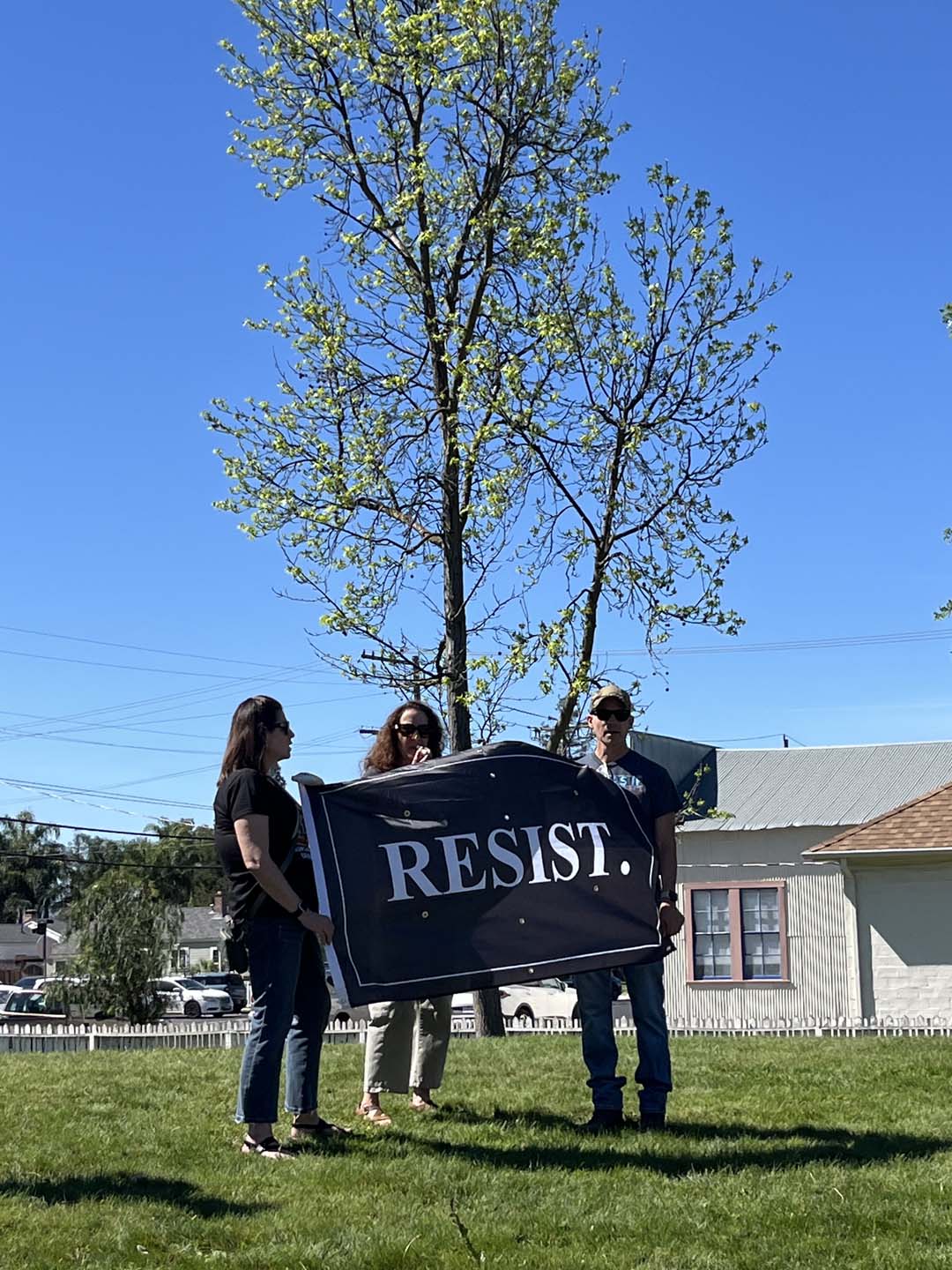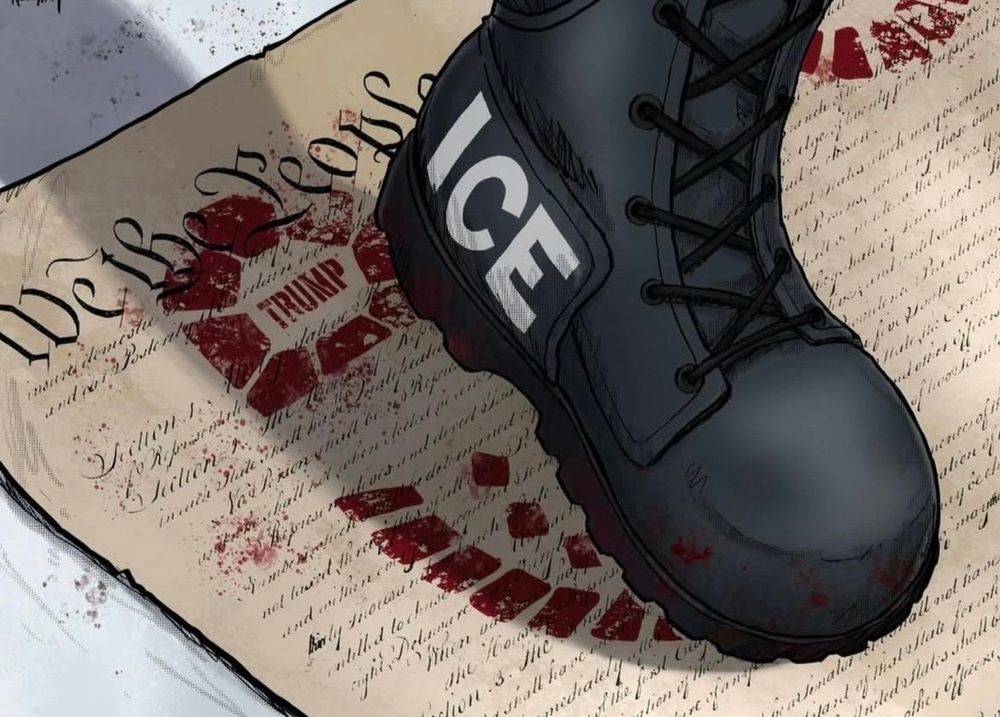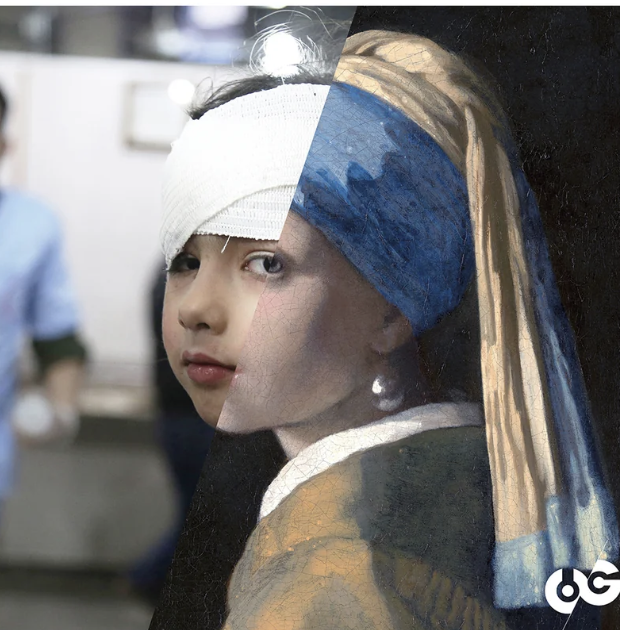
Walk with me, up and down the hills of the San Ramon Valley, morning fog enhancing the beautiful shapes of the leafless oak trees at this time of year. The contrast of dark limbs against gray air is striking. Stark, though, as is much that is going through my mind which switched from fog to smog all too easily. I had just read news about changes in laws about pollution, and then came across a list of all the administrative decisions that affect our health in more or less direct ways. I’ll summarize below – the full set from which I borrowed can be found here.
Let’s start with pollution, given my associations to smog. The Trump administration has declared the EPA will no longer consider any monetary benefit from saving lives and protecting health when regulating toxic, fine-particle pollution. A life – yours, mine, that of your kids or grandkids – is now valued a $0 instead of the previous $10 million, when balanced against the cost of regulating the industry. As of January 2026, only the cost to industry will be considered, not tempered by concern for our health.
And should you develop lung problems, cancer or other diseases, good luck with your health insurance. The “Big Beautiful Bill” is predicted to deprive over 15 million people of health insurance, by slashing support for Affordable Care Act policies and by tightly restricting eligibility for Medicaid and CHIP, the Children’s Health Insurance Program. Medical experts predict more than 50.000 preventable deaths as a consequence, of course affecting the most vulnerable among us.
It is not just small particle pollution that potentially makes us sick. Mercury and other poisonous heavy metals were under strict emission control before. No longer. ” Nearly 70 of the nation’s largest fossil-fuel power plants have won exemptions from limits on the metals they spew into the air.”
Measles are running rampant, not just causing potential death in some cases, but more frequently life-long disability. They also wipe the slate clean in the sense that whatever immunity you built to other diseases through prior exposure, is lost. Your body now has to start from scratch.
Vaccines could prevent scores of horrible diseases. Many are no longer recommended; among them hepatitis A and B, rotavirus, RSV, meningococcal disease, influenza, and Covid. Don’t get me going on the absence of scientific reasoning in this area. Or the presence of absolute cult-like thinking around conspiracy theories tied to vaccines.
Another impact on our health rests on the changed recommendations about what we should and should not eat. The food pyramid has been turned upside down, with beef tallow, butter and red meat now on the top. (Never mind the environmental consequences related to climate change from such changes.) Whole grains have been placed at the bottom. The fat content of whole milk is also recommended again. Our leading cause of death in this country – heart attacks and strokes – will be shooting further upwards.
These are all changes that will directly affect the nation’s health. Indirectly contributing will be the fact that the National Institute of Health is under assault by the administration. Medical research has been undermined by the termination of grants, (including hundreds targeting infectious diseases), and Trump has proposed a 40 percent budget cut for 2026, after already more than 15% of the staff have been fired.
Trump has also withdrawn us from the World Health Organization, decimating the budget of the global health agency. That impacts us nationally, since the spread of HIV, tuberculosis, or pandemics knows no borders. These diseases are now less monitored and certainly less effectively fought given the withholding of funds.
The daily news grabs so much attention regarding the war-like actions we see in Minnesota, or the threats of war directed at other nations, the impunity of whole government agencies when they defy the law or judicial verdicts. The less spectacular actions around environmental or health protection easily fall through the cracks of the attention economy. But they will have a huge, long-lasting impact that affects us as well as future generations.
All receding into the fog created by the onslaught of too many bad news at once….
I’ll try and lift the mood after such a downpour of bad news. At least this bit of gallows humor around “acquiring” Greenland made me smile. Tells you about the state of my brain … Seriously, though, if you want to learn about the true rationale(s) underlying the Greenland fixation, read this.
What to write for the first column of the New Year, a year that started with fresh horrors on top of the old ones? I was determined about one thing: it should be something positive, following the oft mentioned abolitionist Mariama Kaba’s instructions toward hope as a discipline, a practice. I wanted content that inspired hope, then, before landing on all the evil currently unleashed onto our world. I also wanted something close to my main interests of science, nature, art and politics. The latter two won out, with a little help from my friends.
Two of them seeded the idea: one gave me a book about artists and resistance under fascism, as a Hanukkah present. The other pointed out Mamdani’s inauguration as new Mayor of New York City. It contained a plethora of cultural references linked to artists and art that fight for a better future or strengthens the belief that all of us can be agents towards that goal.
I will focus today on the inauguration because it affects us here and now in our own cultural milieu. The general history of artists resisting fascism will take more time to learn about and digest, will return to it at some later point. Not that I understood all of the contemporary inauguration references either. I had to dig to make sense of some of them, derived from and directed at a younger generation that has been successfully awakened to participate in politics. Happy to share this new knowledge!
(Snapshots are from NYC some years back. The people make the city in all its glorious diversity.)
First, though, let’s look at some of the more familiar appearances during the inauguration. Actor and LGTBQ rights activist Javier Muñoz sang the national anthem. He is best known for starring and co-creating the role of “Alexander Hamilton” in Lin-Manuel Miranda’s Hamilton. That musical was, of course, about the American Revolution and Hamilton’s role in it, casting founding father roles with non-white actors. The creator and the producer of Hamilton recently canceled the show in reaction to the Trump takeover of the Kennedy Center. It was scheduled to run between March 3 and April 26, 2026, to commemorate the 250th anniversary of the Declaration of Independence.
Mandy Patinkin sang “Over the Rainbow” along with a Staten Island elementary school chorus. It is a song of wanting and longing for a better future, written by a Jewish composer and a Jewish lyricist. Composer Harold Arlen was born in Buffalo, NY in 1905, to a Jewish cantor. Lyricist Yip Harburg (Isidore Hochberg) was born in 1896 on the Lower Eastside, to Yiddish speaking Orthodox Jews who had emigrated from Russia. Harburg was a close friend of Ira Gershwin since his schooldays and, according to his son, a “democratic socialist, [and] sworn challenger of all tyranny against the people”. He championed racial, sexual and gender equality as well as union politics, and was an ardent critic of high society and religion. Harburg’s song Brother, can you spare a dime is almost as familiar as Over the Rainbow. Both artists are definitely cultural touchstones for a demand for a more just world.
I found the lyrics in the Jewish Women Archives, spelling out the 1911 poem by Jewish writer, editor and Jungian analyst James Oppenheim. It was based on a famous line by Rose Schneiderman, a Jewish Labor Union Leader.
Oppenheim was the founder and editor of The Seven Arts, a progressive magazine declaring “it was is not a magazine for artists, but an expression of artists for the community.” It published, among others, Theodore Dreiser, Robert Frost, Kahlil Gibran, D. H. Lawrence, Amy Lowell, and Paul Rosenfeld.
For her part, Rose Schneiderman was instrumental in the fight for unions and parity for women. She worked and organized from the tender age of 13, became vice president of the New York Women’s Trade Union League and she helped organize the Uprising of the 20,000 for the International Ladies Garment Workers Union in 1909. Her friendship with Eleanor Roosevelt and their conversations on labor issues led to Franklin Delano Roosevelent appointing Schneiderman in 1933 to the National Labor Advisory Board, where she fought to include domestic workers in social security and argued for wage parity for women workers.(Ref.) The Bread and Roses reference pertains to the need for subsistence (bread), but also the need for other support (roses,) including better schools, recreational facilities, and professional networks for trade union women.
The theme of inclusivity and fighting for a better future was central to the inaugural poem Proof by Cornelius Eady, reciting his poem here. He dedicated it to all of his students currently particularly affected by the hatred and revulsion expressed by the administration for all that is deemed “DEI.” The poet ends with “proof” that our hopes can become reality if we pursue large goals unimpeded b lack of imagination.
Proof.
You have to imagine it. Who said you were too dark, too large, too queer, too loud? Who said you were too poor, too strange, too fat?
You have to imagine it. Who said you must keep quiet? Who heard your story, then rolled their eyes? Who tried to change your name to invisible?
You’ve got to imagine. Who heard your name and refused to pronounce it. Who checked their watch and said, “Not now.”
James Baldwin wrote, “The place in which I’ll fit will not exist until I make it.”
New York City of invention, roiling town, refresher and renewer. New York City of the real will. The canyons whisper in a hundred tongues.
New York, where your lucky self waits for your arrival, Where there is always soil for your root.
This is our time. The taste of us, the spice of us, the colors and the rhythms and the beats of us, In the echo of our ancestors who made certain we know who we are.
City of insistence. City of resistance.
You have to imagine an army that wins without firing a bullet, A joy that wears down the rock of “no,” Up from insults, Up from blocked doors, Up from trick bags, Up from fear, Up from shame, Up from the way it was done before.
You have to imagine that space they said wasn’t yours. That time they said you’d never own. The invisible city lit on its way.
And finally, a cultural reference by the new Mayor himself. Mamdani cited the rapper Jadakiss (of the trio LOX.) “We will, in the words of Jason Terrance Phillips, better known as Jadakiss or J to the Muah, be “outside.”
What does that mean? I learned that the phrase “I’m outside,” “means having street credibility and being present in one’s community, often used to assert authenticity and connection to one’s roots. It became a cultural catchphrase representing a commitment to being engaged and visible in the real world.” (Ref.)
Being present in our community: how is that for a start to 2026, a resolution that focuses on us being in this together rather than alone. It certainly has helped a progressive candidate unafraid to confront the Goliath(s) of structural obstacles, racist individuals and institutions, malignant narcissists, billionaires guarding their turfs, and corrupt agencies he now has to run, to secure a position of power. How much he will be able to transform his proposals into reality will depend on how much support he can garner along the way. He faces formidable resistance against his plans that serve the interests of the many, rather than the profits of the few.
Here is Mamdani’s full speech after being sworn in as Mayor.
For me, the selections of these particular songs and poems signified two important points: people have lived through difficult times in this country, whether the plight of European (and other) immigrants, the starvation of farming families in the dustbowl, the workers without rights, the women as second class citizens, the non-White population exposed to Jim Crow. Hard times arch across history, not exempting the present. Importantly, though, these pieces of art speak to meaning or even victories born from activism – progress has happened, through labor and union movements, through the civil rights movement, through women liberation movements.
Yes, the powers that be ardently want to turn back the clock. But prior generations have modeled for us that we can fight for our rights and win. The vast coalition supporting the new Mayor of New York did well to remind us of that. Onwards!
Music is a Bread and Roses version sung by Joan Baez chosen for the video commentary on women’s existence.
My mother, working on her dissertation in the field of agricultural sciences, conducted a series of experiments in the university greenhouse in 1948. I don’t think I ever learned the details of the experimental set up – differences in light exposure, application of fertilizers, varying combination of seedlings? – but I do remember her strong affect even in the repeat retelling of the tale: one night towards the end of the experiments, a rabbit snuck inside and consumed the crops, nothing left to measure and document the effects of independent variables, a full year of work down the drain. Or into the bunny’s belly, as the case may be.
The memory emerged when I got notice about an ongoing art project that sounds fascinating – and vulnerable to similar and other external forces. London-based artist Almudena Romero, in collaboration with the Institut national de recherche pour l’agriculture, l’alimentation et l’environnement (INRAE), is creating a huge living photograph of a human eye, visible in the South of France next summer, a project titled Farming Photographs.
The image is formed by growing plants, a biological rather than mechanical process, fragile but sustainable in the sense that image creation can happen anywhere, at any time, without using chemical resources for production and preservation. The artist carefully chose old and contemporary varieties of wheatgrass plants with differing genetic pigmentation. They were planted in a huge field, with photosynthesis producing emerging colors that create, in turn, the contours and planes of the image. (Demonstrations are from her website.) By the end of the season the wheat will be milled and the flour distributed for consumption to the surrounding communities.
The mix of land art, focus on ecological responsibility, and reference to the scientific functions of eyes in nature (think, for example, eyespot mimicry, where butterflies and other animals display eye-like patterns in their wings or plumage to deter predators,) is a smart combination. In some ways it is ironic, though, that the immense photograph will only be visible from a perspective high above – unless it is planted in a valley surrounded by hilltops, the visual angle that encompasses all 5 acres of pixels will require an airplane or drone – adieu sustainability….
I am fully admiring, though, of the artist’s willingness to take risks – so much can go wrong with environmentally based art. Beyond rabbits, deer, and other species fond of greenery or trampling paths to water sources, think pests, think vandals, and last but not least weather, from drought to deluges. A very courageous woman!
Seeing, being seen, not seeing – here a a few other thoughts, randomly associated, that occupied my brain these last days, with varying degrees of dismay. Weather first, since that was just mentioned. The devastation that the current rains and ensuing floods have brought to both, Washington and Oregon, are immense. Barely a blip in the national media, consumed with all the other bad news in our world, but also part of a trend to simply hide bad facts, with the intent that ignorance will lead to less push back. The flooding and landslides have hit poor communities particularly hard, and we know that FEMA, eviscerated by the current administration, will be of little help.
Photocredit Reuters
Soon, we no longer have to hide data – we simply refuse to collect them in the first place. The Trump administration has decided to shut down our premier research institution around climate and weather, the National Center for Atmospheric Science in Colorado. Director of the Office of Management and Budget Russell Vought told a reporter that the center is “one of the largest sources of climate alarmism in the country” and that the government will break it up.
All grants to them have been terminated, and it will be dissolved. There has never been a time when that kind of research was more urgent – fire and flood prediction are directly link to possible protection of lives and livelihoods. The political decision to deny the existence of climate change translated directly into harm done to communities all over the country, the entire nation.
“Since 1960, NCAR scientists have studied Earth’s atmosphere, meteorology, climate science, the Sun, and the impacts of weather and climate on the environment and society. Climate scientist Katharine Hayhoe wrote that “[d]ismantling NCAR is like taking a sledgehammer to the keystone holding up our scientific understanding of the planet.” (Ref.)
Being seen: ICE accidentally published a watch list of immigration lawyers. Doing your job now qualifies you to be on an enemy list, open for being spied on and harassed. Nothing to see here.
And talking of spying: Have you heard about FLOCK?
“Flock Safety is a company that makes specialized Automatic License Plate Reader systems, designed to scan and photograph every plate that passes, 24/7. Unlike gated-community or private driveway cameras, Flock systems stream footage to off-site servers, where it’s processed, analyzed, and added to a growing cloud database. Currently, there are probably well over 100,000 Flock cameras installed in the United States and increasingly rapidly. To put this in perspective, that’s one Flock camera for every 4,000 US citizens. And each camera tracks twice as many vehicles on average with no set limit. (Ref. ) Have you seen one in your neighborhood?
Here is the issue: so far, Flock tracks License plate numbers, vehicle color/make/model, time, location. Some cameras can capture broader footage; some are strictly plate readers. But there is no reason to believe it cannot be extended to tracking who sits in the car, who drives it, etc. And while these cameras don’t capture people right now, “they do capture patterns, like vehicles entering or leaving a neighborhood. That can reveal routines, habits, and movement over time, logging every one of our daily trips, including gym runs, carpool, and errands. Not harmful on its own, but enough to make you realize how detailed a picture these systems build of ordinary life.”
Who has access to these data? Using Flock’s cloud, only “authorized users”, which can include community leaders and law enforcement, ideally with proper permissions or warrants, can view footage. Residents can make requests for someone to determine privileges. Flock claims they don’t sell data, but it’s stored off-site, raising the stakes of a breach. The bigger the database, the more appealing it is to hackers. Unlike a home security camera that you can control, these systems by design track everyone who comes and goes…not just the “bad guys.”
If you think footage was misused (hacked, leaked online, used by people to stalk you or harass you) you can request an audit or raise it with your HOA or local law enforcement. By then, though, the damage is done.
Out of sight: here is a news item that really raise my blood pressure through the roof: The CDC is funding a study on the Hepatitis B Vaccine inGuinea – Bisseau (West Africa). For screaming out loud: this is unethical!
An unsolicited (!) grant for Bandim Health Project, a research company in Denmark with ties to the anti-vaccine movement, allows a study with randomized, controlled trials in which you withhold a proven, life-saving vaccine from newborn babies. WE KNOW that the vaccine works, and so withholding this from half of the babies in the study condemns them to possible life long illness and liver failure, if they contract the disease – a possibility which is hugely more likely in a poor African nation where it is rampant. It is countries like these, with a 12 % prevalence rate of Hep B, where the birth dose of vaccination matters most. and according to UNICEF, Guinea Bissau has one of the highest infant mortality rates in the entire world.
Anyone wonders, why this is not done with little white American babies if needs to be done at all?
Can’t take our eyes off them for one second …. an oldie confirms, although this music refers to someone positive!
I borrowed that title from writer Celeste Ng who posted it in response to the inane opinion piece by Ross Douthat in the NYT, wondering if women ruined the work place (I will not even link to it – they later shifted the titled to liberal feminism instead of “women.”)
Low energy on my end this week, so you get to look at some portraits I took of strong women, and a collection of publications (I found ready-made) that blamed women for ruining – well, everything.
It would all be laughable, if the bigotry wasn’t so scary.
\
Portrait of a Woman
She must be a variety. Change so that nothing will change. It’s easy, impossible, tough going, worth a shot. Her eyes are, as required, deep, blue, gray, dark merry, full of pointless tears. She sleeps with him as if she’s first in line or the only one on earth. She’ll bear him four children, no children, one. Naive, but gives the best advice. Weak, but takes on anything. A screw loose and tough as nails. Curls up with Jasper or Ladies’Home Journal. Can’t figure out this bolt and builds a bridge. Young, young as ever, still looking young. Holds in her hand a baby sparrow with a broken wing, her own money for some trip far away, a meat cleaver, a compress, a glass of vodka. Where’s she running, isn’t she exhausted. Not a bit, a little, to death, it doesn’t matter. She must love him, or she’s just plain stubborn. For better, for worse, for heaven’s sake.
A short piece for music today, introduced as: “Being a woman writing music in the early 20th century was an act of feminism in itself. In the 1920s, a critic at one performances remarked with surprise that Ruth Crawford Seeger could “sling dissonances like a man”—because, you know, what could a woman possibly know about discord?”
Green King tides on the Pacific coast this weekend. Blue waves in other parts of the country a few days later.
(Photographs from the outing – note how the light shifts in the span of just 48 hours and how the trees are shaped by their environment.)
Got me thinking about William Makepeace Thackeray’s insights about the power (or lack thereof) of men to stop the tides and his savage novel, Vanity Fair, converted into a brilliant movie (2004) by the mother of New York City’s newly elected mayor. Convergence!
Thackeray was an interesting character – born in India, sent to England at age 5 after being orphaned, educated in brutal school settings, gambling away much of his inheritance. A smart, extremely perceptive satirist, allergic to hypocrisy and liberal to the core – he fought for suffrage, legislature term restrictions and an end to classism. Some of his social critique of Victorian society is almost too on the nose for our own times.
His poem below is often misinterpreted to claim the King thought he was almighty and tried to stope the waves, when it really says the opposite. His immoral life full of raids, killing and looting, he gets cold feet towards the end of it. Caught with remorse and fear of consequences (thoughts of will I get into heaven, one might wonder,) he, I speculate, tries to appease the judging power with submission. The sycophantic parasites surrounding him being too dense to even catch his drift. Plus ça change….
King Canute
KING CANUTE was weary hearted; he had reigned for years a score, Battling, struggling, pushing, fighting, killing much and robbing more; And he thought upon his actions, walking by the wild sea-shore.
‘Twixt the Chancellor and Bishop walked the King with steps sedate, Chamberlains and grooms came after, silversticks and goldsticks great, Chaplains, aides-de-camp, and pages,—all the officers of state.
Sliding after like his shadow, pausing when he chose to pause, If a frown his face contracted, straight the courtiers dropped their jaws; If to laugh the king was minded, out they burst in loud hee-haws.
But that day a something vexed him, that was clear to old and young: Thrice his Grace had yawned at table, when his favorite gleemen sung, Once the Queen would have consoled him, but he bade her hold her tongue.
“Something ails my gracious master,” cried the Keeper of the Seal. “Sure, my lord, it is the lampreys served to dinner, or the veal?” “Psha!” exclaimed the angry monarch, “Keeper, ’tis not that I feel.
“‘Tis the HEART, and not the dinner, fool, that doth my rest impair: Can a king be great as I am, prithee, and yet know no care? Oh, I’m sick, and tired, and weary.”—Some one cried, “The King’s arm- chair!”
Then towards the lackeys turning, quick my Lord the Keeper nodded, Straight the King’s great chair was brought him, by two footmen able- bodied; Languidly he sank into it: it was comfortably wadded.
“Leading on my fierce companions,” cried he, “over storm and brine, I have fought and I have conquered! Where was glory like to mine?” Loudly all the courtiers echoed: “Where is glory like to thine?”
“What avail me all my kingdoms? Weary am I now and old; Those fair sons I have begotten, long to see me dead and cold; Would I were, and quiet buried, underneath the silent mould!
“Oh, remorse, the writhing serpent! at my bosom tears and bites; Horrid, horrid things I look on, though I put out all the lights; Ghosts of ghastly recollections troop about my bed at nights.
“Cities burning, convents blazing, red with sacrilegious fires; Mothers weeping, virgins screaming vainly for their slaughtered sires.—” “Such a tender conscience,” cries the Bishop, “every one admires.”
“But for such unpleasant bygones, cease, my gracious lord, to search, They’re forgotten and forgiven by our Holy Mother Church; Never, never does she leave her benefactors in the lurch.
“Look! the land is crowned with minsters, which your Grace’s bounty raised; Abbeys filled with holy men, where you and Heaven are daily praised: YOU, my lord, to think of dying? on my conscience I’m amazed!”
“Nay, I feel,” replied King Canute, “that my end is drawing near.” “Don’t say so,” exclaimed the courtiers (striving each to squeeze a tear). “Sure your Grace is strong and lusty, and may live this fifty year.”
“Live these fifty years!” the Bishop roared, with actions made to suit. “Are you mad, my good Lord Keeper, thus to speak of King Canute! Men have lived a thousand years, and sure his Majesty will do’t.
“Adam, Enoch, Lamech, Cainan, Mahaleel, Methusela, Lived nine hundred years apiece, and mayn’t the King as well as they?” “Fervently,” exclaimed the Keeper, “fervently I trust he may.”
“HE to die?” resumed the Bishop. He a mortal like to US? Death was not for him intended, though communis omnibus: Keeper, you are irreligious, for to talk and cavil thus.
“With his wondrous skill in healing ne’er a doctor can compete, Loathsome lepers, if he touch them, start up clean upon their feet; Surely he could raise the dead up, did his Highness think it meet.
“Did not once the Jewish captain stay the sun upon the hill, And, the while he slew the foemen, bid the silver moon stand still? So, no doubt, could gracious Canute, if it were his sacred will.”
“Might I stay the sun above us, good sir Bishop?” Canute cried; “Could I bid the silver moon to pause upon her heavenly ride? If the moon obeys my orders, sure I can command the tide.
“Will the advancing waves obey me, Bishop, if I make the sign?” Said the Bishop, bowing lowly, “Land and sea, my lord, are thine.” Canute turned towards the ocean—”Back!” he said, “thou foaming brine.
“From the sacred shore I stand on, I command thee to retreat; Venture not, thou stormy rebel, to approach thy master’s seat: Ocean, be thou still! I bid thee come not nearer to my feet!”
But the sullen ocean answered with a louder, deeper roar, And the rapid waves drew nearer, falling sounding on the shore; Back the Keeper and the Bishop, back the king and courtiers bore.
And he sternly bade them never more to kneel to human clay, But alone to praise and worship That which earth and seas obey: And his golden crown of empire never wore he from that day. King Canute is dead and gone: Parasites exist alway.
Before we expect miracles to follow Tuesday’s election outcomes, here are some reflections on what is ahead of us – not meant as downers, but as a reminder that work lies before us.
Election lawyer Marc Elias predicts Republicans’ reactions and further assault on voting rights.
Hadas Thier at Hammer & Hope writes thoughtfully about the challenges to Mamdani’s delivery of much that he promised voters.
Both reads highly recommended.
He will have help, though, from a lot of accomplished women on his transition team:
Former First Deputy Mayor Maria Torres-Springer, former Federal Trade Commission Chair Lina Khan, nonprofit president Grace Bonilla and city budget expert Melanie Hartzog will be his transition co-chairs. Progressive political strategist Elana Leopold, a de Blasio alum and senior Mamdani campaign adviser, will serve as the transition’s executive director.
Together, they have backgrounds in social services, finance, city budgeting and housing development. Their roles on the transition team — meant to smooth the mayor-elect’s path from election in early November to inauguration in January — often serve as a de facto audition for appointments to City Hall. (Ref.)
Music today promises unity in diversity, jazz from Sweden, not too far from King Canute’s home in Denmark, to celebrate what the electorate managed to pull off.
How come on some days light just suffuses your soul, uplifts your spirits, fills you with joy at the ways a landscape transforms and brings out color? And on other days: nada, zip, nothing, foul mood solidly anchored in place, refusing to budge? You really should reconsider coming with me on my walk – I am not fun to be with, at all.
Then again, what nature has to offer might delight you, which is enough.
And it is right in front of our doors – we can heed the National Park Service urging us all to stay home from the big parks during the shutdown, since they lack the personell to provide safety, and more importantly, monitor fires, which are more likely to happen with increasing number of visitors. The beauty can be found in your neighborhoods – you just have to look within a 20 mile radius, in local preserves.
I can barely motivate myself to write today – too many frightening or dismaying topics competing for attention. Even some intrinsically fascinating new scientific data remind me of what is unfolding around us. I could not but think of all the people now carrying whistles to warn of ICE approaching neighborhoods to snatch brown people, when I read about birds developing specific warning calls directed at species not just their own, about brood parasites like cuckoos that lay their own eggs into others’ nests to be raised at the expense of the host birds’ offspring.
Here is the thing: the calls – dubbed whining – are nearly identical for 21 different species of birds, spanning several continents and millions of years of evolution, as reported in a new study published last week in Nature Ecology & Evolution. For birds that live in areas with a high frequency of brood parasites, the alarm call is ‘understood’ regardless of species.
“If this call is something like a ‘universal word’ for a brood parasite across birds, we should expect different species to respond equally to hearing it—even when it is produced by a species they have never seen before,” the authors write. “We found exactly this: When we played calls from Australia to birds in China (and vice-versa) they responded the same…. The evolution of the whining vocalization is affecting patterns of cooperative behaviors between birds around the world.”
“The findings suggest the alarm call has both innate and learned characteristics: responding to the alarm by investigating the threat is innate, while making the whining sound under the right circumstances is learned.”
(An in-depth introduction to animal communication and intent can be found here. It’s complicated and there’s a lot of disagreement between scientists. Our household included.)
Back to humans: Whistles are not enough. So I will offer you words today, someone else’s, which are a better alarm than I could provide in any case.
Jet Heer has written for numerous publications, including The New Yorker, The Paris Review, Virginia Quarterly Review, The American Prospect, The Guardian, The New Republic, and The Boston Globe. Here are excerpts from his latest in the Nation, commenting on the video sent by the President on Sunday, a president who is currently demolishing the White House, reversed promises of aid to Ukraine, getting the military used to firing on civilians in a trial run in the Caribbean, before they will be let loose at home, and feeding billions into a South American right-wing regime at the expense of farmers and ranchers at home, never mind the USAID programs that could have run on that money, saving millions of vulnerable lives.
Heer on Trump’s latest:
“But on Saturday, Trump posted on Truth Social a disturbing video, almost certainly created by AI, that indicated he was less inclined to refute the accusation of royal aspirations than to revel in the fantasy of being a sovereign who could degrade his subjects with impunity. The New York Times offered a typically euphemistic description of this “fake video,” writing delicately that it “showed him wearing a crown and flying a jet labeled ‘King Trump’ that dumps brown liquid on protesters.” The newspaper went on, with only slightly more candor, to explain that the video depicted the president “dropping a brown liquid resembling feces onto the heads of protesters, who appeared to be gathered in a city.
As distasteful as Trump’s video is, it deserves to be talked about without evasion: It’s a fantasy of Trump as a king who drops shit on peacefully protesting citizens exercising their First Amendment rights. In other words, Trump was shit-posting in every sense of the word.
The normal response to such posts is to tut-tut them as breaches of presidential norms and civility. But such prim rejoinders are beside the point. Trump was twice elected president. Whether we like it or not, he is the norm, and mourning for a lost era of politeness has done nothing to stop him.
The normal defense by Trump’s supporters to such vulgarity is to dismiss it as a joke and ask why the president’s critics don’t have a sense of humor. But this MAGA apologia is no more convincing than liberal opprobrium.
Trump’s unhinged scatological nightmare is not so much a satirical transgression as a revelation, a key to the impulses of his authoritarian politics. He has always been moved by anger and resentment against those he thinks are insufficiently respectful of him. As his political career has progressed, these vengeful motives have only grown more sadistic. It’s not enough to politically defeat his foes or to enact policies they dislike. Trump clearly wants to humiliate and debase his enemies.
Trump’s disgusting post is only one piece of evidence pointing to the fact that the No Kings accusation is completely on the mark. If Trump is energized by personal vengefulness, he is surrounded by cronies more than willing to harness that anger toward their political goal. They too want Trump to be a king, not just to degrade the opposition but to enact an irreversible political transformation pushing America to the right.
Writing in Semafor, David Weigel noted that Trump has wide approval among Republicans in a project of reviving the “imperial presidency” (which was only modestly rolled back after the Watergate scandal and Richard Nixon’s 1974 resignation). [W]ith a few libertarian exceptions, [Republicans] see a lot to like about Trump stripping power from the legislative branch of the US government. Trump is undoing post-Watergate norms that took away the president’s right to impound congressionally appropriated money, strike enemies without congressional approval, and govern without the distraction of politicized investigations—and most Republicans would respond: What’s wrong with that? Who, they wonder, has actually benefited from reining in the “imperial presidency”?
Stephen Miller, the agenda-setting White House deputy chief of staff for policy, has claimed that Trump enjoys “plenary authority” as president, meaning his power is nearly without limit. Steve Bannon, an unofficial adviser who has long shaped MAGA ideology, has been even more explicit in celebrating the unchained presidency, delighting in the fact that Congress is as servile and irrelevant in Trump’s America as the Duma is in Vladimir Putin’s Russia.
All of these policies, combined with Trump’s likely illegal unilateral bombing campaign in the Caribbean seas, are assertions of the power of an absolute sovereign. Trump is trying to rule as a king, and not a benign one. He thrills at being a monarch who craps all over the people of the world and his nation’s constitutional traditions. In that sense, his AI post is truly an honest expression of his goals.”
I don’t blame the – let m guess – many of my readers who chose to skip reading the excerpts listed above – we all try to curate how much bad news we can tolerate before descending into the kind of mood I am currently in, or worse. It’s just not how my brain works, and sometimes the price I pay is substantial. Maybe another nature outing is called for…. that, or a strawberry milk shake, which reliably works as consolation….
Ok. Mahler works too, most of the time. Here is his symphony that is more sympathetic to the cuckoo …
In case you wondered what a war ravaged city looks like, here are some samples from my inbox over the weekend. Just repeating the term war ravaged gives me goose bumps, of course, given what we see in our daily views of Gaza city and yesterday’s repeat attack on Kiev. But that is the term the President used to justify sending the troops to Portland, Oregon, Posse Comitatus Act be damned.
In addition to people sending their photographs of PDX or the memes they devised to make fun of a dire situation, I will attach the mails or pronouncements received from our Senator and the Oregon Attorney General.
Oregon and Portland are now suing to block Trump from deploying the state’s national guard, calling it an unconstitutional abuse of power. So far, the Pentagon followed through on Trump’s order on Sunday morning, calling up 200 members of the state’s 6,500-member National Guard contingent. (Ref.)
I saw duck guy yesterday afternoon in person, when I was at a small protest in front of the ICE facilities in SW Portland.
War ravaged? It was a typical PDX affair. A mix of people, some hundred or so, who ranged in age from 12 to 92, by conservative estimates. All levels of ability, all kinds of cheerful costuming.
A woman swung a burning sage bundle to clear the evil from the air,
and dogs gave out free hugs.
People dressed as angels distributed ACLU fliers informing you about your rights,
and organizers donned safety vests to direct traffic.
Police biked by, but soon sought out shade, escaping the afternoon heat.
4 lonely ICE goons trotted around the building only to disappear after 2 minutes behind the gates. Some chanting, some music from boom boxes. An understandably irritated neighbor who had to live with the noise across the facility shouting her disapproval, upon which the speaker turned the sound of his microphone lower.
Signs ranged across the spectrum,
the Epstein connection fluttered on lamppost and was glued to the walls of buildings.
The people, a true cross section, not a particular block, showed up, sending courage and solidarity to the immigrants trapped behind the boarded-up windows of the building. I was thinking how easy it is for us to joke about the stupidity of calling our city war ravaged, when for them their entire lives have been upended, with no certainty what the future will hold and nothing but misery in the very present.
Masked ICE showed up, once the streetlights were on.
Here is a timeline as posted by historian Heather Cox Richardson on 9/27 in her Letters from an American.
“Trump also posted: “At the request of Secretary of Homeland Security, Kristi Noem, I am directing Secretary of War, Pete Hegseth, to provide all necessary Troops to protect War ravaged Portland, and any of our ICE Facilities under siege from attack by Antifa, and other domestic terrorists. I am also authorizing Full Force, if necessary. Thank you for your attention to this matter!”
Zane Sparling, Fedor Zarkhin, and Zaeem Shaikh of The Oregonian/OregonLive compiled a timeline of protests against the U.S. Immigration and Customs Enforcement building in Portland. They noted that the last arrest of protesters by Portland police was on June 19, bringing the total to 25, and the last arrest by federal officers was on July 4, bringing the total to 22.
After a Labor Day protest downtown, more than 100 people marched to the ICE building and set up a makeshift guillotine. Federal officers responded with tear gas and pepper balls. On September 4 the Fox News Channel aired a story about the Labor Day protests, but mixed in clips from 2020 showing protesters burning the base of the Thompson Elk Fountain and a federal officer pepper-spraying a protester. The next day, Trump said he was considering federal intervention. “They’ve ruined that city,” he said. “It’s like living in hell.”
On September 17, Portland officials said ICE had violated its land use agreement by holding detainees for longer than 12 hours, opening the door for the city to force ICE to move. Two days later, The Oregonian/OregonLive published a video of federal agents hitting nonviolent protesters and using chemical spray on them. Portland mayor Keith Wilson called for a full investigation; Trump said people in Portland are “out of control and crazy,” and vowed to “stop that pretty soon.”
On September 22 the president signed an executive order designating “Antifa” as “a major terrorist organization,” and three days later he called demonstrators in Portland “professional agitators and anarchists.” The day after that, September 26—yesterday—Democratic members of Oregon’s congressional delegation, including Senators Ron Wyden and Jeff Merkley and representatives Suzanne Bonamici, Maxine Dexter, and Andrea Salinas, visited the ICE facility. They called out the violence against protesters and said they were “not at all satisfied with the answers and the evasion” they got from ICE agents about their treatment of detainees.
In response to Trump’s announcement that he was directing Secretary Hegeseth to send troops, authorized to use full force, to Portland, Senator Wyden—who has led the push to force the Treasury to turn over Epstein-related Treasury records of at least $1.5 billion in suspicious transactions to Senate investigators—posted a video of the ICE facility Trump claims is under siege. There were no people there at all.
“My message to Donald Trump is this,” Wyden posted: “we don’t need you here. Stay the hell out of our city.”
And here is Rebecca Solnit with a short humorous missive teasing the situation.
It remains to be seen, if the administration’s provocative and accelerations tactics will goad enough enraged people into the kinds of violent encounters that can be used to justify ultimate goals of dispensing with constitutional rights. It is, however, not always an easy balancing act between reactions that show the will not to normalize the use of military on our streets, and those that are undisciplined enough to confirm – so far unsubstantiated – claims of violence.
Here are some suggestions what people can do when observing Feds operating:
– Call PIRC (Portland Immigrant Rights Coalition)) if you believe you see ICE or masked individuals: (888) 622-1510 – Document vehicles and assailants. – Attempt to get the name and DOB of the person being detained. – If you are white or in a position of privilege warn people and vulnerable businesses in the area. Reminder * if they refuse to identify themselves and their agency you are also well within your rights to call 911 and report them. Oregon is a sanctuary state and all Portland Metro DA offices have confirmed their precincts are not complying with Trump’s immigration orders.
Music today is a song of hope from different hard times, the Great Depression, sung by a PDX homegrown talent, Esperanza Spalding.
And here she is in a wonderful NPR Tiny Desk Concert from some years back.
· Oregon Historical Society presents: Street Roots - Providing Income Opportunities and Independent Journalism as Portland’s Street Paper Since 1999. ·
“You’ll be my first sale of the day!,” a woman in a wheelchair suggested to me, holding up a bundle of Street Roots newspapers while I walked next to her in the South park blocks. I had literally just left the Oregon Historical Society’s current exhibition celebrating 25 years of Street Roots publishing, looking at it together with Jim Lommasson, a friend and fellow photographer who has powerful work up in the show. Vendor Karen’s optimistic smile sparkled just as much as her zircon-encrusted sandals, lifting me out of very dark thoughts about the current and future plight of the unhoused in our city, our country.
Over 100 vendors, some 50% unhoused and all living below the poverty line, sell weekly newspapers published by Street Roots, a non-profit Portland newspaper covering local as well as national news, offering opinions and art. In operation since 1999, the newspaper serves as a means for vendors to earn some income – a single issue costs $1 – and helps to forge contact between the housed and unhoused population in the human encounters around the street sales. Many of the vendors have consistent spots and regular buyers, they and their customers getting to know each other.
The organization, led by interim executive director Rebecca Nickels, provides more than just an opportunity to make money and community connections. The new building in Old Town offers opportunities for showers and laundry, help with administrative chores and opportunities for education or communal gatherings. With the move, Street Roots is in dire need to raise the funds for new operating coasts and changes in staff structures, not an easy task in the current economic and political climate.
Old vs. new digs….
Here is an in depth introduction about outreach by my ArtsWatch colleague Elizabeth Mehren, writing some months back about the weekly poetry workshop for vendors (for transparency, I regularly participated as a volunteer in that workshop before my immune system went south, some years ago.)
The exhibition at OHS presents a mix of informative text, objects related to the vendors’ trade and art by those involved with the newspaper. It depicts determination and resilience, as well as the difficulties and dangers of being unhoused. In the reverberating words of Kaia Sand, uttered at a previous showcase of vendors’ poetry, “There is a lot of courage out there.” Sand recently stepped down from her position as executive director of the organization after 7 years, and now writes an excellent column and a book about homelessness.
***
An entire room at the OHS gallery is filled with a collaborative project between photographer Jim Lommasson and vendors who wrote their thoughts and comments on pictures he took of their possessions, objects or animals that had particular meaning for them. There is a wall of dogs that tugs at your heart strings.
Jim Lommasson and collaborators what i carry.
There are items to cope with the hunger,
Jim Lommasson and collaborators what i carry.
the cold,
Jim Lommasson and collaborators what i carry.
the existence within a society that has turned its back on the unhoused, at best, and criminalizes and threatens them, at worst.
Jim Lommasson and collaborators what i carry.
And there is the constant reminder of the fragility of it all, with life-long, meaningful possessions lost to theft or, more frequently, sweeps.
Jim Lommasson and collaborators what i carry.
what i carry is an ongoing project by Lommasson, in which he uses his camera as well as his deep sense of justice to depict populations that have been displaced due to varying, most often traumatic, causes. His work with refugees, survivors of genocide and the Holocaust, whose few mementos are often the only thing that survived into life in the diaspora, has found national recognition. The photographs with their added commentary by the participants have been exhibited in countless national museums, including the Dallas Holocaust and Human Rights Museum, Ellis Island Museum of Immigration, NY, the National Veterans Art Museum, Chicago, the Japanese American National Museum, L.A, and the United Nations Headquarters in NYC.
Jim Lommasson in front of the images.
For the new project with Portland’s unhoused population, he faced a specific hurdle: you have to find individuals willing to participate, take a picture of what they offered, then print the work, and bring it back to the respective person for commentary: but where to find them in a population that is constantly on the move, due to the vagaries of street life and the constant pressure by the police to move away from previous spots, including regular sweeps of encampments? It took up to half a year to find some of the participants again. Street Roots, however, was one of the few institutions eager to support the project, and opened their doors to the photographer, with many of the regulars at the poetry workshop quickly engaged. Here is a detailed introduction to the series, exhibited at an earlier date at Place in full.
In our conversation we both agreed how working with this population immediately called out our very own stereotypes about the unhoused. The degree of learnedness and sophistication displayed in interaction around text and literature was a surprise. Just goes to show how deeply ingrained our prejudices are, our assumptions about what is or isn’t likely to be associated with precarious existence.
What Lommasson’s project does, however, is independent of the educational status of his collaborators. It unveils the humanity contained in all people, housed or unhoused, depressed and anxious or not, addicted in some fashion or another (easier to hide with a roof over your head, I might add) or not, sharing a place where we feel we belong – or are told that we don’t.
It is profound work that has the potential of opening someone’s eye to the underlying similarities rather than differences, of closing the gap between “us” and “them,” of diminishing stereotypes that continue to harm the pursuit of solutions addressing homelessness.
***
I did not ask vendor Karen in the wheelchair how she felt about the live TV remarks of well-known moderator and political commentator Brian Kilmeade last week. My sincere hope was that she had not heard them. I had not been able to shake the thoughts during my exhibition visit of what it must feel like to be unhoused and hear that someone publicly declares I should “simply be killed by involuntary lethal injection,” (after the Fox&Friends co-hosts discussed involuntary incarceration if “they refuse all the help regularly thrown at them.”) Kilmeade apologized several days later for “callous” remarks.
What is even happening? The U.S. homeless population includes over a million children and tens of thousands of veterans, many of whom served in Iraq or Afghanistan. Does poverty or mental illness, often PTSD-induced, justify extrajudicial mass killings? Does our desire to be spared the exposure to poverty and mental illness warrant detention camps? Scott Turner, Secretary of Housing and Urban Development in the second Trump administration, thinks so. During his confirmation hearings he indicated he would agree with his President’s plans. In Trumps own words:
“Under my strategy, working with states, we will BAN urban camping wherever possible. Violators of these bans will be arrested, but they will be given the option to accept treatment and services if they are willing to be rehabilitated. Many of them don’t want that, but we will give them the option.We will then open up large parcels of inexpensive land, bring in doctors, psychiatrists, social workers, and drug rehab specialists, and create tent cities where the homeless can be relocated and their problems identified. We will open up our cities again, make them livable and make them beautiful.”
Trump has now issued an executive order on July 24, calling for civil commitments of homeless people, criminalizing harm reduction efforts, an end to “housing first” policies and federal law enforcement assistance to help local governments sweep encampments. It follows the Supreme Court’s Grants Pass v. Johnsondecision to criminalize public sleeping by those who are houseless, even if no shelter or other options available.
“In a 6-3 decision written by Justice Neil Gorsuch, the Supreme Court ruled that cities enforcing anti-camping bans, even if homeless people have no other place to go, does not violate the Eighth Amendment’s prohibition on cruel and unusual punishment. Gorsuch was joined by the rest of the court’s conservatives, including Chief Justice John Roberts.”
Since May 1, Oregonians living in encampments in forests have been evicted as well. (Ref.)
(I wrote about the historical, economic roots of No Trespassing laws regarding public lands following the abolition of slavery earlier here.)
Where are the unhoused supposed to go? Treatment and services are, of course, not just woefully underfunded, but simply not available for a large part of the population expected to agree to them. Here are the facts for Portland this summer:
Multnomah County’s Homeless Services Department estimates there are over 7,000 unsheltered homeless residents in the county as of May (likely a severe undercount). Since the beginning of the year, Mayor Wilson, who ran on a compassionate platform for the election, has added 430 new shelter beds, totaling 1,300 city-run beds. Including Multnomah County-funded shelters, 2,454 beds are available to local homeless residents on a given night (this number can be verified.) At least 4500 people then face civil or criminal penalties if found outside. Violation of the city’s current ordinance addressing “conduct prohibited on public property” is punishable by a $100 fine or up to seven days in jail.
Wilson has also increased the number of sweeps of encampments compared to his predecessor Mayor Wheeler, according to the statistics provided by the latest Impact Reduction Program, to an average of 26.6 sweeps a day, 4,815 for the first six months of 2025. The city sweeps homeless residents at a higher rate than its West Coast peers, and homeless residents in Multnomah County die at a higher rate than any other West Coast county with available homeless mortality data, as reported by Street Roots and ProPublica June 11.
Photograph part of the exhibition.
Many worry that the city’s clear investment in temporary shelters has led to a disinvestment of permanent housing. To be fair, in the last 8 years, the city built 2,238 permanent supportive housing units, which are currently in operation, and has 361 units in the pipeline to be built. That’s above its goal of building 2,000 units by 2028, but the number of people finding themselves without housing has dramatically increased over prior projections as well, and is likely to increase with the current trajectory of our economy.
Two things stand out: By criminalizing people now, people who have nowhere to sleep other than the park or the street, you will make it harder for this population to land housing at any point in the future, given their criminal record. So the claim that it is about decreasing homeless populations is logically fallible.
Secondly, if you have the option to crack down punitively, you will likely ignore more structural remedies, since they would cost you more money up front. Building housing, the ONLY way out of the catastrophe we are experiencing here on the West Coast, will take a backseat. So will upping universal rental assistance, repairs to public housing, and funds for eviction prevention.
Found on a bookshelf at the old Street Roots Building – photograph by author.
One can only hope the exhibition at OHS educates large numbers of people about how much difference organizations can make in empowering and supporting the unhoused, paving a way back into a more secure life. These organizations, in turn, deserve our renewed, vigorous support.
Reading the newspaper, sold by Karen, Sept 10-16 2025 edition.
Want to walk with me? Meet me about 30 miles east of San Francisco, at the Alamo Oaks Trail, a small hilly enclave in the middle of suburban developments of the city of Danville, CA.
The hills are conscientiously tended to for fire prevention, grass mowed to a stubble, dry branches piled up for removal. It still has a feel of open nature, not manicured park, though, enhanced by the fact that I seemed to be the only soul around hiking the steep slopes.
The cracked grey dirt on the path visually mirrored the cracked grey bark of the oak trees, no bird song around other than the occasional chittering acorn woodpecker, calling for company.
Dust everywhere. Even though the oak leaves looked green from afar, they were coated with it, oak galls dropping left and right.
Brought me back to the images along the Interstate Highway on our drives, going south from Portland, going north back home all the way from SoCal.
Dust plumes whipped up by the wind, and more so by tractors and other farming equipment.
Which led to thinking about agriculture and the tragedy of all those 2.5 million people ruined and displaced by the 1930s dust bowl, following the late 1920s crash and subsequent Great Depression. At the time, poor farming techniques caused the soil to erode. A seven year drought starting in 1931, together with the erosion, led to desert-like conditions, unfit for growing food or keeping animal stock alive. When the winds came the dust was carried away in huge clouds, sickening people and depleting the once fertile grasslands.
Archival image showing dust storms in OK
Climate change brings, of course, increasing droughts but also increasing flooding events that make farming just as impossible. I urge you to read in-depth reporting on what farm families face these days, in the mid-West and increasingly California as well. Pro-Publica has a two part series that reveals how much farming should change, given the current and future conditions, but is stuck in a senseless place of doing the same old, no-longer-working thing, due to federal farm policies. (Part 1/ Part 2) The shortest summary: subsidies, including federalized crop insurance, are keeping farmers on land that is no longer productive. Programs that could help to pull outdestitute farmland from production are cut by the Trump administration.
It is not the only problem farmers face (or berry-pickers and meatpacking workers — often immigrants employed exploitatively and with unsafe conditions, with workplace protections varying from state to state, never mind the current rash of ICE deportation.) Farmers continually loose access to markets as large companies buy up smaller, locally run grocery stores. (The following statistics are culled from an in-depth, devastating article in High Country News.) Four grocery giants – Walmart, Albertsons Companies, Kroger Companies and Costco – now control most of the markets, even if they run under diverse store names, which gives them power not just over consumers, but producers as well.
Farmers’ Markets are a desperate counter weight to these monopolies, but there are way too few to make a real dent (California has only 2, Oregon 5.9 per 100 000 people.)
In terms of production, 78% of the market share is held by 6% of U.S. farms, with ever larger scale production driving out family farmers. 1.8 million small farms constitute the remaining 22 %, many of them on the brink of ruin now with the tariffs. Farm bankruptcies already swelled under the first Trump administration, things are worse now. Up to 30% of Arkansa farmers are facing bankruptcy this year if not rescued by emergency funds (and they voted overwhelmingly Republican.) Expanding tax subsidies, of course, benefits not all equally.
Subsidies, once introduced to ease the pain during the Great Depression, now lead to overproduction and discourage innovation in farming practices.
Approximately one-third of U.S. farms receive regular subsidies, with larger farms benefiting more significantly. The top 10% of subsidy recipients receive about two-thirds of total farm subsidies, in direct payments, crop insurance and loans, often favoring large agribusinesses over smaller farms. They also contribute to environmental issues, as large-scale farming often relies on monoculture practices that can harm ecosystems. 30 billion $$ spent, but no talk of welfare queens….
With the new congressional bill, environmentally destructive overproduction of a few major food commodities, combined with stubbornly high and rising hunger rates, particularly among children, will be intensified and prolonged.
As reported by MOTHER JONES: “The consequences promise to be devastating for the economy, the environment, and public health. The BBB slashes food aid for poor people while showering cash on already lavishly subsidized farmers, mainly corn and soybean producers…. The new law slashes $185.9 billion from SNAP over the next 10 years, a 20 percent reduction. While low-income people got kicked in the teeth, large-scale commodity farmers cashed in from Trump’s bill. Driven largely by billions of dollars of annual incentives for all-out production embedded in decades of farm bills, farmers in the upper Midwest have maximized corn and soybean production in ways that have pushed this vital growing region to its ecological limits. Soil is rapidly eroding away there, and pollution from agrichemicals fouls drinking-water sources and feeds harmful algae blooms from the Great Lakes to the Gulf of Mexico. The rapidly warming climate makes both problems worse.“
Not yet taken into account is the fact that even monopolist producers are starting to feel the pain of Trump policies. Just as the soybean harvest begins, there are no orders – zip – from one of the largest clients: China. They account for 25% of all soybean sales and more than half all soybean exports.
***
There is much heartbreaking, perceptive poetry written about the displacement of farmers, and the yearning for a return to the land that they were driven from through a combination of climate, governmental actions and the results of ruthless capitalism. The land calls, in Hughes’ poem below, despite the evident hardship, promising the freedom of a migratory bird in flight, in contrast to the caged one, mired in poverty. (Best read in conjunction with his poem Let America be America again. It also compelled me to offer one of the two musical choices today, a wonderful rendition of I know why the caged bird sings by Buckshot Le Fonque, reciting Maya Angelou’s poem of the same name.)
By Langston Hughes
Smoke from 21 wild fires in the vicinity of Dunsmuir lining the horizon.
View of Mt. Shasta.
I was equally drawn to more modern allusions to the hardships of the dust bowl, by Steven Leyva, a poet new to me. Very much attracted by his determination to stay hopeful under the veneer of his play with language, encapsulating the vagaries of defense against what this world has in store for us, including existential threat.